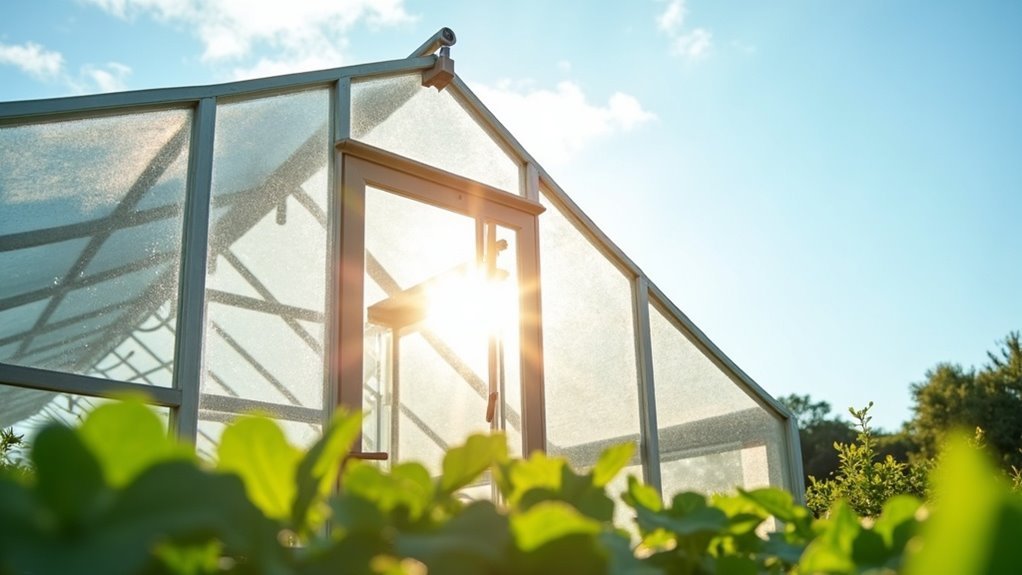
To effectively vent your greenhouse without relying on power, it’s crucial to implement a range of passive strategies that enhance airflow while promoting sustainability. Install roof and side vents to create a natural chimney effect, allowing warm air to escape. Position side vents approximately 6 inches from the ground to facilitate cross-ventilation, which is essential for maintaining optimal temperatures in a survival setting.
Utilize large windows and doors to take advantage of natural breezes, and consider incorporating shade cloths to reduce heat buildup during peak sunlight hours. Misting systems can be utilized for evaporative cooling, providing an additional layer of temperature regulation. Regular maintenance and careful humidity monitoring are vital to ensure your greenhouse operates at peak efficiency, especially in a long-term survival situation.
Explore a variety of additional strategies, such as utilizing thermal mass and strategic plant placement, to maximize your greenhouse’s efficiency and support plant health in your prepping endeavors.
Key Takeaways
- Install roof vents covering 40% of the greenhouse area to facilitate natural airflow and allow warm air to escape, ensuring your plants remain healthy in any survival situation.
- Use side vents positioned 6 inches from the bottom to enhance cross-ventilation, which is crucial for cooling efficiency and maintaining a stable environment for your crops.
- Create a chimney effect by combining roof and side vents for optimal ventilation, allowing you to effectively manage temperature and humidity without the need for electricity.
- Utilize large windows and doors on opposite sides of the greenhouse to capture natural breezes, enhancing airflow and creating a self-sustaining ecosystem for your survival garden.
- Implement shade cloths and reflective materials to lower temperatures and reduce heat buildup during sunny days, protecting your plants and ensuring food security in a prepping scenario.
Utilizing Natural Ventilation Techniques
When it comes to creating a self-sustaining greenhouse for survival and prepping, utilizing natural ventilation techniques is crucial for maintaining an optimal growing environment.
Begin by installing roof vents; since hot air rises, these vents will allow warm air to escape, especially when paired with strategically placed side vents to create a chimney effect.
Position side vents approximately 6 inches from the bottom to facilitate cross-ventilation, allowing cooler air to enter and maintaining a balanced temperature inside.
Consider incorporating roll-up side curtains or thermal shutters that open automatically in response to heat, which will enhance airflow and improve plant health.
Additionally, make sure to orient your greenhouse to take advantage of prevailing winds, further improving ventilation and reducing reliance on artificial shading during intense heat, thus ensuring your crops thrive in any situation.
Installing Roof Vents for Hot Air Escape
To enhance the ventilation system of your survival greenhouse, installing roof vents is an essential strategy. Roof vents play a crucial role in allowing hot air to escape, as warm air naturally rises.
Aim for vent coverage of approximately 40% of your greenhouse’s floor area to ensure efficient removal of heat, which is vital for preserving plant health and maximizing crop yields in austere conditions.
Aim for roof vent coverage of about 40% of your greenhouse floor area for optimal heat removal and plant health.
Retrofitting roof vents to existing polycarbonate structures can significantly improve airflow without relying on electricity, an important consideration for preparedness. For added convenience, consider solar-powered vent openers that utilize temperature-sensitive wax cylinders to automate the process.
While roof vents are critical for effective ventilation, combining them with side vents will further enhance airflow, creating a chimney effect that cools your greenhouse and helps maintain a stable environment, essential for long-term survival gardening.
Enhancing Airflow With Side Vents
To enhance airflow in your survival greenhouse, consider installing side vents below roof vents for optimal ventilation.
Position these vents about 6 inches from the bottom to create a chimney effect, which will allow hot air to escape while drawing in cooler air.
By integrating side vents with roof vents, you can significantly improve cooling efficiency, ensuring a stable environment for your survival crops.
This setup is essential for maintaining healthy plants that can sustain you in times of need.
Optimal Vent Placement
Proper vent placement is crucial for enhancing airflow in your greenhouse, especially when preparing for self-sufficiency and survival situations.
It’s important to strategically install side vents approximately 6 inches from the bottom of the side walls to promote effective airflow. This positioning allows cool air to enter while warm air escapes through continuous roof vents, creating a natural chimney effect.
Aim for side vents to account for about 40% of the total floor area to ensure maximum ventilation. When combined with solar-powered openers, these vents can automate airflow, helping your greenhouse maintain optimal temperature and humidity levels for growing healthy food in any survival scenario.
Benefits of Side Vents
While many survivalists focus on shelter and food storage, the benefits of side vents for enhancing airflow in your greenhouse shouldn’t be overlooked. Installing side vents below roof vents creates a chimney effect, allowing hot air to escape while drawing in cooler air. Placing them about 6 inches from the ground optimizes airflow and temperature regulation, which is crucial for preserving food and plant life in a survival scenario. Utilizing solar-powered openers automates ventilation, ensuring consistent airflow without relying on external electricity sources. Properly sized side vents should make up about 40% of the total floor area to maximize cooling efficiency, which is essential during extreme weather conditions. Together with roof vents, side vents significantly improve overall ventilation, creating a comfortable and sustainable growing environment critical for long-term self-sufficiency.
| Feature | Benefit |
|---|---|
| Chimney Effect | Enhances airflow |
| Ground Proximity | Optimizes temperature control |
| Solar-powered Openers | Automates ventilation |
| Size Ratio | Maximizes cooling efficiency |
Enhancing Natural Airflow
Creating a well-ventilated greenhouse is crucial for optimizing your survival garden, and enhancing natural airflow with side vents is one of the most effective strategies.
Installing side vents about 6 inches above the ground promotes a chimney effect, allowing hot air to escape while cooler air enters, essential for maintaining healthy plants that can sustain you in emergencies.
To maximize effectiveness, side vents should cover around 40% of your greenhouse’s total floor area.
Consider utilizing solar-powered openers for automation, which can be particularly useful when you’re busy preparing for unexpected situations.
Regularly check that side vents are unobstructed to guarantee consistent airflow, preventing overheating and ensuring a stable climate for optimal plant growth.
- Prevent overheating
- Optimize plant growth
- Create a stable climate
Creating Cross-Ventilation With Windows and Doors
Effective cross-ventilation in your greenhouse is crucial for maintaining optimal growing conditions, especially in a survival or prepping scenario. To achieve this, strategically position large doors and windows on opposite sides of the structure. This allows for a natural breeze to flow through, drawing in cooler air while expelling hot air, which is essential for preserving your plants and supplies.
Ensure your windows open easily and remain stable in windy conditions to facilitate controlled airflow. For best results, position windows about 6 inches from the ground to enhance airflow and take advantage of the chimney effect during warm weather.
Utilizing two sizable windows significantly improves ventilation, enabling warm air to escape from the top as cooler air enters from the bottom. Regularly monitor temperature and humidity levels to adjust openings for maximum efficiency, ensuring your greenhouse remains a reliable source of food and resources in any situation.
Implementing Shade Cloth for Temperature Control
To maintain ideal temperatures in your survival greenhouse, implementing shade cloth is a practical solution that complements your ventilation efforts.
Shade cloths effectively lower greenhouse temperatures by blocking intense sunlight, which is particularly important for preserving food and resources.
Consider these options for best results:
- Higher density cloths provide more effective shading, crucial for protecting sensitive plants and crops.
- Reflective materials can enhance cooling by bouncing sunlight away, helping to maintain a stable environment for your survival supplies.
- Choosing the right percentage of shading (30% to 90%) is essential based on your climate and the specific needs of your plants.
With proper installation, you can reduce greenhouse temperatures by 10-15 degrees Fahrenheit, creating a comfortable environment that promotes healthy growth for your plants and ensures optimal conditions for your prepping efforts.
Employing Misting Systems for Evaporative Cooling
While managing the temperature in your greenhouse, utilizing misting systems can be a pivotal strategy for evaporative cooling, especially in survival or prepping scenarios. These systems release fine water droplets that absorb heat from the air, effectively lowering temperatures. They generally require a water supply but can operate on solar-charged batteries, making them advantageous for off-grid environments. In addition to cooling, misting systems help maintain optimal humidity levels, which is crucial for promoting healthy plant growth during challenging conditions. However, it’s essential to monitor humidity levels to prevent excessive moisture that could lead to mold, especially in survival situations where resources are limited.
| Benefits | Considerations | Maintenance |
|---|---|---|
| Significant temperature reduction | Requires a reliable water source | Regular cleaning to prevent clogs |
| Supports healthy plant growth | Risk of mold if humidity is too high | Monitor humidity levels consistently |
| Compatible with solar power | Initial investment cost | Routine system checks for optimal performance |
Leveraging Environmental Elements for Natural Cooling
Leveraging environmental elements for natural cooling in your survival greenhouse can significantly improve temperature regulation while minimizing reliance on mechanical systems.
By strategically positioning your greenhouse to capture prevailing winds, you can enhance natural ventilation crucial for preserving food and maintaining plant health. Installing roof vents that cover 40% of the floor area creates a chimney effect, allowing hot air to escape and cooler air to enter, which is essential in a survival scenario.
Utilizing roll-up side curtains further enhances airflow, ensuring your crops remain viable.
- Benefit from a refreshing breeze during scorching days.
- Cultivate healthier plants that thrive in ideal conditions, supporting your long-term food supply.
- Slash energy costs and reduce your environmental footprint, aligning with sustainable living practices.
Regularly cleaning insect screens is vital to guarantee unobstructed airflow, preventing overheating and fostering a more comfortable environment for your survival crops.
In a prepping mindset, this approach not only aids in immediate cooling but also contributes to your self-sufficiency goals.