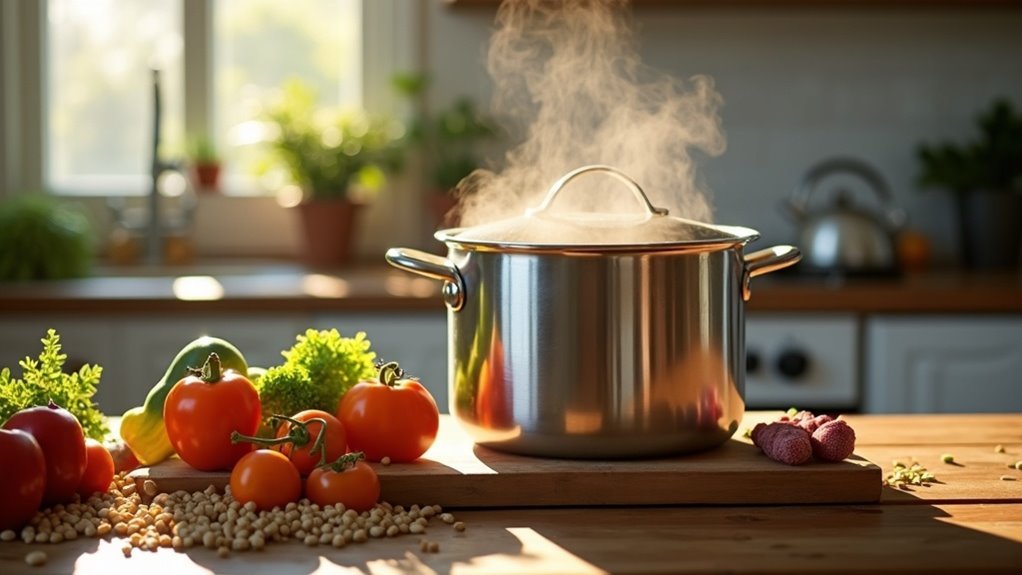
To effectively utilize a thermal cooker for fuel savings in a survival situation, begin by boiling your food in a conventional pot for approximately 10 minutes. This critical step ensures that bacteria are killed, making your meal safe for consumption. After boiling, transfer the pot into a well-insulated container, ensuring that it is surrounded by at least 4 inches of insulation. It’s crucial to keep the lid tightly sealed during the boiling process.
Ideal foods for this method include hearty soups, stews, and grains, which provide essential nutrients for sustaining energy. Once transferred, you can leave your meals cooking unattended for up to 8 hours while maintaining safe temperatures, allowing you to focus on other survival tasks. By optimizing your cooking methods with a thermal cooker, you can conserve fuel and ensure your food is prepared efficiently. Stay informed and improve your survival skills by learning more about effective cooking techniques.
Key Takeaways
- Start by boiling food for 10 minutes to ensure safety and maximize heat retention before transferring it to the thermal cooker, which is essential for preparedness in any survival situation.
- Use a tight-fitting lid during boiling to minimize heat loss and boost cooking efficiency, helping you save energy and resources when they are limited.
- Insulate the pot with a minimum of 4 inches of material to maintain temperature and reduce energy consumption, a crucial step in self-sufficient living.
- Focus on high-liquid dishes like soups and stews, which are ideal for extended cooking times and help retain moisture—important for nutrition and hydration during emergencies.
- Keep food in the thermal cooker for up to 8 hours, which not only reduces the need for reheating but also conserves fuel, a vital consideration when resources are scarce.
Understanding Thermal Cooking Principles
Understanding the principles of thermal cooking is essential for survivalism and prepping, as it maximizes efficiency while conserving resources. This method involves thoroughly boiling your food before transferring it to an insulated container, allowing for slow cooking without the need for continuous energy use.
To ensure optimal heat retention, it’s crucial that the insulation surrounding the cooking pot is at least 4 inches thick. Maintaining food temperatures above 140°F is vital to prevent bacterial growth, which can be achieved by boiling for at least 10 minutes.
Thermal cooking is particularly effective for simmering dishes such as soups and stews, making it an ideal technique for those looking to conserve fuel and minimize water evaporation during challenging times.
The Basics of a Thermal Cooker
A thermal cooker is an invaluable tool for survivalists and preppers, as it utilizes boiling and insulation to cook food without the need for continuous heat.
To effectively utilize this resource, first bring your ingredients to a rolling boil, then transfer them to the insulated container, allowing them to cook slowly for hours.
This method conserves energy, making it ideal for situations where resources are limited, while also ensuring your meals remain at safe temperatures and develop rich flavors.
In emergency scenarios, a thermal cooker can be a reliable way to prepare nutritious meals without relying on conventional cooking methods.
Thermal Cooker Overview
While you may be familiar with traditional cooking methods that demand constant oversight, thermal cookers present a practical, efficient alternative for survival situations by allowing you to prepare meals with minimal active involvement.
These non-electric devices utilize retained heat to cook food unattended for up to 8 hours after an initial boil, making them ideal for prepping and emergency scenarios.
Here are three key benefits of using a thermal cooker in your survival toolkit:
- Fuel Savings – Minimizes overall fuel consumption, crucial in a survival situation where resources may be limited.
- Time Efficiency – Reduces cooking time compared to conventional methods, allowing you to focus on other essential survival tasks.
- Flavor Preservation – Perfect for simmering soups and stews without evaporation, ensuring you maintain nutritional value during long-term food storage.
With thermal cookers, you’ll discover a smarter, more resourceful way to cook while preparing for unforeseen circumstances.
Cooking Techniques Explained
Mastering the cooking techniques of a thermal cooker is essential for survivalists looking to prepare meals efficiently with minimal oversight, especially in situations where resources may be limited.
Begin by boiling water with your ingredients in a conventional pot, ensuring it reaches a full boil to eliminate harmful bacteria. Fill the cooking pot to about 80% capacity, then securely place the lid on to retain heat, which is crucial when conserving fuel.
Transfer the pot to the insulated thermal cooker, wrapping it in 4 inches of insulation to maximize heat retention—a critical factor in survival scenarios. Suitable foods include soups, stews, grains, and legumes, which thrive on longer cooking times, providing you with nutritious meals.
Keep in mind that cooking times in thermal cookers can take 3-4 times longer than traditional methods, so plan accordingly to ensure you have sustenance ready when needed.
Preparing Food for Thermal Cooking
To ensure your meals are cooked evenly and safely during your survival preparation, it’s crucial to start by bringing your food to a complete boil for about 10 minutes. This step is vital for reaching the necessary temperature to ensure safe cooking before transferring it to your insulated container.
Follow these steps for optimal results:
- Fill the cooking pot to about 80% capacity to maximize heat retention, which is essential when resources are limited.
- Use a tight-fitting lid during boiling to minimize heat loss, ensuring you conserve energy.
- Surround the cooking pot with at least 4 inches of insulation, such as blankets or towels, to enhance heat retention and make the most of your cooking efforts in a survival situation.
Insulation Tips for Maximum Heat Retention
Effective insulation is essential for maximizing heat retention in a thermal cooker, which is particularly important for survival situations where cooking efficiency and food safety can mean the difference between life and death.
To ensure optimal performance, surround your cooking pot with at least 4 inches of insulation using high-quality materials like straw, wool, or Styrofoam to create effective air pockets that help retain heat. For added insulation, wrap your cooker in a blanket or towel—this simple step can significantly improve heat retention, especially in cold environments.
Surround your cooking pot with 4 inches of insulation and wrap it in a blanket for improved heat retention.
When preparing your meals, fill the pot to about 80% capacity to minimize air gaps and reduce heat loss, making your cooking more efficient.
Additionally, consider incorporating reflective materials like aluminum foil within your homemade cookers to further maintain heat and moisture around your food.
These insulation tips are invaluable for ensuring ideal cooking results when resources are limited, allowing you to thrive even in challenging conditions.
Ideal Foods for Thermal Cooking
When selecting foods for thermal cooking in a survival situation, focus on items like hearty soups, nutrient-dense stews, and versatile grains, as they excel under prolonged heat and moisture retention.
Keep in mind that cooking times will be significantly extended; a dish that typically simmers for an hour will require approximately 3-4 hours in your thermal cooker.
Prioritize high-liquid foods and smaller cuts of meat to ensure even cooking and food safety, which is crucial in prepping scenarios.
Stocking up on these types of foods can provide sustenance during emergencies and enhance your self-sufficiency.
Best Food Choices
When considering the best food choices for thermal cooking in a survival or prepping context, it’s essential to select dishes that not only offer sustenance but also retain their quality and safety during extended cooking times.
Here are some excellent options for successful thermos cooking:
- Soups and Stews: With their high liquid content, these dishes not only retain moisture but also pack a punch in flavor, making them ideal for long-term storage and meal prep.
- Grains: Staples such as rice, quinoa, and barley are perfect for thermal cooking, as they thrive on prolonged heat. A brief boil is all that’s needed to ensure they’re ready for insulation.
- Shredded Meats: Opting for smaller pieces of meat ensures even cooking and maximizes the efficiency of retained heat, providing a hearty source of protein.
Always remember to boil your ingredients for at least 10 minutes before insulation. This step is crucial for maintaining quality and ensuring safety, especially in a survival scenario.
Cooking Time Adjustments
To achieve optimal results in thermal cooking, especially in a survival situation, it’s important to adjust your cooking times based on the density and type of food you’re utilizing. Cooking time adjustments are crucial; typically, thermal methods extend cooking durations to 3-4 times longer than conventional methods. For example, foods with high moisture content, such as soups and legumes, thrive with this method. Always ensure to bring your food to a boil before insulating it for cooking. Denser foods may require additional time. Use the table below as a reference for adjusting your cooking times during your prepping and survival meals:
| Food Type | Conventional Time | Thermal Cooking Time |
|---|---|---|
| Soups | 1 hour | 3-4 hours |
| Brown Rice | 30 minutes | 1.5-2 hours |
| Stews | 1.5 hours | 4-5 hours |
| Quinoa | 15 minutes | 45-60 minutes |
Cooking Times and Safety Considerations
Understanding cooking times and safety considerations is crucial for maximizing the effectiveness of a thermal cooker, especially in survival situations. Keep these key points in mind:
- Always boil food thoroughly before insulation to ensure it maintains a safe temperature above 140°F, which is critical for preventing foodborne illnesses.
- Cooking times can increase 3-4 times compared to conventional methods, so plan accordingly and exercise patience—this is essential when resources may be limited.
- You can safely keep food in the cooker for up to 8 hours, but if the temperature drops below 160°F, be sure to reboil to maintain safety standards.
Experiment with various foods and insulation thicknesses to find the ideal cooking durations, ensuring both flavor and food safety for every meal you prepare in your preparedness efforts.
This knowledge can be vital in a survival scenario where every meal counts.
Advantages of Using a Thermal Cooker
Using a thermal cooker not only enhances your cooking efficiency but also provides essential benefits for survivalists and preppers, particularly in terms of energy conservation and food safety. By boiling food initially and then allowing it to cook in the insulated thermal environment, you achieve energy savings while ensuring safe temperatures—a critical aspect when preparing meals in emergency situations. This method significantly reduces the need for reheating, further conserving energy and resources.
| Benefit | Description | Energy Impact |
|---|---|---|
| Reduced Cooking Time | Less energy needed for prolonged cooking | Lowers fuel costs |
| Safe Temperature Retention | Keeps food at serving temperature | Minimizes reheating |
| Multi-Meal Cooking | Prepare several dishes at once for efficiency | Decreases cooking frequency |
In a survival scenario, these advantages can be invaluable, allowing you to maximize your resources and ensure food safety while minimizing energy consumption.
Additional Resources for Effective Thermal Cooking
While mastering thermal cooking techniques may seem daunting at first, a wealth of additional resources is available to help you navigate this efficient cooking method, especially in the context of survivalism and prepping.
Here are three invaluable resources to enhance your skills:
- Carolyn Shearlock’s Quick Start Guide and Cookbook: This essential guide not only helps you master thermal cooking but also maximizes fuel savings, crucial for long-term preparedness.
- Survivalist Community Forums: Engage with fellow preppers who share their experiences, optimizing cooking times and techniques tailored for survival scenarios.
- Online Courses and Newsletters: Delve deeper into insulation methods and food safety, both vital for effective thermal cooking with your vacuum-insulated cooker in a survival situation.