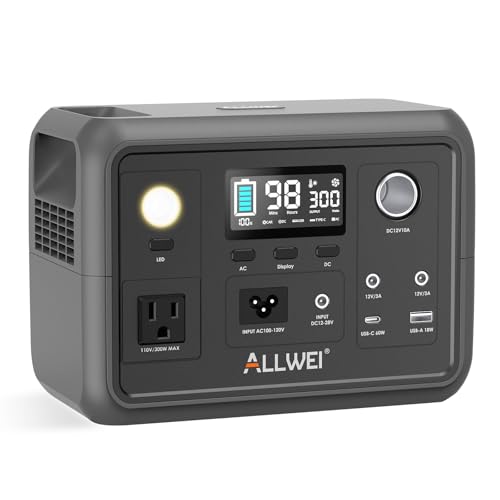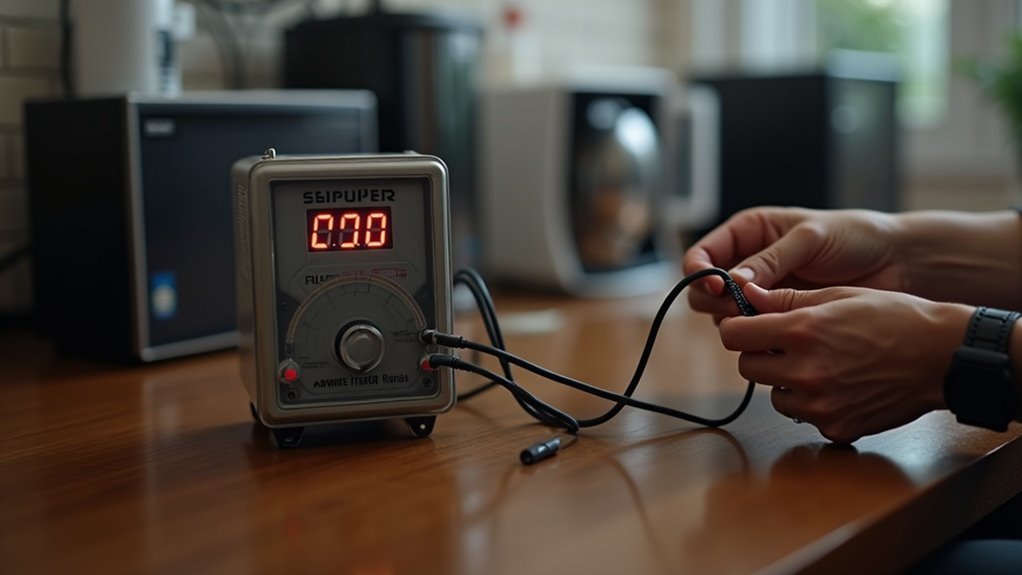
To audit energy draw for your survival and prepping needs, start by plugging a power meter into an outlet and connecting your essential appliances. Keep an eye on real-time wattage, voltage, and current to identify energy consumption patterns that may affect your preparedness. For a comprehensive understanding, consider whole house systems that monitor usage across multiple circuits, which can be crucial during power outages or emergencies. Utilize advanced energy management systems for insights on specific circuits that power vital equipment. Don’t forget about phantom power; measure any unused devices that could drain your resources unnecessarily. Stay tuned for more effective strategies to enhance your energy efficiency and self-sufficiency in the following sections.
Key Takeaways
- Utilize specialized power meters to monitor individual appliances by plugging them into wall outlets, allowing you to gather real-time wattage and cost data essential for prepping efficiently.
- Evaluate your entire home’s energy consumption by installing advanced systems that provide circuit-specific energy tracking, enabling informed decision-making crucial for survival preparedness.
- Recognize phantom power by monitoring devices such as chargers and printers, which can account for 5-10% of total energy usage; this awareness is vital for maintaining energy efficiency in emergency situations.
- Employ smart power strips or timers to disconnect power from devices that contribute to unnecessary energy consumption, ensuring that you preserve resources for when they are truly needed.
- Regularly carry out energy audits with portable power meters to pinpoint inefficiencies and enhance your overall energy resilience, which is essential for enduring emergencies and sustaining your prepping lifestyle.
Understanding Power Meters
When it comes to survivalism and prepping, understanding power meters can be a valuable skill in monitoring your energy consumption effectively.
These devices measure electrical consumption in real-time, providing crucial data on voltage, current, and power usage that can be essential during emergencies. Their portability allows you to move them between different locations, whether it’s at home, in a bug-out bag, or during a temporary shelter setup, ensuring you can keep tabs on your energy usage wherever you are.
Advanced power meters can also assess power quality parameters, such as power factor and harmonics, which are vital for a thorough energy audit—especially when you’re relying on alternative energy sources like solar panels or generators.
Monitoring Individual Appliances
To effectively monitor individual appliances in your survivalist setup, consider using specialized meters that plug directly into a wall outlet. These meters allow you to connect specific devices and measure their power consumption, giving you valuable insights into their efficiency. They display real-time data, helping you assess wattage and estimated costs, which is crucial for budgeting your energy usage during emergencies. You’ll only need one meter per appliance, making it easy to identify energy hogs over time—essential for maintaining a self-sufficient household. Here’s a comparison of common appliances you might rely on:
| Appliance | Wattage (W) | Estimated Monthly Cost ($) |
|---|---|---|
| Refrigerator | 150 | 15 |
| Heater | 1500 | 45 |
| Microwave | 1200 | 36 |
| TV | 100 | 3 |
Whole House Energy Monitoring
Whole house energy monitoring systems provide a comprehensive understanding of your home’s energy consumption, which is essential for survivalists and preppers looking to maximize efficiency and reduce waste.
These systems can be easily integrated by clipping onto your external power meter or using internal installations with optical readers or wireless sensors to track real-time energy usage. Accessing this data online allows you to monitor consumption trends and identify high-demand areas, helping you better prepare for any situation.
Advanced configurations can even differentiate usage across circuits by attaching current sensors to breaker box wires.
With detailed insights into your total energy usage, whole house monitoring equips you with the knowledge to uncover potential cost savings and enhance your home’s energy resilience—key components in any survival strategy.
Advanced Energy Management Systems
Advanced energy management systems are essential tools for survivalists and preppers, enabling real-time energy monitoring with the use of current sensors attached to each wire in your breaker box.
This configuration allows you to track energy consumption on a circuit-specific basis, providing valuable insights into which areas of your home or survival setup consume the most power.
With this data at your disposal, you can make informed decisions to enhance energy efficiency, reduce costs, and ensure that your energy resources are optimized for emergencies and prolonged off-grid living.
Real-Time Energy Monitoring
As you prepare for self-sufficiency and resilience in uncertain times, real-time energy monitoring through advanced energy management systems can provide essential insights into your electrical usage.
These systems employ current sensors that clip onto wires in your breaker box, capturing real-time data for each circuit. This data feeds into a central power management box, aggregating information for detailed analysis and reporting.
You can access this information online, enabling you to track energy consumption in real-time. By identifying high-energy usage areas, you can optimize energy efficiency, reduce reliance on external power sources, and uncover potential cost-saving measures to enhance your preparedness for any situation.
Circuit-Specific Data Tracking
Real-time energy monitoring is crucial for survivalists and preppers, as it enables effective circuit-specific data tracking to optimize energy usage in your home.
Advanced Energy Management Systems utilize current sensors that clip onto each wire in your breaker box, allowing for precise monitoring of individual circuit performance. This data can be essential for assessing your energy needs during emergencies or extended off-grid living.
By analyzing this information through a central power management box, you can access insights about your energy consumption patterns instantly. Identifying high-energy usage areas helps you implement targeted energy-saving strategies, ensuring you’re prepared for any situation.
With this knowledge, you can make informed decisions about efficiency improvements and evaluate their impacts over time, enhancing your overall preparedness.
Identifying Phantom Power
Phantom power can significantly affect your energy consumption, often representing 5-10% of your total usage.
In a survivalist context, identifying common phantom devices—such as chargers and printers—becomes crucial for understanding where energy is wasted.
Utilizing power meters to monitor these devices can help you develop strategies to minimize unnecessary consumption, conserve energy, and ultimately lower your utility bills.
This approach not only promotes sustainability but also aligns with the principles of self-sufficiency and preparedness.
Understanding Phantom Power
Many survivalists and preppers may not realize the hidden costs associated with phantom power, which can significantly affect your preparedness budget.
Phantom power, also known as standby power, is the energy consumed by devices that remain plugged in while turned off or in standby mode, accounting for 5-10% of total residential energy use. Common culprits include printers, televisions, and modems, which draw power even when not actively in use.
This waste can add up to $100 to $200 annually—funds that could be better allocated towards essential supplies or gear.
To combat this energy drain, consider using power meters to measure the consumption of individual appliances in your home.
By identifying which devices are high-drainers, you can implement smart power strips or timers that cut off power when appliances aren’t in use.
This proactive approach not only reduces your energy costs but also aligns with the survivalist ethos of maximizing resources and minimizing waste, ultimately enhancing your preparedness for any situation.
Common Phantom Devices
How can you identify the devices in your home that quietly drain energy, potentially impacting your preparedness efforts?
Common culprits include printers, modems, and televisions, which often consume power even when turned off or in standby mode.
Devices with remote controls, like gaming consoles and set-top boxes, are particularly notorious for this phantom drain.
In a survivalist mindset, being aware of these energy drains is crucial, as they can lead to wasted resources that could be better utilized in your prepping endeavors.
On average, households waste around $100 annually due to these undetected energy draws, money that could be invested in essential supplies or gear.
To pinpoint specific offenders, consider using individual appliance meters.
These tools provide precise data, enabling you to implement energy-saving measures effectively.
Reducing Phantom Consumption
Identifying phantom power is crucial for effective energy management, especially in a survivalist or prepping context. This standby power, which can account for 5-10% of your energy consumption, originates from devices like televisions and chargers that continue to draw electricity even when not in use.
To locate these energy drainers, consider using a power meter to assess each device’s consumption. Once identified, implement strategies such as using timed or smart power strips that cut off power to inactive devices.
By unplugging or efficiently managing connected devices, you can significantly minimize phantom power draw, potentially saving you around $100 annually on your energy bills.
Effective energy management is fundamental for self-sufficiency and preparedness, and addressing phantom consumption is the first step towards a more resilient energy strategy.
Benefits of Metering Energy Audits
Metering energy audits can be an invaluable resource for survivalists and preppers looking to optimize their energy usage in off-grid or emergency situations. These audits provide detailed insights into energy consumption, allowing you to identify inefficiencies and areas that require improvement.
By assessing power quality measurements, they ensure that your electrical systems function effectively and safely, which is crucial when you’re relying on alternative energy sources like solar or wind.
Assessing power quality is vital for safe and effective operation of alternative energy systems like solar and wind.
These audits can be customized to align with your specific preparedness goals, whether you’re evaluating your home’s energy efficiency or assessing backup power systems. Portable power meters are especially useful for monitoring various systems, enabling you to adapt to changing conditions and needs.
Furthermore, specialized audits—such as those focused on cost allocation or device protection—can help you make informed decisions about upgrades and the management of your energy devices, thereby enhancing your overall energy resilience in times of crisis.
Choosing the Right Metering Solution
Choosing the right metering solution is crucial for effectively achieving your survival preparedness objectives.
Consider your specific needs: general energy assessments, resource allocation, or quality monitoring of essential supplies. Versatile, portable power meters are ideal for flexible evaluations, allowing you to monitor various locations and parameters as you prepare for potential emergencies.
If you require detailed insights into your energy consumption or resource usage, evaluate the necessary granularity and depth; this will impact the duration and method of your assessments.
For long-term preparedness, permanent installations might be necessary for continuous data collection on your energy use and resources.
Lastly, ensure compatibility with your existing systems to facilitate accurate assessments and informed decision-making throughout your survival planning process.