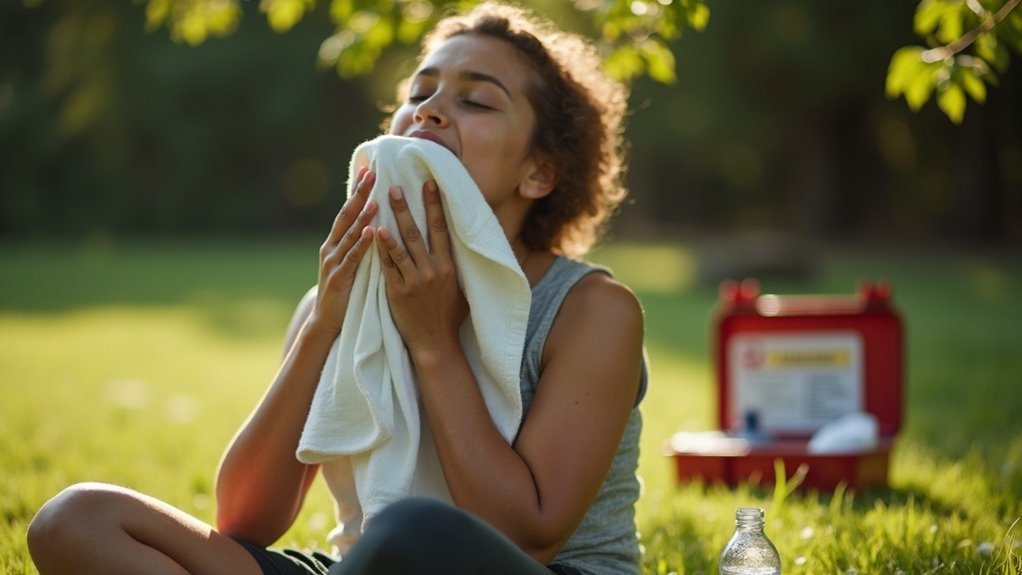
If you’ve experienced minor smoke inhalation, it’s crucial to act quickly. First, move to fresh air immediately to reduce exposure. Assess your breathing and circulation; if you find yourself unresponsive, initiate CPR without delay. Be vigilant for symptoms such as coughing, shortness of breath, or any soot around your mouth or nose, indicating inhalation of harmful particles. If you have access to supplemental oxygen, use it to help stabilize your condition while awaiting emergency services. Keep a close watch on your symptoms, as they may worsen and require further medical intervention. Knowledge of recovery protocols and understanding when to seek medical help are essential components of effective survival preparedness.
Key Takeaways
- Quickly relocate the person affected by smoke inhalation to a location with fresh air to prevent further inhalation of harmful particles.
- Evaluate their airway and breathing; if they are unresponsive, initiate CPR immediately.
- Keep an eye out for symptoms such as persistent coughing, difficulty breathing, or irritation of the eyes which may indicate smoke inhalation.
- Check for any soot around the mouth or nose as this can confirm exposure to smoke.
- If available, administer supplemental oxygen until emergency services can take over, ensuring you have a plan for emergency situations.
What Is Smoke Inhalation?
Smoke inhalation is a critical concern for survivalists and preppers, especially during emergencies involving fires. When you inhale harmful smoke particles and gases—often from wildfires or structural fires—you risk airway obstruction and lung damage due to a lack of oxygen and exposure to toxic substances like carbon monoxide.
Recognizing the symptoms, which can include shortness of breath and irritation of the eyes and throat, is vital for anyone preparing for potential disasters. Immediate medical attention is crucial, as untreated smoke inhalation can deteriorate rapidly and lead to long-term health consequences.
Recognizing symptoms of smoke inhalation is essential; immediate medical attention can prevent serious long-term health issues.
As part of your preparedness plan, ensure you have first aid measures in place to address any signs of smoke inhalation. This may include having an emergency kit with masks, oxygen supplies, and knowledge of how to assist affected individuals until professional help can be obtained.
Being proactive in these situations can significantly improve survival outcomes and reduce the risk of further complications.
Symptoms of Smoke Inhalation
Recognizing the symptoms of smoke inhalation is crucial for survival situations where prompt response and treatment can mean the difference between life and death. Common symptoms to watch for include coughing, shortness of breath, and hoarseness, which arise from irritation and inflammation in the airway. Additionally, you may experience dizziness and headaches due to carbon monoxide exposure, a serious hazard in smoke-filled environments.
Eye irritation, characterized by redness and tearing, can occur along with noticeable changes in skin color from poisoning. It’s important to note that symptoms may not manifest immediately; they can develop within 24-36 hours after exposure. Therefore, careful monitoring of yourself and others is vital in survival scenarios. In severe cases, confusion or fainting may indicate a critical need for medical evaluation, underscoring the importance of being prepared for potential smoke inhalation incidents.
| Symptoms | Description |
|---|---|
| Coughing | Irritation in the airway |
| Shortness of breath | Inflammation effect |
| Eye irritation | Redness and tearing |
| Dizziness | Resulting from carbon monoxide exposure |
Immediate First Aid Steps
When someone is exposed to smoke, swift action can significantly enhance their chances of recovery.
First, move them to fresh air to halt further smoke inhalation. Assess their airway, breathing, and circulation; administer CPR if they’re unresponsive or not breathing.
Move the individual to fresh air immediately, check their vital signs, and perform CPR if necessary.
Keep an eye out for symptoms such as coughing or shortness of breath, and check for any soot around their mouth or nose. If you have access to supplemental oxygen, provide it to alleviate oxygen deprivation until emergency services arrive.
Always stay with the individual; monitor their condition closely for any signs of deterioration. Quick and decisive action is critical for a successful recovery, especially in survival situations where every second counts.
When to Seek Medical Attention
How can you tell if smoke exposure has caused serious harm? If you experience symptoms like shortness of breath, persistent cough, or hoarseness, it’s crucial to seek medical attention immediately; these could indicate airway damage.
Confusion, dizziness, or fainting require emergency care, as they might signal carbon monoxide poisoning—something every prepper should be aware of.
Visible soot in the mouth or burns around it are serious signs of inhalation injury, and shouldn’t be ignored.
Don’t wait for symptoms to worsen; monitoring for 24-48 hours post-exposure is essential, especially if you have a history of respiratory conditions like asthma or COPD.
Being proactive about your health and seeking prompt medical evaluation can prevent complications and ensure your safety in emergency situations.
Always include medical preparedness in your survival planning.
Recovery and Outlook
After experiencing minor smoke inhalation, your recovery will depend on the severity of your exposure and your overall health. Typically, the healing process can take a few days to weeks.
During this period, you may notice lingering symptoms such as a cough, shortness of breath, and fatigue. It’s crucial to remain vigilant and monitor for any worsening symptoms, as complications can occur after the initial exposure.
Monitor for lingering symptoms like cough and shortness of breath, as complications may arise post-exposure.
Follow-up care with healthcare professionals is essential to assess your lung function and ensure a proper recovery. Most individuals fully recover from minor smoke inhalation without long-term effects, particularly when they seek prompt and appropriate care.
As a prepper, it’s wise to have a plan in place for potential smoke inhalation incidents, including having necessary supplies and knowledge on how to treat such conditions.
Prioritize your health and preparedness during your recovery.