To sun dry laundry efficiently as part of your survival and prepping strategy, select warm, dry days between 10 AM and 2 PM for optimal UV exposure, which also helps in sanitizing your clothes. Sort your laundry by fabric type and weight, and shake out each piece before hanging to reduce wrinkles, ensuring that your gear remains in top condition. Hang items with enough space for airflow to prevent mildew, using hangers for shirts and pegs at the waist for trousers. Always monitor the weather to avoid unexpected rain, and consider employing fans or natural breezes for added ventilation. Mastering the art of sun drying is a valuable skill that can conserve energy and resources during challenging times. You’ll uncover more essential tips and techniques for effective sun drying in your prepping endeavors ahead.
Key Takeaways
- Choose warm, sunny days with low humidity for optimal drying conditions, ideally between 10 AM and 2 PM, as this can be crucial for maintaining supplies in a survival situation.
- Prepare laundry by washing heavier items first and opting for quick-drying fabrics like polyester or nylon, which are versatile and lightweight for storage.
- Hang clothes with space between them using the ‘top-bottom, bottom-top’ rule to prevent stretching and ensure airflow, thus maximizing your resources effectively.
- Rotate items regularly for even exposure to sunlight and wind, enhancing drying efficiency, which is essential for maintaining hygiene and comfort in a survival scenario.
- Bring damp clothes indoors promptly if weather changes; use fans or heaters to assist in drying if necessary, ensuring you have dry clothing ready for potential emergencies.
Understanding Ideal Weather Conditions for Sun Drying
To sun dry your laundry efficiently while preparing for self-sufficiency, it’s crucial to understand the ideal weather conditions that facilitate the process. Seek out warm temperatures and low humidity, as these conditions enhance evaporation and reduce drying time—key factors for efficient resource management.
The optimal time for drying is between 10 AM and 2 PM, when UV rays are strongest, effectively aiding in drying your clothes without the need for energy-consuming appliances. Avoid drying on rainy or excessively humid days, as moisture can prolong drying times and create musty odors, which are undesirable in a survival situation.
Even on cloudy days, as long as there’s no rain, you can still benefit from indirect sunlight to assist in evaporation. Spring and summer are your best seasons for outdoor drying, allowing you to maximize the use of natural resources in your prepping efforts.
Preparing Your Laundry for Efficient Drying
To prepare your laundry for efficient drying in a survival situation, begin by selecting durable, quick-drying fabrics and organizing them according to their drying requirements.
Heavier items like towels should be washed first to ensure they’ve ample time to dry.
Implement proper pre-wash care by shaking out each piece and arranging them strategically. This will maximize exposure to sunlight and airflow, which is crucial for quicker drying when resources may be limited.
Select Appropriate Fabrics
Selecting the right fabrics for sun drying can significantly enhance your laundry routine, especially in a survival situation where efficiency is key. Opt for synthetic fabrics like polyester and nylon, as they absorb less moisture and dry faster than natural fibers, making them ideal for quick drying in emergency scenarios.
Lightweight materials, such as fine cotton and sportswear, are also practical choices due to their reduced density and quick drying capabilities.
When drying clothes, hang darker items out early; they absorb more heat from the sun but may fade over time with prolonged exposure.
In a prepping mindset, it’s crucial to check care labels for delicate fabrics that may require special handling to ensure longevity.
Prioritize thick items like towels and denim first, as they take longer to dry and can be essential for maintaining hygiene and comfort in survival situations.
Pre-Wash Care Tips
Before you prepare your clothes for washing, taking a few simple steps can significantly impact their readiness for drying in the sun, especially when you’re in a survival situation.
Start with these pre-wash care tips: shake out any debris from your clothes to enhance washing efficiency—this is crucial when resources are limited.
Check for stains and treat them with appropriate stain removers; the sun can help naturally bleach organic stains, which is an advantage in outdoor settings.
Sort your laundry by fabric type and weight, washing heavier items separately to ensure they dry effectively without weighing down lighter fabrics.
Finally, use the fastest spin speed available to remove excess water, drastically reducing drying time and ensuring your gear is ready for your next outdoor endeavor.
Organize Laundry for Drying
Organizing your laundry effectively is essential for maximizing drying efficiency, especially when you’re relying on the sun. Here are some laundry tips to prepare for hanging clothes, keeping in mind the principles of survivalism and prepping:
- Prioritize heavy items first, like towels and jeans for optimal drying time, ensuring you have the essentials ready for use.
- Shake clothes well before hanging to reduce wrinkles and promote even drying, which is crucial for maintaining a neat appearance in survival situations.
- Follow the ‘top-bottom, bottom-top’ rule to prevent stretching, ensuring your clothing remains in good shape for long-term wear.
- Spread items out on the line, avoiding overlaps for thorough drying to maximize the effectiveness of your drying space.
- Use hangers for shirts and peg trousers at the waist to maintain shape, ensuring your clothing is ready for practical use when needed.
Techniques for Hanging Clothes Effectively
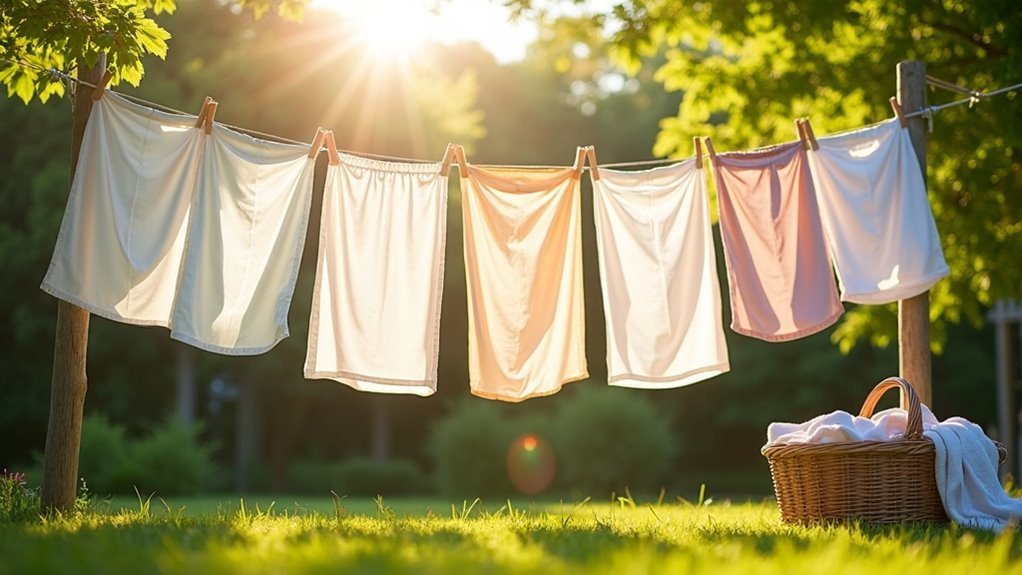
Hanging clothes effectively is essential for preparedness and maintaining your gear. To optimize drying time and preserve the integrity of your clothing, adhere to the ‘top-bottom, bottom-top’ strategy: hang shirts by their bottom edges to prevent stretching, and hang pants from the top to allow moisture to drip down.
Spread out your laundry to avoid overlapping, unroll sleeves, and turn up hems to facilitate better air circulation for drying. Utilize hangers for shirts, ensuring they’re unbuttoned and secured at the bottom.
For trousers, attach clips at the waistband and align pleats at the hem for optimal drying. Give each item a gentle shake before hanging to minimize wrinkles and enhance the longevity of your clothing.
This method is vital for keeping your survival gear in top condition.
Maximizing Airflow and Sunlight Exposure
To ensure your gear dries efficiently in a survival situation, maximizing airflow and sunlight exposure is crucial.
Follow these tips for optimal drying:
- Arrange items with space between them to enhance airflow and prevent mustiness.
- Set up a clothesline running east to west to take advantage of sunlight throughout the day.
- Hang heavier items, such as blankets and towels, first to allow them time to dry thoroughly.
- Rotate your gear regularly to ensure every piece gets equal exposure to sunlight and airflow.
- Position items facing into the wind to boost airflow and expedite the drying process.
These techniques will help keep your survival gear in top condition, ready for when you need it most.
Speeding Up the Drying Process
To expedite the drying process of your gear in a survival situation, begin by utilizing the highest spin speed on your washing machine or a manual wringer to eliminate excess water from your clothing.
Then, hang your items outdoors during peak sunlight hours, generally between 10 a.m. and 2 p.m., to enhance evaporation.
Optimize Spin Cycle
When preparing for emergencies, optimizing your spin cycle can be an essential part of your laundry routine, especially when time is of the essence.
Here’s how to effectively utilize your washing machine to ensure your clothes are ready for any situation:
- Use the fastest spin speed to minimize moisture content, ensuring your clothes dry quickly.
- Consider an extra spin-only cycle for items that are particularly damp, reducing the time they take to dry.
- Always check care labels before increasing spin speeds to prevent damage to your gear.
- A faster spin can decrease drying time by up to 30%, allowing you to focus on more critical prepping tasks.
- Proper spin management not only saves time but also helps maintain the integrity and longevity of your clothing, keeping your prep supplies in top condition.
Maximize Sunlight Exposure
Maximizing sunlight exposure is crucial for effective drying of laundry, especially during emergencies or in off-grid situations.
Position your clothesline or drying rack in direct sunlight, ideally between 10 a.m. and 2 p.m., to ensure optimal drying conditions. Set up a long, straight line running east to west to minimize shadows, which can hinder the drying process.
Space out garments adequately; overlapping can restrict airflow and sunlight, preventing even drying. Rotate items periodically to ensure that all sides receive light, particularly for thicker fabrics that retain moisture.
Additionally, keep an eye on weather conditions—low humidity and gentle breezes are ideal for enhancing evaporation, allowing your laundry to dry faster.
Troubleshooting Common Drying Issues
How can you ensure your laundry dries efficiently in an outdoor survival scenario? Start by ensuring proper airflow around your clothes. Space them apart to prevent overlapping, which can trap moisture. If they remain damp after the expected drying time, consider bringing them indoors to use a portable fan or heater if available.
Ensure proper airflow and space your clothes apart to promote efficient drying in outdoor survival situations.
- Monitor the weather forecast to avoid unexpected rain that could ruin your efforts.
- Limit direct sunlight exposure for dark or delicate fabrics, which can fade or become damaged.
- Hang clothes in well-ventilated areas to prevent musty odors and promote faster drying.
- Rotate drying locations to maximize sun exposure and wind flow.
- Bring clothes in promptly if conditions change, such as a sudden drop in temperature or an increase in humidity.
With these survival tips, you’ll effectively tackle common drying issues while maintaining essential preparedness!
Benefits of Sun Drying Your Laundry
While you might already know that sun drying your laundry is eco-friendly, it also offers numerous benefits that align with survivalism and prepping principles.
Sun drying not only helps reduce energy consumption and your carbon footprint, but it can also save you money—averaging $528 annually, which can be redirected towards essential supplies.
The sun’s UV rays act as a natural disinfectant, eliminating bacteria and odors while brightening colors and whitening whites, making it an effective method for maintaining hygiene in a survival scenario.
Additionally, air-dried clothes experience less wear and tear, reducing the need for frequent replacements and prolonging garment life—an essential factor when resources may be limited.
Finally, you’ll enjoy the fresh, natural fragrance that’s impossible to replicate with dryer sheets, making sun drying a practical and sustainable choice for those preparing for self-sufficiency.