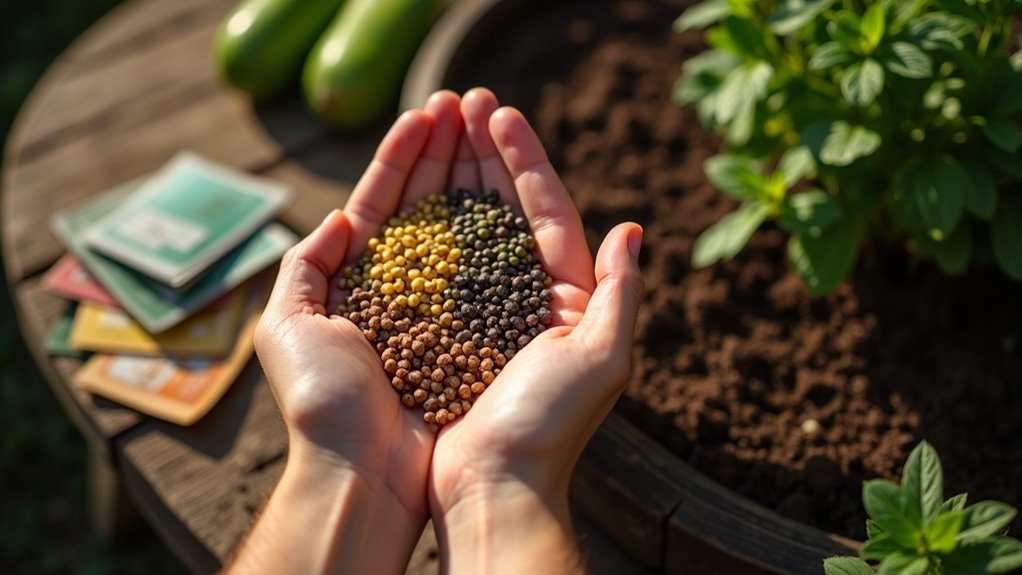
To start a seed bank rotation for survival and prepping, prioritize using your oldest seeds first, as this enhances viability and ensures you’re always prepared for emergencies. Organize your seeds into categories based on type and planting season for quick access during critical times. Store them properly in airtight containers with desiccants in a cool, dry environment to prolong their lifespan. Regularly inspect your inventory and replace seeds that are nearing expiration to maintain a reliable stock. Engage with local seed banks or online prepping communities to diversify your collection and improve your resilience. If you want to enhance your seed management further, there’s a wealth of information available to help you become more self-sufficient.
Key Takeaways
- Start by choosing open-pollinated heirloom seeds that are not only resilient but also tailored to your local climate and survival needs.
- Categorize seeds based on planting seasons and survival strategies, creating a detailed seed catalog for efficient inventory management.
- Store seeds in airtight containers with desiccants in a cool, dry location, and clearly label them with collection dates to track their viability.
- Regularly assess germination rates and inspect seeds for pests to maintain quality and ensure they can support your long-term preparedness plans.
- Engage in community seed swaps to expand your collection and connect with fellow survivalists and gardeners for invaluable knowledge sharing.
Understanding Seed Bank Rotation
Understanding seed bank rotation is crucial for survivalists and preppers aiming to maintain a resilient and productive garden. By systematically using older seeds first, you ensure they’re planted before losing their viability—a key factor in self-sufficiency during uncertain times.
To organize your seeds effectively, keep detailed records of acquisition dates, characteristics, and any specific survival traits they may possess. Regular germination testing on older seeds helps you evaluate their viability, ensuring that only healthy seeds contribute to your food supply.
Organize your seeds by tracking acquisition dates and testing germination to ensure a robust and viable food supply.
Additionally, regularly inspect stored seeds for pests and diseases to maintain quality and prevent contamination, as this can jeopardize your preparedness efforts.
Engaging in community seed swaps can revitalize your collection with new varieties, enhancing your seed-saving strategies and promoting biodiversity—both essential for a sustainable future.
Benefits of Implementing a Seed Bank Rotation
Implementing a seed bank rotation is a crucial strategy for survivalists and preppers, offering significant benefits such as enhanced seed viability and improved crop diversity.
By prioritizing the use of older seeds, you minimize the risk of viability loss and ensure a steady supply of various plant varieties for sustainable living.
This efficient resource management not only supports a resilient ecosystem but also maximizes the productivity of your garden, ensuring that you’re well-prepared for any situation.
Enhanced Seed Viability
By prioritizing the use of older seeds first in your seed bank rotation, you significantly reduce the likelihood of planting seeds that have lost their viability. This proactive strategy is essential for preppers, as maintaining a consistent germination rate is crucial for food security.
Fresh seeds typically exhibit greater vigor and germination potential than older seeds, making it imperative to manage your seed stock effectively. Regularly monitoring seed expiration dates ensures that you can replace or replenish seeds before they reach their viability limits, which can vary depending on the species.
Ultimately, a well-executed seed rotation not only preserves seed viability but also fosters a diverse range of crops, fortifying your garden’s resilience against environmental changes and enhancing your self-sufficiency in times of need.
Improved Crop Diversity
While many survivalists may focus solely on maximizing yields for immediate food supply, adopting a seed bank rotation offers significant benefits in enhancing crop diversity essential for long-term preparedness.
By rotating vegetable seeds, you cultivate various plant species, reducing risks from diseases and pests common in monocultures, which is crucial for maintaining a reliable food source in uncertain times. This practice also supports soil health by varying nutrient uptake, helping to avoid soil depletion—a key factor for sustainable self-sufficiency.
Moreover, rotating heirloom seeds preserves genetic diversity, which is vital for adapting to climate changes and emerging threats, ensuring that your food supply remains resilient.
Efficient Resource Management
A well-organized seed bank rotation is crucial for survivalists and preppers, as it not only enhances crop diversity but also optimizes resource management for long-term sustainability.
Here are the key benefits of implementing seed rotation in your preparedness strategy:
- Increased Seed Viability: Utilizing older seeds first ensures they remain viable for future planting, crucial for food security in uncertain times.
- Financial Savings: By reducing the need for new seed purchases, you can allocate your resources more efficiently, keeping your budget intact.
- Enhanced Biodiversity: Regularly rotating different seed varieties promotes soil health, which is essential for sustaining productive gardens under various conditions.
- Sustainable Practices: Keeping a stock of fresh seeds contributes to self-sufficiency and ensures a reliable food source, vital for long-term survival strategies.
Selecting Seeds for Your Rotation
How can you ensure a successful garden rotation for self-sufficiency? Start by selecting a variety of open-pollinated heirloom seeds, as they allow for saving seed and replanting year after year without losing quality.
Prioritize local seed options that thrive in your climate and soil conditions, optimizing them for survival gardening. Diversify your rotation with a mix of vegetable seeds, herbs, and flowers to attract beneficial insects, which can help maintain a balanced ecosystem in your garden.
Assess your family’s dietary preferences to include essential plant varieties that contribute to your long-term food security.
Finally, consider seasonal planting schedules and crop rotation principles to enhance soil health while minimizing pest and disease issues, ensuring a resilient garden that can sustain you through challenging times.
Organizing Your Seed Inventory
Successful garden rotation is essential for survival preparedness and relies not only on selecting the right seeds but also on effectively organizing your seed inventory.
Effective seed organization is key to successful garden rotation and essential for survival preparedness.
To optimize your personal seed bank for emergencies, follow these steps:
- Create a comprehensive seed catalog that lists all seed types, quantities, and expiration dates to maintain an accurate inventory essential for long-term planning.
- Organize your seeds by category (vegetables, herbs, survival crops, flowers) and planting season to ensure quick access in times of need.
- Utilize airtight, moisture-resistant storage containers like mason jars, labeling each with the seed type, collection date, and any specific survival notes relevant to each variety.
- Conduct regular germination tests on stored seed packets to ensure viability; update your records accordingly to ensure you’re always prepared for self-sufficiency.
Planting Older Seeds First
To maximize the viability of your survival garden’s productivity, prioritizing the planting of older seeds can significantly boost your success.
Implementing a First In, First Out (FIFO) method ensures you start with seeds that are nearing the end of their storage life, thereby reducing the risk of losing their viability in critical situations.
Regularly check expiration dates, as most seeds remain viable for 1-3 years under optimal storage conditions.
Organizing seeds by planting order not only helps you access older seeds easily but also prepares you for unforeseen shortages.
Before planting, conduct germination tests to confirm at least 80% sprout rates, ensuring your stock is ready for emergencies.
Rotate your seed stocks annually to maintain freshness and prevent declines in germination rates, securing your self-sufficiency in times of need.
Regularly Replenishing Your Seed Collection
While maintaining a robust and effective seed collection is crucial for your survival garden, regularly replenishing your inventory ensures you have access to the best varieties and helps maintain seed viability.
Maintaining a diverse seed collection is vital for your survival garden; regular replenishment keeps your inventory viable and effective.
Here are essential actions for preppers to consider:
- Participate in local seed swap events to diversify and strengthen your seed collection.
- Implement the First In, First Out (FIFO) method to ensure older seeds are utilized first, maximizing their potential.
- Keep meticulous records of seed acquisition dates and conduct germination tests to identify when replacement is necessary.
- Schedule annual assessments to evaluate seeds approaching their expiration dates, typically within 1-3 years, to ensure your stock remains viable for emergencies.
Storing Seeds Properly for Longevity
Storing seeds properly is crucial for survivalism and ensuring a reliable food supply in times of need. To achieve this, store seeds in airtight containers such as mylar bags or mason jars, which prevent excess moisture that can compromise their viability.
Including desiccant packets in these containers will help absorb humidity. For long-term preservation, keep your seeds in a cool, dry location with stable temperatures between 40-45°F (4-7°C).
It’s essential to label each container with the seed type and collection date for quick identification during emergencies. Regularly inspect your stored seeds for pests or diseases, and adopt a First In, First Out (FIFO) method to ensure that older seeds are planted first, maximizing your preparedness for any situation.
Engaging With Community Seed Banks
Engaging with community seed banks is crucial for survivalists and preppers, providing access to a diverse range of heirloom seeds specifically suited for local climates.
By participating in events like seed swaps, you not only exchange seeds but also gather essential knowledge on effective cultivation techniques from fellow survival enthusiasts.
This collaboration builds a resilient network that bolsters regional biodiversity and aids in the preservation of rare plant varieties, ensuring a sustainable food source for emergency situations and self-sufficiency.
Benefits of Community Sharing
Participating in community seed banks not only enhances your gardening experience but also plays a vital role in self-sufficiency and preparedness.
By engaging in sharing heirloom seeds, you can:
- Access diverse regional seeds that are well-suited for local survival conditions.
- Ensure seed viability through the replenishment of older seeds, which is crucial for long-term food security.
- Build valuable social connections and share essential gardening knowledge at swaps, fostering a support network for preparedness.
- Learn sustainable gardening practices through workshops and resources, equipping you with the skills needed for self-reliance in challenging times.
Participating in Local Events
Participating in local events focused on seed swapping and community engagement presents a valuable opportunity to enhance your survival skills while contributing to the preservation of biodiversity.
By attending local seed swap events, you can exchange surplus seeds and bolster your seed bank with heirloom varieties from fellow preparedness enthusiasts.
Community seed banks often organize workshops on seed saving techniques, equipping you with essential knowledge to ensure food security.
Joining local gardening and prepping clubs grants you access to these vital resources, allowing you to share experiences and learn effective preservation practices.
Engaging with local seed preservation societies connects you to networks dedicated to conserving native and heirloom seeds, nurturing a resilient community spirit essential for survivalism.