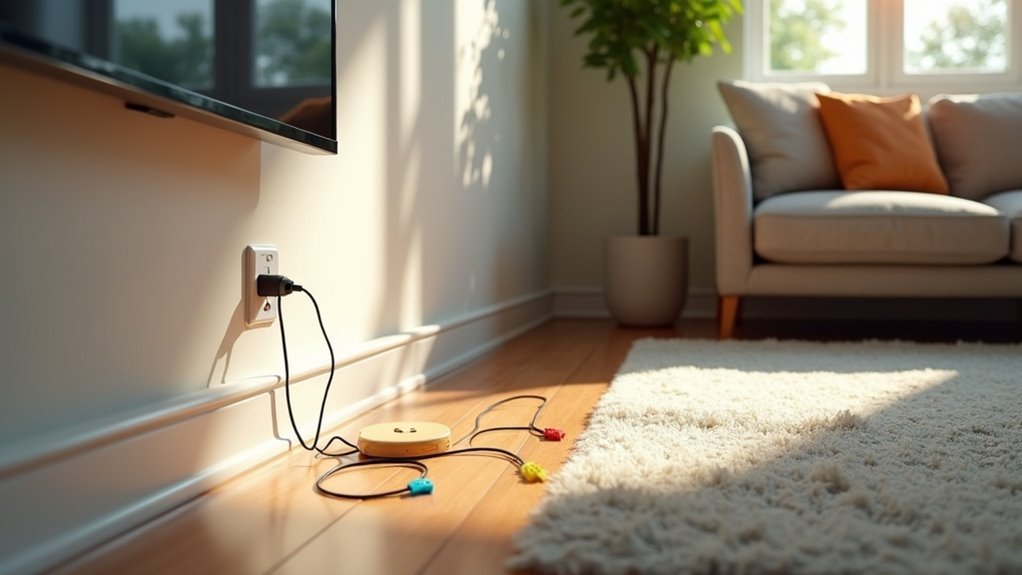
To run extension cords safely indoors while preparing for emergencies, it’s essential to choose the right cord with appropriate gauge and wattage ratings to power your essential survival equipment. Keep cords organized to avoid tripping hazards, especially in high-traffic areas, and ensure they are kept away from water and heat sources to prevent accidents. Always opt for three-prong cords for added safety and inspect them regularly for any signs of wear or damage, as a failure in your electrical setup could impact your preparedness efforts. Avoid overloading outlets by unplugging unnecessary devices, which can lead to circuit overloads during critical times. By following these guidelines, you can create a safer electrical environment in your home, ensuring your survival gear is ready when you need it. Remember, there’s always more to learn about cord safety and preparedness.
Key Takeaways
- Select extension cords with the appropriate gauge rating to meet the power demands of your survival gear and appliances, minimizing the risk of overheating.
- Avoid running cords under carpets or rugs, as this can create fire hazards, which is particularly critical in emergency situations where safety is paramount.
- Regularly inspect cords for wear and damage, and safely dispose of any that show signs of fraying or melted insulation to ensure your preparedness equipment remains reliable.
- Keep cords organized and away from tripping hazards to maintain safe navigation in your living space, especially in the event of an emergency.
- Use three-prong cords for added safety, ensuring they are properly connected to grounded outlets to protect both your equipment and yourself.
Choosing the Right Extension Cord
When selecting the right extension cord for survivalism and prepping, it’s essential to consider the power requirements of your essential appliances and gear.
Ensure the cord can handle the wattage and amperage necessary to prevent overheating and potential fire hazards, especially when operating off-grid or during emergencies.
Ensure your extension cord meets wattage and amperage needs to avoid overheating and fire hazards in emergencies.
Choose cords with an appropriate gauge rating; lower numbers signify thicker wires that can safely manage higher loads in critical situations.
Always select cords that are certified by independent testing laboratories, such as UL or ETL, to ensure they meet safety standards.
Opt for cords equipped with polarized or three-prong plugs, as these designs help minimize the risk of electrical shock.
Be cautious of counterfeit options by checking for clear manufacturer labels that indicate capacity and intended use, ensuring you have reliable and safe equipment in your preparedness arsenal.
Avoiding Foot Traffic
To ensure safety in your survival space, position extension cords along walls or baseboards to minimize tripping hazards during critical situations.
Make sure the cords lie flat on the ground, especially when crossing walkways where quick movement may be necessary.
Securing them with tape can further enhance safety, preventing accidental trips and allowing for efficient maneuvering in emergencies.
Position Along Walls
Positioning extension cords along walls or baseboards is crucial for maintaining a safe environment in your preparedness setup. By keeping cords away from foot traffic, you can significantly reduce tripping hazards and potential electrical accidents during emergencies.
Here are some key safety measures to consider:
- Run cords flat on the ground in low-traffic areas to avoid accidental disconnections.
- Avoid daisy chaining multiple cords to prevent overloading and potential fire hazards.
- Verify that cords are appropriately rated for the devices you intend to use, ensuring reliability during critical times.
- Regularly check for wear and tear to prevent damage that could lead to outages when you need power the most.
Implementing these practices not only enhances safety but also prolongs the life of your cords, ensuring a secure and efficient household in any survival situation.
Secure With Tape
Securing extension cords with tape is an essential practice for survivalists and preppers, especially when preparing your living space for long-term sustainability. Properly securing cords not only protects your setup from potential hazards but also ensures that you can navigate your environment safely during emergencies.
| Step | Purpose | Reminder |
|---|---|---|
| Tape cords to the floor | Indicate presence of power | Prevent accidental disconnection |
| Flat placement | Avoid tripping hazards | Ensure no loops or bends |
| Check taped areas | Guarantee security of cords | Look for signs of wear and tear |
| Avoid high-traffic areas | Minimize risk of damage | Prioritize safety in movement |
| Use visible tape | Enhance visibility in low light | Maintain clear pathways |
Regularly inspect the tape and cords to avoid potential safety hazards and maintain a secure environment. This proactive approach is vital in prepping for any situation that may arise.
Keeping Cords Away From Water and Excess Heat
To ensure the safety and longevity of your extension cords in a survival situation, always avoid using them in wet areas and make sure surfaces are dry before plugging in.
Protect your cords from excessive heat by keeping them out of direct sunlight and ensuring proper airflow.
Being vigilant about these practices can prevent electrical hazards and enhance the durability of your cords, which is crucial for reliable power in emergency scenarios.
Avoid Wet Areas
Keeping extension cords away from wet areas is crucial for survival and safety, as moisture can lead to short circuits and increase the risk of electrocution.
To minimize electrical hazards in your preparedness plans, remember to:
- Ensure that surfaces are dry before connecting cords to maintain safety.
- Refrain from using indoor extension cords outdoors, particularly in wet conditions.
- Choose insulated cords specifically rated for outdoor use when necessary for your survival setup.
- Regularly inspect cords for signs of fraying or melting, as moisture can exacerbate these issues.
Staying vigilant about these precautions is key in any survivalist environment.
Protect From Heat
Moisture isn’t the only factor that can jeopardize the safety of your extension cords; excessive heat poses a significant threat as well. In a survival or prepping scenario, it’s crucial to keep your cords away from heat sources like radiators and heaters to prevent overheating and potential insulation damage. Avoid running them under carpets, which can trap heat and create a fire hazard. Regularly inspect your cords for signs of wear or damage, as frayed insulation can expose wires to both heat and moisture, compromising your preparedness. Store extension cords in a cool, dry place, avoiding direct sunlight to ensure they remain in optimal condition for when you need them most.
| Precautions | Description |
|---|---|
| Avoid Heat Sources | Keep cords away from radiators and heaters. |
| No Carpets | Don’t run cords under rugs or carpets. |
| Inspect Regularly | Look for signs of wear or damage. |
| Store Properly | Keep cords in a cool, dry place. |
| Avoid Moisture | Prevent contact with wet surfaces. |
Ensure Proper Airflow
Ensuring proper airflow around your extension cords is vital for maintaining safety and functionality, especially in survival and prepping scenarios.
To minimize the risk of electrical hazards while preparing for any situation, follow these guidelines:
- Keep extension cords in dry areas to prevent moisture-related issues that could compromise your equipment.
- Avoid running cords under carpets or rugs to prevent overheating, which could lead to fire hazards in emergency situations.
- Don’t expose extension cords to direct sunlight for extended periods, as prolonged exposure can deteriorate insulation and reduce reliability.
- Use cords with proper insulation and gauge ratings to safely handle the required electrical load, ensuring your emergency gear remains operational when you need it most.
Ensuring Proper Use and Storage
To ensure your safety and prolong the lifespan of your extension cords while preparing for emergencies, it’s crucial to unplug them when not in use.
Store your cords in a cool, dry location, avoiding tight coils that can lead to wear and tear or electrical hazards.
Always handle cords by the plug, not the cable, to prevent damage and reduce the risk of electric shock.
If you often rely on extension cords for your survival needs, consider installing additional outlets in your home to enhance overall electrical safety and accessibility.
Checking for Damage Regularly
Regular inspections of your extension cords are crucial for ensuring safety in your survival prep environment. Make it a routine to check for damage before each use, especially when relying on these cords for essential equipment.
Look for:
- Signs of wear like fraying or melted insulation, which could compromise functionality
- Exposed wires that pose a serious risk of electrical fires
- Loose plugs that may lead to overheating, jeopardizing your gear
- Discolored or burned areas, indicating potential failure that could disrupt your preparedness plans
Damaged cords significantly heighten the risk of electric shock and fire, so dispose of any that show these issues immediately.
Preventing Overloading
Overloading an extension cord can create serious hazards, so it’s crucial to understand the limitations of your equipment when preparing for emergencies. Always check the maximum wattage and amperage ratings before use to ensure your setup is safe. Disconnect unnecessary devices to prevent overloading, and stay vigilant for signs like buzzing sounds and dimming lights that indicate potential issues. Avoid daisy chaining extension cords, as this significantly increases the risk of electrical fires, which can be catastrophic in a survival situation. For high-energy devices, consult professionals to properly assess your power supply and ensure it meets your prepping needs. Regularly inspect your cords for damage, as deteriorated cords are more susceptible to hazards and could jeopardize your preparedness efforts.
| Action | Importance |
|---|---|
| Check wattage ratings | Prevents overheating and danger |
| Disconnect extra devices | Reduces overload risk |
| Avoid daisy chaining | Lowers fire hazard |
| Inspect cords regularly | Guarantees safety and reliability |
Using Three-Prong Cords for Safety
Using extension cords with three-prong plugs is essential for ensuring safety while powering your devices in survival and prepping situations. The third prong serves as a ground wire, significantly lowering the risks of electrical shocks and overheating, which can be critical when you need reliable power sources.
To enhance safety during your preparedness endeavors, keep in mind the following guidelines:
- Utilize three-prong cords for heavy-duty appliances essential for your survival needs.
- Regularly inspect cords for loose pins or signs of wear, such as burned plastic, to prevent potential hazards.
- Ensure that all connections fit securely into grounded outlets, especially in emergency setups.
- Steer clear of using two-prong plugs or adapters with three-prong cords, as this can compromise safety.