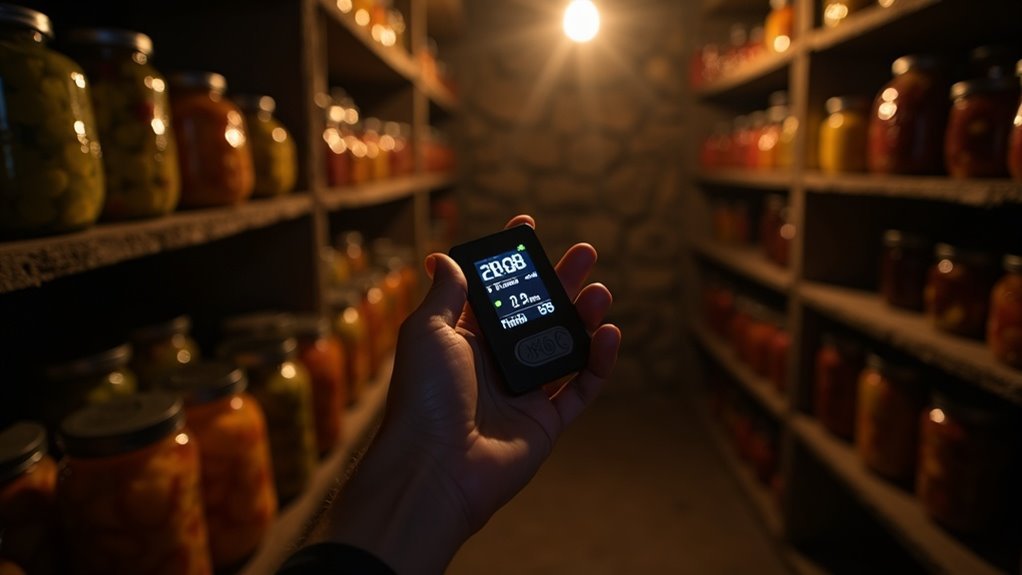
To conduct a humidity check in your root cellar, you’ll need a dependable hygrometer. Place it at various heights to obtain accurate readings and monitor humidity levels consistently. The ideal humidity range is between 85% and 95% to prevent spoilage of your stored food supplies. If humidity levels are too low, introduce containers of water to increase moisture; if they are too high, improve ventilation to promote airflow. Regularly monitor these levels to ensure your produce remains fresh and viable for long-term storage. Stay tuned for more survival tips on maintaining optimal conditions for your essential supplies.
Key Takeaways
- Utilize a digital hygrometer to accurately measure humidity levels in your root cellar, aiming for a range of 85% to 95% to ensure optimal preservation of your food supplies.
- Regularly calibrate your hygrometer to guarantee precise readings, and position it strategically within the cellar for dependable results.
- Monitor humidity levels at various times throughout the day to gain insights into fluctuations and make necessary adjustments to maintain ideal conditions.
- To boost humidity, place containers of water or damp sand inside if levels drop below 85%, helping to create a more stable environment for your stored goods.
- If humidity levels rise above 95%, implement ventilation strategies by opening vents or using moisture-absorbing materials to effectively manage excess moisture and prevent spoilage.
Understanding the Importance of Humidity in Root Cellars
When you store produce in a root cellar, understanding humidity’s role is essential for preserving quality and extending shelf life in a survival situation.
Maintaining humidity levels between 85% and 95% is vital to prevent desiccation, keeping your vegetables fresh and flavorful for long-term storage. High humidity is particularly beneficial for leafy greens and root crops, while low humidity can lead to shriveling and spoilage, which could compromise your food supply.
This moisture balance also helps minimize mold growth and ethylene gas, both of which can accelerate deterioration, threatening your preparedness efforts.
By replicating the ideal temperature and moisture conditions found underground, you significantly enhance food preservation and ensure a reliable food source in times of need.
Regularly monitoring and adjusting humidity will guarantee that your root cellar remains an effective storage solution for your harvest, supporting your survival goals.
Tools Needed for Measuring Humidity
To ensure optimal humidity levels in your root cellar for food preservation, it’s crucial to equip yourself with reliable measuring tools. A hygrometer is a must-have, as it specifically measures humidity levels, keeping them within the ideal range of 85% to 95%. This is vital for maximizing the longevity of your stored food.
For accuracy and ease of use, digital hygrometers are highly recommended. Battery-operated models are particularly suited for root cellars since they eliminate the need for electrical outlets, making them more versatile in off-grid situations.
For those who value convenience, consider investing in a hygrometer with Bluetooth connectivity, which allows you to monitor humidity levels remotely—an excellent feature for preppers who want to keep an eye on their supplies from anywhere.
Invest in a Bluetooth hygrometer to monitor humidity levels remotely, perfect for preppers keeping tabs on their supplies.
Be sure to regularly calibrate your hygrometer according to the manufacturer’s instructions, especially after any significant fluctuations in temperature or humidity, to maintain its accuracy and effectiveness in your survival preparations.
Ideal Humidity Levels for Food Preservation
To ensure the longevity of your stored produce during preparedness efforts, it’s crucial to maintain humidity levels between 85% and 95%.
This optimal range helps prevent desiccation in fruits and vegetables while simultaneously deterring mold growth, which could compromise your food supply.
Importance of Humidity
Humidity is a vital factor in the effectiveness of your root cellar for food preservation, especially in the context of survivalism and prepping. Maintaining an ideal humidity level between 85% and 95% is crucial for keeping your produce fresh and preventing spoilage, which is essential for long-term food storage. High humidity is particularly important for leafy vegetables and root crops, while low humidity can lead to drying out and loss of nutritional value. However, excessive humidity can promote rot, which can compromise your food supply. By understanding the temperature zones of your cellar, you can manage humidity effectively based on where you store different types of food, ensuring you have a reliable source of sustenance in any situation.
| Humidity Level | Effect on Food |
|---|---|
| Below 85% | Drying out |
| 85% – 95% | Ideal for preservation |
| Above 95% | Promotes rot |
| Consistent levels | Extends shelf life and maintains food security |
Humidity Measurement Tools
Maintaining the right humidity levels in your root cellar is essential for effective food storage and preservation, especially in a survival situation.
A hygrometer is a vital tool for accurately measuring humidity, ensuring that you maintain the critical range of 85% to 95%. This measurement is crucial for keeping your stored produce, such as leafy vegetables and root crops, fresh and preventing moisture loss.
Regularly checking the humidity allows you to make timely adjustments, which is key in a prepping scenario. Remember, dry conditions can lead to shriveling and spoilage, while excessive humidity can promote mold growth, jeopardizing your food supply.
Pairing your hygrometer with proper ventilation will help you balance moisture content, creating an ideal environment in your root cellar for long-term food storage.
Being proactive about humidity management is an important aspect of successful survivalism and prepping.
Ideal Humidity Ranges
A humidity level between 85% and 95% is crucial for preserving the quality of your stored produce in a root cellar, especially for those focused on survivalism and prepping.
This ideal humidity range helps retain moisture, preventing desiccation in leafy vegetables and root crops, which is essential for sustaining your food supply during emergencies. By maintaining humidity within this range, you can extend the shelf life of fruits and vegetables, allowing them to stay fresh longer without spoilage.
However, be vigilant; excessively low humidity can dry out your produce, while too much humidity can lead to mold growth, compromising your stockpile.
Regularly checking humidity with a hygrometer is important to ensure the best conditions for the variety of foods stored in your root cellar, ultimately supporting your preparedness efforts.
How to Place Your Hygrometer for Accurate Readings
Where should you position your hygrometer for the most precise readings in your root cellar? Place it at eye level, between 3 to 5 feet off the ground, ensuring it is away from walls, vents, or doors to prevent any interference. Steer clear of direct sunlight, as it can distort humidity readings. For comprehensive monitoring, consider using multiple hygrometers on different shelves to capture fluctuations. Regularly check and calibrate your hygrometer according to the manufacturer’s guidelines to ensure accurate measurements, a crucial step in effective survivalism and prepping.
| Placement Location | Considerations |
|---|---|
| Eye Level | 3 to 5 feet high |
| Away from Walls | Prevents drafts and improves accuracy |
| No Direct Sunlight | Ensures reliable readings |
| Multiple Units | Detects humidity variations for better preparedness |
Adjusting Humidity Levels: Tips and Techniques
To effectively manage humidity levels in your root cellar, which is crucial for food preservation, begin by using a hygrometer to get an accurate reading of moisture levels.
If you discover that the humidity is too low, you can increase moisture by placing containers of water or damp sand inside the cellar. Conversely, if the humidity is too high, enhancing ventilation through open vents or using fans can help create a balanced environment.
Maintaining the right humidity is essential in a survival situation, as it helps to protect your food supplies and ensures their longevity.
Humidity Measurement Tools
Maintaining the right humidity levels in your root cellar is crucial for effective preservation of fruits and vegetables, especially in a survivalist or prepping context. To measure humidity accurately and ensure your food supplies last, consider these essential tools:
- Digital Hygrometer: This tool provides precise humidity readings, with an ideal range of 85% to 95% for optimal storage conditions.
- Temperature and Humidity Monitor: This device tracks both temperature and humidity, allowing you to maintain ideal conditions for your stored produce, which is vital for long-term food security.
- Alerts Feature: Opt for a hygrometer that has an alert system to notify you of any fluctuations. This feature enables you to make timely adjustments, ensuring that your food supply remains safe from spoilage.
Regularly check humidity levels, especially during seasonal changes, to adapt to varying environmental conditions.
With the right tools in your prepping arsenal, you can store your fruits and vegetables more effectively, prolong their shelf life, and bolster your food preservation efforts.
Increasing Humidity Methods
Maintaining the right humidity levels in your root cellar is crucial for preserving the quality of your stored produce, especially in a survival situation where food resources are limited.
To increase humidity, strategically place shallow trays or bowls of water on shelves; as the water evaporates, moisture levels will rise, creating a more favorable environment for your food supplies. You can also utilize damp burlap or towels to cover your produce, which aids in retaining humidity and keeps your food fresher for longer.
For a more DIY approach, create a simple humidifier using a wet sponge in a container. Regularly misting the walls and floor of the root cellar can further boost humidity, but be mindful to avoid excess water that could lead to mold.
Lastly, maintaining a managed compost pile not only enhances humidity naturally but also provides beneficial nutrients for future food storage or gardening needs.
Monitoring Humidity Regularly: Best Practices
How can you ensure your root cellar maintains optimal humidity levels for long-term food preservation? Regular monitoring is crucial for survivalists and preppers. Follow these best practices:
- Invest in reliable hygrometers: Position them at various heights within the cellar to capture diverse humidity levels and ensure a consistent environment for your stored produce.
- Monitor at different times: Check humidity levels throughout the day to account for fluctuations caused by temperature variations, which can impact the preservation of your food supplies.
- Utilize remote monitoring devices: Implement technology that alerts you to any changes in humidity, allowing you to take immediate action and maintain the ideal conditions for your food storage.
Common Humidity Issues and Solutions
Even with regular monitoring, humidity issues can arise in your root cellar, impacting the quality of your stored produce, which is crucial for long-term survival and preparedness.
High humidity levels above 95% can lead to mold growth, so it’s wise to implement ventilation strategies or use moisture-absorbing materials like sawdust to regulate moisture effectively.
Conversely, low humidity levels below 85% can cause food desiccation; therefore, conducting regular checks with a hygrometer is essential for maintaining optimal conditions.
To enhance your food storage capabilities, install vents at opposite ends of the cellar. This setup allows excess moisture to escape while promoting airflow, helping you maintain the ideal humidity range for effective food preservation, a vital aspect of any prepper’s strategy.
Maintaining Optimal Conditions for Long-term Storage
Maintaining optimal conditions in your root cellar is crucial for preserving the quality and longevity of your stored produce, especially for those focused on survivalism and prepping.
To ensure ideal humidity levels, consider these essential steps:
- Monitor humidity: Utilize hygrometers or digital monitors to maintain humidity levels between 85% and 95%, which is vital for long-term food storage.
- Ventilation: Install vents on opposite walls to promote airflow, preventing mold growth while retaining necessary moisture for your supplies.
- Regular checks: Conduct frequent inspections of humidity levels to prevent fluctuations that could lead to spoilage, ensuring your food reserves remain viable during challenging times.