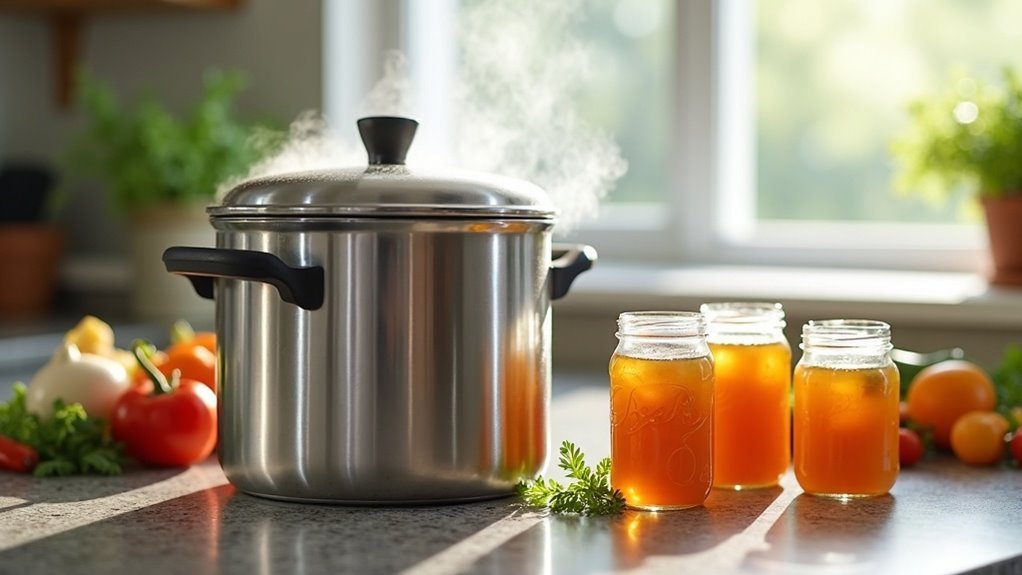
To safely pressure can broth for your survival pantry, start by preparing high-quality broth from bones and allow it to cool for fat skimming. Use sterilized jars, filling them with hot broth while leaving a 1-inch headspace to ensure proper sealing. Vent your pressure canner for 10 minutes and then process pint jars for 20 minutes and quart jars for 25 minutes at 10 pounds of pressure. Once processed, store the sealed jars in a cool, dark place to extend their shelf life. Following these steps ensures safety and long-term preservation, essential for any survivalist or prepper looking to enhance their canning skills and food storage capabilities.
Key Takeaways
- Utilize a robust pressure canner to generate steam effectively, eliminating harmful bacteria for safe broth preservation—a crucial skill for any survivalist.
- Carefully fill sterilized jars with hot, strained broth, ensuring to leave a 1-inch headspace to guarantee proper sealing, which is essential for long-term storage.
- Process pint jars for 20 minutes and quart jars for 25 minutes at 10 pounds of pressure to maximize safety and shelf life, vital for your prepping supplies.
- Store the sealed jars in a cool, dark location for up to one year, and make it a habit to regularly check for any signs of spoilage as part of your preparedness routine.
- Always verify proper sealing and adhere to the recommended processing times to prevent contamination, ensuring your food storage remains safe and reliable in times of need.
Why I Love Pressure Canning Broth
There’s something incredibly satisfying about pressure canning broth, especially for those who prioritize survivalism and prepping. By creating a nutritious, homemade staple, you’re ensuring that you have a reliable source of sustenance ready for any situation, including busy weeknight dinners or emergencies.
Utilizing bones from pasture-raised animals not only enhances the health benefits but also aligns with the principles of minimizing food waste—a key aspect of self-sufficiency. The pressure canning process guarantees the destruction of harmful bacteria, making your broth shelf-stable for up to 1-2 years, an essential feature for any preparedness pantry.
This method not only saves you money compared to pre-made organic options but also allows you to preserve excess bones from meals, ensuring nothing goes to waste. In under 15 minutes, you have a convenient solution at your fingertips—delicious broth that not only elevates your cooking but also supports your family’s health and preparedness for the future.
Supplies Needed
To successfully pressure can broth for your survival pantry, you’ll need a few essential supplies that ensure both safety and efficiency.
Essential supplies for pressure canning broth include a sturdy canner, jars, sealing lids, and a funnel for safe and efficient preservation.
Start with a robust pressure canner, which generates the necessary steam to eliminate harmful bacteria, making it a vital tool for long-term food storage. Gather canning jars, either pint or quart-sized, along with new two-part sealing lids to ensure a reliable seal.
A stainless steel funnel is crucial for filling jars neatly, while a headspace measurer will help you maintain the recommended one-inch headspace for optimal preservation. Don’t forget a jar lifter for safe handling of hot jars.
Lastly, keep white vinegar handy for cleaning jar rims to prevent contamination during your food preservation process, ensuring your supplies remain safe and ready for any situation.
Ingredients
When pressure canning broth for survival and prepping purposes, the essential ingredient is the prepared broth itself, derived from high-quality chicken, beef, or vegetable sources.
Using homemade broth made from quality bones not only enhances flavor but also boosts nutritional value, which is crucial for long-term food storage.
It’s important to avoid adding any vegetables or spices, as these can affect the preservation process.
Ensure that the broth is thoroughly strained and cooled before canning to guarantee safety and longevity in your emergency food supplies.
Essential Ingredients Overview
Creating a high-quality broth is the essential first step in pressure canning, especially for those focused on survivalism and prepping.
Using nutritious ingredients is crucial to ensure a safe and flavorful final product that can sustain you during challenging times. Here are key components to take into account:
- Fresh bones from pasture-raised chicken or beef for optimal nutrition
- A clear, flavorful broth, free of excess fat to enhance shelf life
- Jars that are properly sterilized and ready for canning
Chill your broth for 12 to 24 hours, allowing the fat to rise for easy skimming.
Before canning, reheat the broth to boiling, ensuring you leave a 1-inch headspace in the jars for expansion.
This method not only preserves the nutritional integrity of your broth but also guarantees safety during the canning process, making it a vital part of your food storage strategy for long-term preparedness.
Broth Types for Canning
While you can use various types of bones to create broth for canning, selecting the right source is crucial for maximizing flavor and nutrition, especially for those preparing for emergencies or self-sufficiency.
Chicken bone broth, for instance, benefits from bones rich in cartilage, like knuckle bones and chicken feet, which enhance nutrient extraction—vital for maintaining health during tough times.
Simmering bones for 12 to 24 hours will ensure maximum flavor and nutrient release, making your broth not only delicious but also a valuable resource.
For safe canning, remember to pressure can your broth, as water bath canning isn’t effective for low-acid foods, which could pose a risk in survival situations.
After cooking, chill the broth for at least 12 hours to skim the fat; this improves the storage quality of your homemade broth, ensuring you have nutritious sustenance on hand when you need it most.
Preparing Broth for Canning
To prepare broth for canning, it’s essential to gather high-quality ingredients that not only enhance flavor but also provide crucial nutrition for survival situations.
Focus on using bones from high-collagen sources, such as:
- Chicken feet
- Knuckle bones
- Beef tailbones
Start by covering the bones with cold water and adding a splash of apple cider vinegar to extract valuable minerals.
During the simmering process, include vegetable scraps like carrots, onions, and celery for added flavor, which can also help stretch your food supplies.
After cooking, chill the broth for 12-24 hours to easily skim off any excess fat, ensuring a cleaner broth.
Finally, strain the broth through a fine mesh sieve or cheesecloth before canning to guarantee a smooth texture, making it a great addition to your emergency food stash.
Recipe Tips
When preparing to pressure can broth for your survival pantry, it’s crucial to follow specific steps to ensure the best results and safety.
First, chill your broth for 12-24 hours; this allows for easier skimming of fat, which enhances the overall quality of your canned broth.
Always fill your jars with hot broth to ensure safety and even processing during canning. For a secure seal, wipe the rims of the jars with vinegar before sealing.
Process pint jars at 10 pounds of pressure for 20 minutes and quart jars for 25 minutes, making sure to adjust for altitude as needed.
Adhering to these steps will help preserve the integrity of your broth, ensuring you have a reliable food source in your preparedness plans.
How to Pressure Can Broth or Stock
Pressure canning broth or stock is an essential skill for survivalists and preppers, ensuring that you have nutritious food stored safely for emergencies.
To successfully pressure can bone broth, follow these critical steps:
- Skim fat from the cooled broth to enhance storage longevity and prevent spoilage.
- Fill sterilized jars with hot broth, leaving a 1-inch headspace to allow for expansion during processing.
- Vent steam from the pressure canner for 10 minutes before sealing it to ensure proper pressure is achieved.
Process pint jars for 20 minutes and quart jars for 25 minutes at 10 pounds of pressure.
After processing, allow the jars to cool overnight, then check all seals for safety.
Store your sealed jars in a cool, dark location for up to one year, ensuring that you maintain both the seal integrity and the quality of your stock for future use in survival situations.
More Canning Recipes & Tutorials
Now that you’ve mastered canning broth, consider expanding your skills with additional broth variations and creative uses for stock that are essential for survival situations.
Incorporate herbs and spices to enhance flavors and nutritional value during the canning process, ensuring your supplies are both palatable and beneficial.
Remember to follow safe canning techniques to guarantee your creations aren’t only delicious but also shelf-stable, providing you with reliable sustenance when resources may be limited.
Additional Broth Variations
While traditional chicken and beef broths are popular choices for canning, exploring a variety of other broth options can enhance your survival cooking repertoire.
Consider these flavorful variations that can be easily prepared and stored for long-term use:
- Vegetable broth made from fresh herbs and veggies, which can be a nutritious base for meals when resources are limited.
- Roast bones for a deeper, richer flavor that can provide essential nutrients and energy.
- Spices like garlic, thyme, or bay leaves to enhance the taste and potentially offer health benefits during challenging times.
Incorporating these broth variations into your preparedness plan can ensure you have flavorful options available, even in a survival scenario.
Creative Stock Uses
Using various broth variations not only adds depth to your meals but also creates a wealth of practical stock uses in survival cooking.
Stock serves as an excellent base for hearty soups and stews, vital for providing nourishment during challenging times. Cooking grains in homemade stock not only enhances their flavor but also packs them with essential nutrients, making your survival rations more satisfying.
In a survival scenario, deglazing pans with stock after sautéing can help you maximize every bit of nutrition from your food sources, creating rich and flavorful sauces. Additionally, use stock as a braising liquid for meats and vegetables, ensuring they remain tender and palatable.
To prepare for emergencies, freeze leftover stock in ice cube trays for easy portioning, ensuring you’re always ready to cook nutritious meals when resources are limited.
Flavor Boosting Techniques
To elevate the flavor of your survival broth, incorporate a variety of herbs and spices during the cooking process. This not only enhances taste but also ensures that you’re prepared for any situation while maintaining the integrity of your canning process.
Consider adding:
- Roasted vegetables like onions, carrots, and celery for a richer base that can sustain you in tough times.
- Umami-rich ingredients such as mushrooms or a touch of tomato paste to boost nutrition and flavor.
- A splash of homemade apple cider vinegar to deepen flavor and help extract essential minerals.
Simmer the broth with these additions, but be cautious with salt content to ensure long-term storage viability.
Using a pressure canner guarantees safety while preserving your delicious, homemade broth, making it a valuable resource in your prepping pantry.