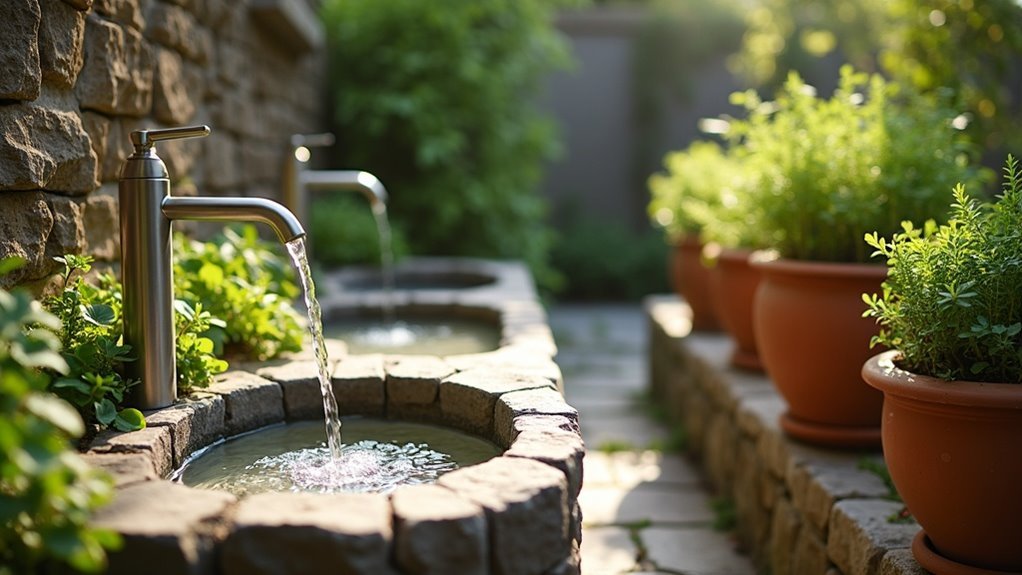
To effectively manage greywater from handwashing in a survival or prepping context, begin by collecting the used water in a five-gallon bucket or a wide bowl, and make sure to empty it regularly to maintain hygiene. Consider setting up a branched greywater system with a diverter valve that directs this water to your garden beds, using biodegradable soaps to ensure the safety of your plants. Regularly check your system for clogs and leaks, and avoid storing greywater for more than 24 hours to prevent contamination. By implementing these strategies, you can enhance your garden’s sustainability, conserve valuable water resources, and better prepare for any situation that may arise. More survival insights await.
Key Takeaways
- Utilize a sturdy five-gallon bucket or a wide stainless steel bowl for efficient collection and frequent emptying to uphold hygiene standards during survival situations.
- Consider installing a diverter valve to channel handwashing water into a branched greywater system, allowing for sustainable irrigation of survival gardens.
- Choose biodegradable, low-sodium soaps to reduce potential harm to plants, ensuring that your survival garden remains productive and eco-friendly.
- Limit the storage of greywater to no more than 24 hours to avoid bacterial growth and unpleasant odors, crucial for maintaining a healthy living environment.
- Frequently inspect and maintain your greywater system for any clogs, leaks, or performance issues, ensuring that your irrigation system is functioning effectively to support your preparedness efforts.
Understanding Greywater and Its Uses
When you wash your hands, the resulting greywater contains fewer contaminants than black water, making it a valuable resource for survivalists and preppers. This greywater can be effectively utilized for irrigation, especially for non-edible plants, supporting your self-sufficiency efforts.
To minimize any potential harm to your plants, choose biodegradable soaps during handwashing.
Opt for biodegradable soaps when washing hands to protect your plants while utilizing greywater effectively.
It’s essential to store this greywater properly; it shouldn’t exceed 24 hours to prevent bacterial growth, especially in a survival situation where hygiene is critical.
When applying greywater to your garden, ensure it promotes absorption into the soil to avoid pooling, which could lead to waterlogging and negatively impact plant health.
Utilizing handwashing greywater not only aids in water conservation but also enhances your garden’s resilience, helping you reduce waste and prepare for future challenges.
Simple Collection Methods for Handwashing Greywater
To effectively manage handwashing greywater in a survival or prepping context, you can implement several simple collection methods that optimize both convenience and efficiency. Using a five-gallon bucket under the sink is a practical solution; just remember to empty it regularly to prevent odors and maintain hygiene. Alternatively, a wide stainless steel bowl simplifies the process of washing and transferring water, making it easy to repurpose greywater for other uses. For outdoor irrigation in a survival garden, consider setting up a constructed wetland system with native pond plants that can help filter and purify the water naturally. Additionally, connecting collection containers with PVC pipes on a slight slope will ensure proper drainage and ease of use. Always avoid using greywater on edible plants to prevent contamination from soaps and detergents, especially in a self-sufficient living scenario.
| Method | Benefits |
|---|---|
| Five-gallon bucket | Easy collection |
| Stainless steel bowl | Simple transfer |
| Constructed wetland system | Natural filtration |
Setting Up a Branched Greywater System
Setting up a branched greywater system for handwashing can greatly enhance your self-sufficiency and irrigation efficiency while reducing dependence on municipal water supplies.
Begin by installing a diverter valve that channels used water from your sink to a network of PVC pipes that lead to mulch basins or garden beds. This sustainable setup allows for effective irrigation without significant alterations to your household plumbing, making it ideal for prepping scenarios.
Use biodegradable soaps to protect plant health and avoid toxic, high-sodium alternatives that could harm your crops.
Ensure regular maintenance by checking for clogs and replenishing mulch in basins, which helps filter and break down organic matter, ultimately supporting a robust and reliable irrigation system for your survival garden.
Maintenance and Monitoring of Your Greywater System
Proper upkeep and vigilant monitoring are vital for the longevity and efficiency of your greywater system, especially in survival situations where resource management is key.
Regular maintenance not only ensures effective water use but also promotes soil health, which is crucial for sustainable living.
- Clean collection containers regularly to prevent bacteria and odors that could compromise your water supply.
- Inspect your filtration systems to ensure they’re functioning at peak performance, as clean water is essential for survival.
- Monitor plants for signs of stress or chemical sensitivity, as healthy plants can provide food and medicinal resources.
- Check for leaks to guarantee efficient drainage, preventing water loss that could be critical in a prepping scenario.
Environmental Considerations and Best Practices
While managing greywater from handwashing can significantly contribute to water conservation in a survival or prepping scenario, it’s crucial to adopt practices that ensure safety and sustainability.
Use biodegradable soaps to minimize environmental impact and protect the health of any plants you may be cultivating for food. Implement a straightforward greywater collection system to capture and direct this water for reuse, maximizing efficiency in your water supply.
Utilize biodegradable soaps and a simple greywater collection system to enhance sustainability and protect your food plants.
Avoid storing greywater for more than 24 hours to prevent bacterial growth and unpleasant odors, which could compromise your health. Be careful not to discharge greywater near natural water sources, as this may lead to contamination of local ecosystems.
Regularly check the health of your plants, and choose low-sodium soap to prevent adverse effects from excessive sodium, ensuring a successful and sustainable survival garden.