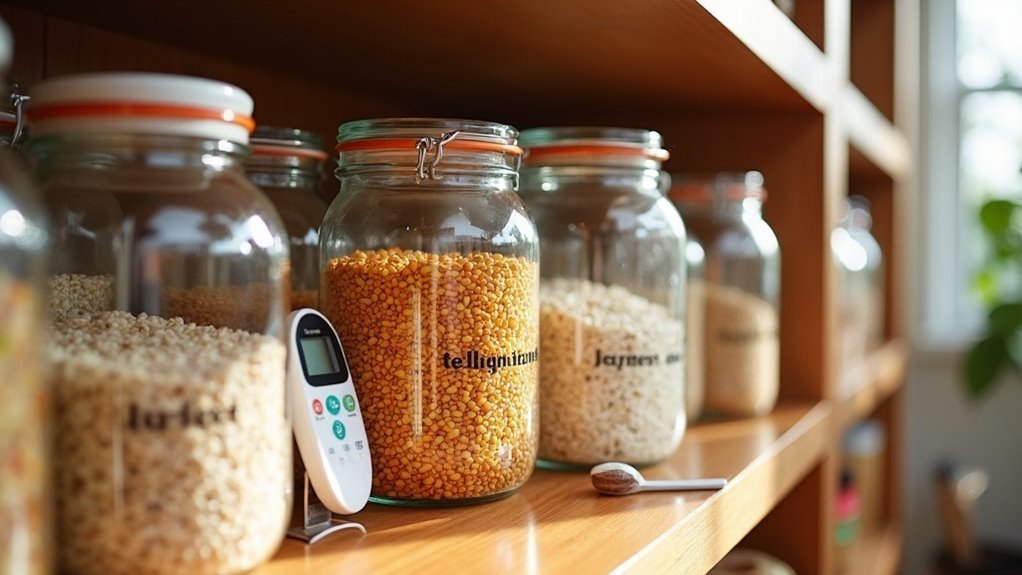
To manage food allergies in your survival storage, begin by designating separate areas for allergenic foods to prevent cross-contamination. Utilize clear, labeled containers and ensure that raw allergenic ingredients are stored below ready-to-eat items. Implement a color-coded system for quick identification, making it easier to locate safe foods in an emergency. Maintain strict inventory controls to ensure freshness, regularly checking expiration dates, and sanitizing surfaces to avoid contamination. Educate everyone in your prepping group or household about safe handling practices, as this knowledge is crucial during times of crisis. As you continue your preparedness journey, you’ll discover more effective strategies to guarantee safety and prevent allergic reactions in your food storage.
Key Takeaways
- Designate specific storage areas and shelves for allergenic foods to minimize cross-contamination risks, especially in emergency preparedness scenarios.
- Use clearly labeled, sealed containers for easy identification and protection of allergenic items in your long-term food storage.
- Implement a color-coding system for containers and labels to quickly identify allergens, aiding in efficient resource management during a crisis.
- Regularly check and update expiration dates and ingredient lists to ensure safety compliance, particularly for stored survival supplies.
- Educate all household members on safe food handling practices to prevent accidental exposure, ensuring that everyone is prepared in case of an emergency.
Importance of Allergy Awareness in Food Storage
When it comes to food storage in the context of survivalism and prepping, being aware of food allergies is crucial, especially since they affect around 8% of children under five.
Proper labeling of allergens in your long-term food supplies can prevent accidental exposure, which is vital for safety in emergency situations. Segregating allergenic items from non-allergenic ones minimizes cross-contamination risks, ensuring that your food stock remains safe for all members of your household.
Proper allergen labeling and segregation in food storage are essential for preventing cross-contamination and ensuring safety for everyone.
It’s important to educate yourself and anyone involved in food preparation on allergen awareness and safe storage practices; improper handling can lead to severe reactions that could jeopardize your survival efforts.
Regularly review ingredient lists from suppliers to stay compliant with allergen safety guidelines, especially if you’re sourcing food for a prepper pantry.
Organizing Your Pantry for Allergy Safety
Organizing your pantry for survival and prepping goes beyond mere awareness; it requires strategic organization to ensure you are prepared for any situation. Designate specific shelves for emergency supplies to avoid cross-contamination with other food items. Use clear, labeled containers for easy identification, especially for critical resources like dehydrated meals and medical supplies. Regularly check expiration dates and rotate your stock to guarantee that essential items are always on hand. Store raw ingredients below ready-to-eat foods to prevent spills and ensure quick access during emergencies. Maintain a thorough inventory list that includes expiration dates and quantities for efficient planning during your shopping trips.
| Pantry Organization | Actionable Steps |
|---|---|
| Designate Safe Areas | Create specific shelves for emergency supplies |
| Label Containers | Use clear labeling for easy identification |
| Rotate Stock | Regularly check expiration dates |
| Store Safely | Keep raw ingredients below prepared foods |
| Maintain Inventory | List all items with expiration dates and quantities |
Safe Storage Practices for Allergenic Foods
To ensure the safe storage of allergenic foods in your prepping and survivalist endeavors, it’s crucial to designate specific storage areas and clearly label them to prevent cross-contamination.
Utilize sealed containers for these foods to shield them from accidental exposure to non-allergenic items.
Designated Allergen Storage Areas
Establishing designated storage areas for essential survival supplies is crucial for preventing mix-ups and ensuring the readiness of individuals during emergencies. Clearly label these areas and separate them from non-essential products. Use color-coded bins to easily identify different categories of supplies, such as food, medical, and gear. Store critical items at the bottom of shelves to avoid any risk of damage to items above them. Implement strict inventory controls, keeping supplies in their original packaging with visible labels. Regular training for team members on storage practices is vital, along with compliance audits.
| Storage Element | Description |
|---|---|
| Color-Coded Bins | Easily identify different categories |
| Bottom Shelf Storage | Prevent damage to critical items |
| Clear Labeling | Ensure visibility of supplies |
| Original Packaging | Maintain item information |
| Team Training | Reinforce effective storage practices |
Clear Labeling Practices
Clear labeling practices are crucial for effective food management in survival situations, particularly when dealing with allergenic foods that pose serious risks due to cross-contamination.
Implement a color-coded labeling system to enable quick identification of allergens among your supplies. Each food container should prominently display its specific allergens, including sub-ingredients, to help prevent allergic reactions during emergencies.
Regularly update these labels and check for supplier changes at least once a year to ensure accuracy. Use sealed containers that feature clear allergen warnings and establish designated storage areas with visible signage to separate allergenic foods from non-allergenic items.
These practices enhance safety and minimize the risk of accidental exposure, providing better protection for individuals with food allergies in a survival context.
Clear Labeling and Color-Coding Strategies
When it comes to managing food allergies in a survival situation, clear labeling and color-coding are essential for safety.
Ensure that all allergenic products are labeled with the allergen name prominently displayed, and implement a color-coding system to help quickly identify and separate different allergens.
Regular updates to both labels and color codes will keep your group informed and prevent any accidental exposure, which is critical during emergencies where resources may be limited.
Being prepared means knowing exactly what each item contains, especially when it comes to food safety in a survival scenario.
Importance of Clear Labeling
Effective labeling of food products is crucial for individuals practicing survivalism and prepping, especially those with food allergies. Clear labeling allows you to quickly identify allergens, ensuring that you can avoid accidental exposure during emergency situations or when stockpiling supplies. Regularly updating labels to reflect ingredient changes is vital for maintaining safety in your preparedness plans. Be sure to emphasize the “Big 8” allergens on your packaging to facilitate informed choices.
| Allergen Type | Example Foods | Labeling Importance |
|---|---|---|
| Milk | Cheese, Yogurt | Highlight for safety |
| Eggs | Mayonnaise, Cakes | Clearly state presence |
| Peanuts | Peanut Butter | Avoid cross-contamination |
| Shellfish | Shrimp, Crab | Essential for allergy info |
| Wheat | Bread, Pasta | Comply with regulations |
In a survival scenario, knowing what foods to avoid can be the difference between safety and a health crisis.
Color-Coding for Safety
To enhance safety in food storage for survival and prepping scenarios, implementing a color-coding system is an invaluable strategy for managing allergens effectively. Use distinct colors for each allergen—like red for peanuts and blue for gluten—to help you and your team quickly identify and segregate food items. This minimizes the risk of cross-contamination in your storage areas, which is crucial when you’re relying on your supplies for long-term survival.
Additionally, consider using color-coded bins to separate allergenic foods from non-allergenic items physically. This won’t only keep your food organization efficient but also ensure that you can quickly access safe options in emergency situations.
Regularly assess and update your color-coding system based on new allergen information or changes in your food supply. Educate your team on the importance of color-coding to guarantee they understand and apply this system in daily operations. This knowledge is essential for maintaining safety and ensuring that your preparedness efforts are as effective as possible.
Labeling Techniques and Tools
Clear labeling is crucial for effective food storage in a survivalist or prepping context, as it ensures that everyone can quickly identify contents, especially during emergencies.
Use bold labels on all food products to highlight any potential allergens, making them easily readable from a distance. Implement a color-coding system that assigns specific colors to each allergen for rapid recognition in stressful situations.
Include both the allergen name and relevant warnings, such as “may contain” statements, to provide comprehensive information. Regularly review and update your labeling techniques to ensure compliance with allergen guidelines and to reflect any changes in your food supplies.
Consider utilizing digital labeling tools for automatic updates, reducing human error and enhancing safety in your preparedness efforts.
Preventing Cross-Contamination in the Kitchen
While managing food allergies in the kitchen can be challenging, preventing cross-contamination is crucial for ensuring the safety of your food supply, especially in a survival scenario.
Start by maintaining separate storage areas for allergenic and non-allergenic foods, clearly labeling them for easy identification. Use color-coded containers and utensils designated for allergy-safe cooking to avoid accidental mixing, especially when resources are limited.
Store raw allergenic foods on lower shelves in the refrigerator to prevent drips onto safe foods, a practice that’s vital when food preservation is paramount.
Implement strict sanitation protocols by thoroughly cleaning surfaces and utensils after handling allergenic ingredients, as cleanliness can help extend the shelf life of your supplies.
Ultimately, educate all members of your household about the importance of washing hands before and after handling allergenic foods to minimize cross-contamination risks, ensuring your emergency food stores remain safe and viable.
Essential Supplies for Allergy Management
When preparing for food allergies in a survival situation, having essential supplies readily available can greatly enhance your safety and peace of mind.
Here are four critical items to consider adding to your preparedness kit:
- Sealed containers for storing allergy-safe foods, which help prevent cross-contamination in your food storage areas during emergencies.
- Color-coded utensils and storage containers to easily identify and organize allergen-free items, making meal preparation more efficient in a crisis.
- Comprehensive inventory lists of all food items, clearly labeled with allergen contents to ensure clarity and avoid accidental exposure when rationing supplies.
- Emergency supply kit stocked with allergy-friendly snacks and essential medications, such as auto-injectors, so you’re always prepared for allergic reactions.
These supplies are crucial for maintaining a safe food environment in survival scenarios and minimizing the risk of accidental exposure to allergens.