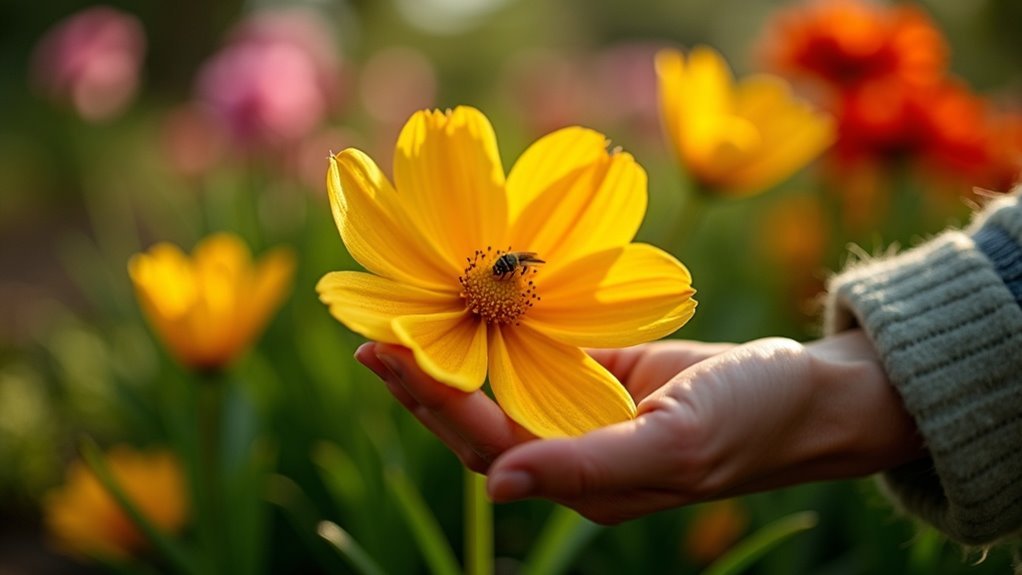
To hand pollinate garden plants for survival gardening, begin by identifying the male and female flowers—male ones are clustered, while female flowers have swollen bases that indicate potential fruit. Use a small brush, Q-tip, or your fingers to transfer pollen from male to female flowers, ideally in the early morning when petals are open. Keep a close watch on your plants for any signs of stress or deficiencies, as maintaining plant health is crucial for a self-sufficient garden. Additionally, consider incorporating a variety of flowering plants to attract more natural pollinators, enhancing your garden’s resilience. There’s much more to learn about ensuring a sustainable and productive garden in your prepping efforts.
Key Takeaways
- Identify male and female flowers; male flowers tend to cluster together, while female flowers have a noticeable swelling at the base indicating potential fruit, which is crucial for self-sustaining gardens.
- Use a small brush, Q-tip, or your fingers to transfer pollen from male flowers to female flowers in cucumbers and squash, ensuring a reliable food source in times of need.
- Pollinate early in the morning when flowers are fully open and pollen is viable for the best results, optimizing your garden’s output for survival situations.
- Ensure a diverse range of flowering plants nearby to attract natural pollinators, which enhances the success of your hand pollination efforts and contributes to a resilient ecosystem.
- Avoid using pesticides during blooming periods to protect pollinators and increase the likelihood of successful fruit set, ensuring a sustainable food supply in your prepping plans.
Understanding Pollination Basics
Pollination is a critical aspect of successful gardening, especially in a survivalist context where self-sufficiency is key. It involves transferring pollen from the male anther to the female stigma of flowers, which is crucial for fruit and seed formation.
To effectively hand pollinate, you must first identify male and female flowers. Certain plants, like tomatoes and peppers, possess both male and female parts and can self-pollinate, making them excellent choices for a prepper’s garden.
However, imperfect flowers, such as cucumbers and squash, have distinct male and female blooms, requiring your intervention to ensure a successful harvest. Understanding your plants’ anatomy and flowering patterns is essential for knowing the right timing and method for transferring pollen, which will maximize fruit set and help secure your food supply, even in challenging conditions.
Why Hand Pollination Is Necessary
While many gardeners depend on natural pollinators to support their plant reproduction, those living in areas with limited insect activity must adopt hand pollination techniques to ensure a successful harvest. This practice is especially crucial for survivalists and preppers, as it allows for greater control over food production in unpredictable environments.
Plants with imperfect flowers, such as cucumbers and squash, require direct pollen transfer between male and female blooms for fruit development. Furthermore, adverse conditions, like high nighttime temperatures, can hinder natural pollination efforts.
Identifying Male and Female Flowers
To successfully hand pollinate your garden plants, especially when prepping for self-sufficiency, it’s crucial to identify male and female flowers accurately. Male flowers typically cluster together and have slender stalks without any developing fruit, while female flowers are solitary, showing a swelling at the base that indicates potential fruit. Understanding the differences can greatly enhance your survival gardening efforts. Here’s a quick comparison:
| Male Flowers | Female Flowers |
|---|---|
| Thinner petals | Swelling at the base (ovary) |
| No immature fruit | Developing fruit (e.g., cucumbers) |
| Found in clusters (e.g., squash) | Usually solitary (e.g., zucchini) |
Recognizing these differences is essential for effective pollination and maximizing your harvest in a survival situation.
Techniques for Hand Pollination
Hand pollination can significantly improve your garden’s yield, which is crucial for self-sufficiency in a survival situation.
For self-pollinating plants like tomatoes, gently shake the flowers or use a small brush to transfer pollen from the male parts to the female parts during the warmest part of the day.
For cross-pollinating plants like cucumbers, you need to identify male and female flowers, remove the male petals, and use your finger or a clean Q-tip to transfer the pollen.
To maximize your chances of fruit set, pollinate multiple female flowers with pollen from different male flowers.
Regular checks on your plants are essential to ensure that you effectively pollinate new blooms as they open, helping you build a reliable food source for your prepping needs.
Tools for Effective Pollination
When you’re preparing to enhance your survival garden’s yield through hand pollination, having the right tools can make a significant difference.
Consider using:
- Watercolor Brush: Gently collects and transfers pollen without harming delicate flowers, ensuring your crops flourish in any situation.
- Q-tips: Ideal for precise application of pollen from male to female flowers, maximizing your chances of a successful harvest.
- Electric Toothbrush: Mimics bee vibrations, aiding in effective pollen transfer, which is crucial for maintaining food security in a survival scenario.
Ensure your tools are clean to prevent cross-contamination, which could jeopardize your food supply.
Utilizing these tools in the morning, when flowers are open and pollen is viable, will optimize your hand pollination efforts and boost your garden’s productivity, preparing you for any challenges ahead.
Timing Your Pollination Efforts
To achieve successful hand pollination in a survival garden, timing is crucial.
Pollinate early in the morning when flowers are fully open, as this is when pollen is most viable.
Monitor the flower opening schedule closely to ensure you’re prepared to act quickly as soon as male flowers bloom, maximizing your harvest in times of need.
Best Time of Day
The best time for pollinating garden plants is in the morning, specifically between 6 a.m. and 11 a.m. During these hours, pollen viability peaks due to cooler temperatures and higher humidity.
Many survival crops, like squash and pumpkin, open in the morning, making your timing critical for successful hand pollination.
Consider these points:
- Early pollination boosts fruit set, which is vital for self-sufficiency.
- Morning humidity enhances pollen movement, increasing your chances of a successful yield.
- Regular visits to your garden can significantly improve your success rate.
For optimal results, check your plants daily during flowering to catch new blooms.
Timing your efforts wisely can lead to a bountiful harvest, ensuring you have enough food reserves for tough times.
Flower Opening Schedule
Understanding the flower opening schedule of your garden plants can significantly enhance your hand pollination efforts, especially in a survivalist or prepping context.
Many garden flowers, particularly squash and pumpkin, tend to bloom in the morning when pollen viability is at its peak. For crops such as tomatoes and peppers, self-pollination can occur throughout the day; however, gently shaking them in the morning can improve pollen transfer, which is crucial for a reliable food supply.
Cucumber flowers also open in the morning, making this an optimal time for hand pollination to ensure fruit development. Regular monitoring of your garden is essential, as many flowers only last a few hours.
If you’re cultivating potted plants as part of your food security strategy, make it a habit to visit daily to hand pollinate newly opened male and female flowers. This diligence can contribute to a sustainable food source, vital for preparation in uncertain times.
Troubleshooting Common Pollination Issues
When engaging in survival gardening, it’s crucial to recognize that suboptimal environmental conditions can lead to common pollination issues in your crops.
To effectively troubleshoot these challenges, consider the following:
- High nighttime temperatures can cause flowers to drop and impede fruit setting, which is vital for sustainable food sources.
- If you notice only male flowers on your plants, think about incorporating pollinator-friendly species into your garden to promote the growth of female flowers, essential for ensuring a bountiful harvest.
- Regularly assess your plants for any signs of stress or nutrient deficiencies, as these factors can significantly affect the success of hand pollination.
Utilize hand pollination techniques to manually transfer pollen from male to female flowers, safeguarding your potential food supply.
Additionally, connect with local survivalist and prepping communities for valuable support and insights on enhancing your gardening endeavors.
Enhancing Pollinator Activity in Your Garden
To enhance pollinator activity in your survival garden, create an environment that not only attracts these vital insects but also supports your self-sufficiency goals.
Plant a diverse range of flowering plants such as sunflowers and marigolds, which are known to attract bees and butterflies while also providing food sources.
Ensure you have a reliable water source, like shallow dishes or rainwater collection systems, to keep pollinators hydrated—this can also serve as a water supply for other survival needs.
Steer clear of pesticides, particularly during blooming periods, to protect these essential insects and maintain a healthy ecosystem.
Incorporate native plants to create a variety of habitats that enhance pollination success for your vegetable crops, ensuring a better yield for your survival garden.
Finally, plan for continuous blooms throughout the growing season to provide a consistent food source, increasing the presence and effectiveness of pollinators in your garden, which is crucial for a sustainable food supply.