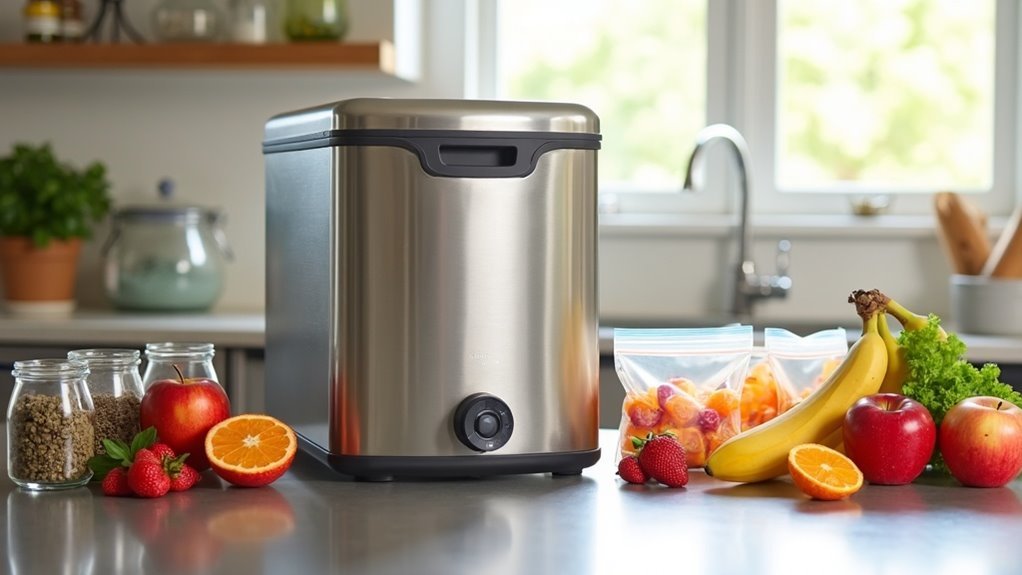
To freeze dry at home safely and effectively for your survival and prepping needs, it’s essential to prioritize food safety by thoroughly washing your hands and using gloves when handling ready-to-eat foods. Familiarize yourself with the freeze-drying process, which involves sublimation and requires maintaining proper temperature and pressure to preserve nutrients and flavor. Begin by preparing your produce: wash and slice it uniformly to ensure even drying. When filling trays, avoid overfilling to promote optimal airflow and drying efficiency. After freeze-drying, store your finished products in moisture-proof containers, incorporating oxygen absorbers to extend shelf life and maintain quality. By adhering to these guidelines, you’ll bolster your food preservation strategies, ensuring you have delicious and nutritious options available for emergencies or long-term storage.
Key Takeaways
- Maintain a sterile environment by washing hands and sanitizing all equipment thoroughly before handling food to reduce the risk of contamination, ensuring your survival supplies remain safe.
- Utilize a reliable freeze dryer that can effectively manage temperature and pressure to ensure maximum moisture removal during the freeze-drying process, which is crucial for long-term food storage.
- Prepare your food carefully by washing, slicing uniformly, and treating light-colored fruits with lemon juice or ascorbic acid to prevent browning before freeze drying, preserving their nutritional value for emergencies.
- Store freeze-dried foods in moisture-proof containers that seal tightly and include oxygen absorbers to maintain quality and extend shelf life, which is vital for your preparedness stockpile.
- Clearly label all containers with the type of food and the packaging date for easy identification. Regularly inspect your stored supplies for any signs of spoilage to ensure your food reserves remain viable for when you need them.
Food Safety Procedures
When engaging in freeze drying at home, especially in the context of survivalism and prepping, adhering to strict food safety procedures is essential to avoid foodborne illnesses.
Begin by ensuring proper food handling; wash your hands thoroughly and utilize disposable gloves, particularly when working with ready-to-eat foods. Store all ingredients at safe temperatures to minimize the risk of contamination throughout the freeze drying process.
It’s crucial to maintain a clean and sanitized kitchen and equipment to reduce the risk of cross-contamination. Regularly wash and sanitize all tools and trays used during the freeze drying process.
Maintaining a clean, sanitized kitchen and equipment is vital to reduce cross-contamination during freeze drying. Regular sanitation of tools is essential.
Keep in mind that freeze drying doesn’t eliminate microorganisms, so maintaining a clean work environment is vital to prevent microbial growth when moisture is reintroduced to the food.
This attention to detail will help ensure your food supplies remain safe and viable for long-term storage, a key consideration for any prepper.
Understanding the Freeze-Drying Process
To grasp the freeze-drying process, especially in the context of survivalism and prepping, it’s crucial to understand the role of sublimation in moisture removal.
By creating a vacuum, ice can transition directly from solid to gas, significantly reducing water content while preserving the food’s structure. This is vital for long-term food storage in emergency situations.
The careful balance of temperature and pressure during this process is essential for achieving high-quality freeze-dried results, making it an invaluable technique for those preparing for self-sufficiency and resilience in challenging circumstances.
Sublimation and Phase Changes
Understanding sublimation and phase changes is crucial for survivalists and preppers looking to preserve food effectively. The freeze-drying process is an excellent method for long-term food storage. During freeze-drying, moisture transitions directly from solid ice to vapor, skipping the liquid phase entirely. This method efficiently removes water while retaining the food’s nutritional integrity.
To begin, food is frozen at temperatures between -30 to -50 degrees Fahrenheit, which helps maintain cell structure and nutrients.
The primary drying phase utilizes sublimation to remove up to 90% of moisture, followed by a secondary drying phase that eliminates an additional 1-2%. This results in a low water activity level, critical for preventing microbial growth, thus enhancing the shelf stability of freeze-dried foods.
With proper freeze-drying techniques, preppers can ensure their food supplies remain safe, nutritious, and ready for use in emergency situations or long-term storage.
Moisture Removal Techniques
Effective moisture removal is crucial in the context of survivalism and food preservation techniques, especially when considering long-term food storage. The freeze-drying process is an invaluable method, utilizing sublimation where ice crystals transition directly to water vapor without melting. In a survival scenario, employing a vacuum pump to lower the pressure in the chamber is vital for facilitating moisture escape, thereby enhancing the shelf stability of preserved food.
During the primary drying stage, it is important to maintain temperatures between -30 to -50°F to successfully remove up to 90% of the moisture content. This is essential for ensuring that food remains safe and edible during extended periods of storage. The secondary drying phase is equally important, as it eliminates the remaining 1-2% of moisture, achieving ideal water activity levels that prevent spoilage.
| Stage | Moisture Removal | Key Factor |
|---|---|---|
| Primary Drying | Up to 90% | Vacuum pressure |
| Secondary Drying | Additional 1-2% | Final moisture level |
| Temperature | -30 to -50°F | Ice crystal integrity |
| Water Vapor | Essential | Shelf stability |
In survival situations, understanding these moisture removal techniques can greatly enhance your food preservation strategies, ensuring you have nutritious options available when resources are scarce.
Temperature and Pressure Effects
Moisture removal techniques are crucial for survivalists and preppers, as they highlight how temperature and pressure significantly influence the freeze-drying process.
By maintaining a temperature between -30 to -50 degrees Fahrenheit, ice crystals remain stable, preventing melting and ensuring that food quality is preserved for long-term storage.
During the primary drying phase, sublimation takes place, effectively removing up to 90% of moisture as ice transitions directly to vapor under low pressure.
It’s essential to manage atmospheric pressure carefully, as it impacts the vapor pressure of water, thereby optimizing the drying rate.
Reliable freeze-drying equipment is key for preppers, as it regulates both temperature and pressure, ensuring efficient moisture removal and preventing spoilage while keeping your food supplies intact and ready for any emergency situation.
Preparing Your Produce
Before you begin freeze drying your produce, it’s crucial to prepare them properly to ensure safety and quality, especially if you’re focused on survivalism and prepping. Follow these essential steps:
- Wash all produce thoroughly to remove dirt, pesticides, and bacteria that could compromise your food supply.
- Slice fruits and vegetables into thin, uniform pieces to facilitate effective moisture removal, which is vital for long-term storage.
- For light-colored fruits, treat them with lemon juice to prevent browning and maintain their appearance.
In addition, most vegetables, such as carrots and green beans, require blanching to preserve their color, texture, and nutritional value, which is critical for sustaining your energy in emergency situations.
Keep in mind that some produce, like tomatoes and peppers, can be freeze dried without blanching. By following these guidelines, you ensure that your freeze dried vegetables remain flavorful and nutrient-rich, contributing to a reliable food reserve for any scenario.
Equipment and Resources Needed
To successfully freeze dry at home for your survivalist and prepping needs, you’ll require a specialized freeze dryer, such as those from Harvest Right, along with a dedicated 20-amp circuit for safe operation.
It’s also crucial to be aware of maintenance requirements, like regular oil changes and thorough cleaning, to ensure the longevity of your equipment.
Let’s delve into the essential tools and maintenance tips that will help you efficiently and effectively preserve food for long-term storage and preparedness.
Essential Equipment Overview
When embarking on the journey of home freeze drying as part of your survival and prepping strategy, having the right equipment is essential for success.
Key tools include:
- Freeze dryer: This machine is vital for controlling temperature and pressure, allowing for effective sublimation of moisture from food, which is crucial for long-term storage.
- Vacuum pump: A necessary component that creates the low-pressure environment required to effectively remove moisture from food, ensuring its preservation.
- Moisture-proof packaging: Utilizing Mylar® bags or vacuum-sealed pouches is vital for guaranteeing the long-term stability and shelf life of your freeze-dried foods.
Additionally, prioritize food safety by using disposable gloves and sanitizing agents during food preparation.
With this essential equipment, you’ll be well-prepared to create nutritious, shelf-stable meals that can support you and your family in any preparedness situation.
Safety and Maintenance Tips
Proper safety and maintenance practices are crucial for ensuring that your freeze dryer operates efficiently and safely, especially for those who prioritize survivalism and prepping.
Always plug your unit into a dedicated 20-amp circuit to avoid potential electrical problems that could disrupt your food preservation efforts. Regular maintenance is vital; change the pump oil every five batches and perform a power flush every ten batches to keep your unit in top condition.
After each use, clean and sanitize food trays, remembering to unplug the equipment beforehand to prevent any accidents.
To maximize the shelf life of your freeze-dried foods, store them in moisture-proof containers, such as MylarⓇ bags or vacuum-sealed packaging. This is essential for maintaining the integrity of your food supply during emergencies.
Additionally, adhere to proper food handling procedures, including thorough handwashing and the use of gloves, to minimize the risk of foodborne illnesses and ensure safe food storage practices.
Being prepared means being proactive about food safety and preservation.
Timing and Filling Trays
Ensuring ideal airflow and even drying is crucial for your survival food preparation. Proper timing and filling of trays are essential in the freeze-drying process, especially for long-term storage of food.
Achieving optimal airflow and uniform drying is vital for effective survival food preparation and long-term storage success.
Follow these guidelines for best results:
- Fill trays in a single layer, allowing space between pieces to maximize airflow and ensure thorough drying.
- Avoid overfilling; this can lead to uneven drying and compromise the quality of your survival food.
- Regularly check moisture levels; if items remain damp after 24 to 27 hours, be prepared to extend the cycle to ensure your food is properly preserved.
Packaging and Storing Freeze-Dried Foods
To ensure the long-term quality and safety of your freeze-dried foods for survival situations, it’s crucial to package them promptly in moisture-proof containers.
Opt for MylarⓇ bags or vacuum-sealed bags to secure optimal long-term storage. Enhance your protection by including food-grade moisture absorbers and oxygen absorbers within the packaging to inhibit microbial growth and maintain quality.
Store these containers in a cool, dry location, and clearly label them with the food type and packaging date for quick identification during emergencies.
Properly sealed containers are vital in preventing moisture reabsorption, which can compromise the safety and longevity of your freeze-dried products, enabling them to retain their nutritional value for years, a key factor in any preparedness plan.
Enjoying Your Freeze-Dried Creations
While enjoying your freeze-dried creations, you’ll discover that they not only preserve their original flavor and nutritional content but also provide a practical solution for snacking and meal preparation in survival situations.
Here’s how to maximize your experience:
- Quickly rehydrate freeze-dried meals by adding hot water, making them ideal for camping trips or emergency situations where access to fresh food is limited.
- Snack on freeze-dried fruits directly for a crunchy, nutrient-packed treat, ensuring you maintain energy levels during your outdoor adventures or prepping endeavors.
- Store your freeze-dried foods in moisture-proof containers to guarantee a long shelf life, ensuring you have reliable food sources ready when you need them.
Regularly check the quality of your freeze-dried creations to prevent spoilage, ensuring safe and enjoyable consumption during critical times.