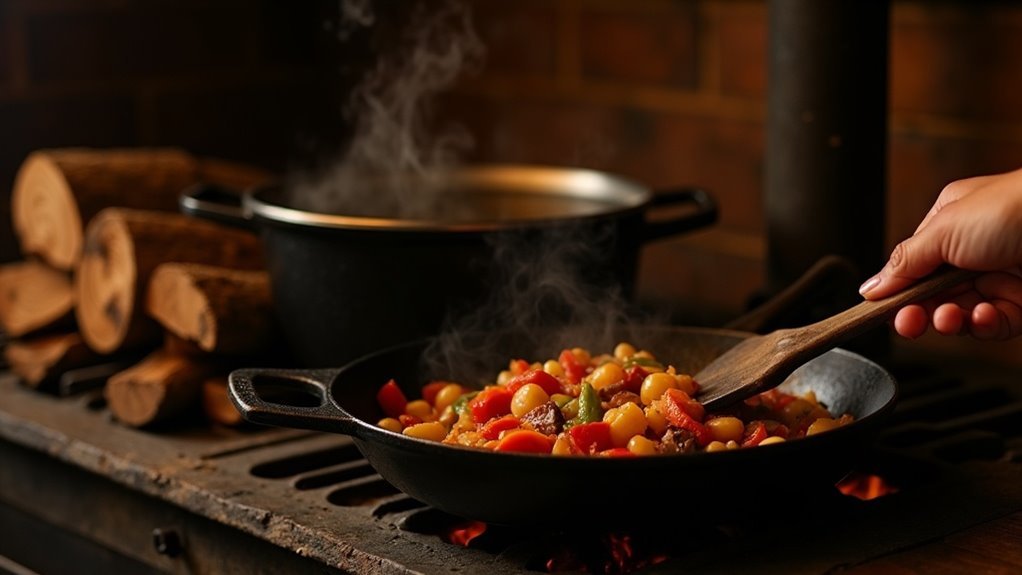
To cook efficiently on a wood stove while embracing survivalism and prepping, it’s essential to choose well-seasoned wood with low moisture content to ensure a steady burn. Optimize your pot placement for ideal heat distribution; utilize hotter zones for boiling water and cooler areas for gentle warming or simmering. For baking, consider using an upside-down cast iron Dutch oven to trap heat effectively, while metal trivets can elevate your dishes for better airflow. Keep an instant-read thermometer on hand to check food doneness and monitor temperature fluctuations, ensuring that your meals are not only delicious but safe as well. There’s a wealth of knowledge to explore in the realm of wood stove cooking, so stay tuned for more survival tips and techniques!
Key Takeaways
- Utilize very dry, well-seasoned wood with 20% moisture or less for optimal burning and efficient heat output, which is crucial in survival situations.
- Keep a close eye on the temperature with an instant-read thermometer, as wood stove heat can vary greatly, and maintaining control is vital for successful cooking in a prepper scenario.
- Elevate your baking items on metal canning bands or trivets to enhance air circulation and ensure even cooking, which is essential for preparing meals during emergencies.
- Strategically place pots according to temperature zones; use the hotter areas for boiling and the cooler zones for simmering to maximize efficiency while cooking off-grid.
- Record your cooking experiences to refine your techniques, improve efficiency, and enhance meal planning for future survival situations.
Selecting the Right Wood for Cooking
When you’re preparing to cook on a wood stove in a survival situation, selecting the right wood is crucial for efficient heat and flavorful results.
Different types of wood offer unique advantages; fir burns hot and lasts longer, making it ideal for sustained cooking during emergencies, while larch creates a very hot fire, useful for quick meals.
Always opt for very dry, well-seasoned wood with a moisture content of 20% or less to maximize heat output and minimize creosote buildup, which is important in a survival scenario.
Listen for the hollow sound when knocking on seasoned wood—it indicates optimal burning conditions.
Combining different wood types can help you manage heat levels effectively, allowing you to adjust for simmering or baking, thus enhancing your cooking experience while prepping for any situation.
Techniques for Baking on a Wood Stove
How can you achieve perfect baked goods on a wood stove, especially in a survival situation?
To create an oven effect, place a cast iron Dutch oven upside down over your items to trap heat for even cooking. Elevate your cookies or pies with metal canning bands or trivets to enhance air circulation and ensure better heat distribution, which is crucial when resources are limited.
Keep a close eye on the temperature, as wood stove heat can fluctuate significantly; using an instant-read thermometer will help you confirm doneness and avoid wasted ingredients.
Experiment with different placements of pots to find the most efficient spots for baking, and remember that baking times may vary in these conditions, so check progress frequently to prevent overcooking.
Mastering these techniques can enhance your self-sufficiency and preparedness in any scenario.
Simmering and Cooking Dinner Efficiently
While you might be accustomed to using a conventional stove for cooking, a wood stove can be a vital asset in survival situations, providing both an efficient and flavorful cooking experience.
Utilize the existing heat by adjusting your cast iron dutch oven’s placement for ideal simmering, ensuring you make the most of your resources. Different temperature zones on the stove allow you to simmer sauces while boiling pasta or other staples nearby, which is crucial when rationing supplies.
Keep a close eye on your dishes, as heat can fluctuate quickly; an instant-read thermometer is invaluable for ensuring perfect doneness, especially when you’re relying on limited food resources.
Document your cooking experiences to refine your techniques and enhance meal planning for future scenarios. Embrace the unique efficiency of wood stove cooking to create delightful meals that sustain you in any situation!
Tips for Effective Woodstove Cooking
Cooking on a wood stove can be an invaluable skill for survivalists and preppers, as it allows you to create meals using readily available resources in challenging situations. To maximize efficiency and flavor in your woodstove cooking, consider these essential tips:
| Tip | Description |
|---|---|
| Use an instant-read thermometer | Ensure precise monitoring of cooking temperatures to avoid undercooking or burning. |
| Optimize pot placement | Place pots on hotter zones for boiling and cooler areas for warming to manage heat effectively. |
| Experiment with wood types | Utilize different types of wood; fir provides long-lasting heat, while larch produces a hotter fire for high-temperature cooking. |
| Elevate baking items | Use metal canning bands or place a cast iron dutch oven upside down to create a makeshift baking environment. |
Document your cooking experiences and techniques to continually improve your efficiency and resilience in woodstove cooking. This will enhance your preparedness for any situation where traditional cooking methods may not be available.
Maintaining Your Wood Stove for Optimal Performance
To maximize the advantages of cooking on a wood stove while preparing for any situation, it’s crucial to maintain it for optimal performance.
Here are three vital steps to ensure consistent heat and reliability:
- Clean the chimney annually with a certified sweep to prevent creosote buildup, which poses a fire hazard and could jeopardize your safety in an emergency.
- Keep stove doors closed during operation to retain heat and enhance efficiency, which is especially important in survival scenarios to conserve resources and maintain a warm environment.
- Use well-seasoned firewood with a moisture content of 20% or less to ensure efficient burning, reduce creosote accumulation, and make the most of your fuel supply in times of need.
Fire Starting and Maintenance Strategies
Starting a fire on a wood stove is a vital skill for survivalists and preppers, as it ensures warmth, cooking capabilities, and a means to signal for help. To ignite your fire efficiently, begin with small, seasoned wood pieces to create a hot blaze. Keep the stove door slightly open for the first minute to enhance airflow, which is crucial for a strong flame. Be mindful not to overload the stove; this can lead to smoke and creosote buildup, increasing fire hazards. Regularly monitor the damper settings to optimize combustion and heat output. Additionally, prioritize safety by scheduling annual chimney cleanings to prevent dangerous blockages. For quick reference, here’s a practical table:
| Step | Action | Frequency |
|---|---|---|
| Fire Starting | Use small wood | Every fire |
| Airflow Management | Adjust damper | As needed |
| Stove Maintenance | Avoid overload | Every use |
| Chimney Cleaning | Professional check | Annually |
This knowledge not only enhances your readiness but also contributes to a sustainable living strategy.
Safety Practices for Wood Stove Cooking
When utilizing a wood stove in a survival or prepping context, prioritizing safety practices is crucial for ensuring a reliable cooking experience, particularly when managing varying heat levels.
Adhere to these vital guidelines to maintain safety and efficiency:
- Ensure your wood stove is installed according to manufacturer guidelines and local regulations, which is essential for proper ventilation and minimizing fire hazards in a survival scenario.
- Regularly clean your chimney and schedule annual inspections to prevent creosote buildup, as this can lead to chimney fires that could jeopardize your safety and resources.
- Always use seasoned firewood for burning; this not only minimizes toxic fumes but also reduces fire risks associated with improperly chosen materials, ensuring a safer cooking environment during any emergency situation.