You can’t safely can butter due to safety concerns, but you can preserve alternatives like ghee, which is shelf-stable and perfect for your survival pantry. Instead of canning, focus on high-acid foods, such as fruits or pickles, that are safe for boiling water canning—these are essential for long-term food storage. Make sure to equip yourself with reliable jars and a pressure canner when necessary to ensure your food supplies remain safe and nutritious. If you want to dive deeper into preserving fats and alternative methods, there’s a wealth of knowledge to explore that can enhance your prepping skills.
Key Takeaways
- Canning butter is not recommended due to safety concerns; instead, focus on high-acid foods like fruits and pickles that are more suitable for long-term storage.
- Consider using freezing, refrigeration, or vacuum sealing as effective methods for preserving butter and butter substitutes in your preparedness plan.
- Ghee is a stable option that can last months at room temperature if stored properly in airtight containers, making it a great choice for survival situations.
- Ensure jars and equipment are thoroughly sanitized before any preservation efforts, and always adhere to USDA guidelines for safe food preservation practices to minimize risks.
- Connect with community resources and forums dedicated to survivalism and prepping to share and learn about effective, safe food storage and preservation techniques that can enhance your preparedness strategy.
Understanding Canning Regulations for Butter Alternatives
When considering canning butter alternatives for survival and prepping purposes, it’s crucial to fully understand the regulations surrounding the process.
The USDA advises against canning butter due to safety concerns, as there are no established guidelines for doing so. Low-acid foods like butter require pressure canning to prevent botulism, which traditional boiling water canning can’t achieve.
The USDA warns against canning butter due to safety risks and the absence of established guidelines.
Ghee, a safer alternative with lower moisture content, is more suitable for long-term preservation and can be a valuable addition to your food storage supplies.
Always follow tested recipes and guidelines from reputable sources when preserving butter alternatives to ensure safety and effectiveness.
Additionally, keep in mind your altitude; pressure canning times and pressures may vary, so make the necessary adjustments to guarantee safety in your home canning efforts.
Being informed and prepared is essential for successful survivalism and prepping.
Recommended High-Acid Foods for Canning
When prepping for survival, selecting high-acid foods for canning is crucial for ensuring safety and longevity.
Fruits such as apples and berries, along with acidified tomatoes and pickles, are excellent choices for preserving essential nutrition.
Make sure you have the proper canning equipment to secure a successful process, as these preserved foods can be vital for sustenance during challenging times.
Safe Canning Practices
To ensure the safety and quality of your canned goods in a survival situation, it’s crucial to focus on high-acid foods, which are optimal for home canning.
Fruits such as apples, peaches, and strawberries, along with pickled vegetables and tomatoes, make excellent choices. These foods have a pH of 4.6 or lower, which helps inhibit the growth of harmful bacteria.
For these items, utilize boiling water canning instead of a pressure canner, which is typically reserved for low-acid foods. Always adhere to tested recipes from reliable sources to guarantee safe canning practices.
Additionally, incorporating acidifiers like lemon juice can enhance safety, ensuring your canned goods are both shelf-stable and nutritious, essential for preparedness in any survival scenario.
Popular High-Acid Foods
High-acid foods are crucial for survivalist canning methods, as they not only preserve well but also enhance the flavor and nutritional value of your emergency food supplies.
Foods like tomatoes, strawberries, peaches, and apples, which have a pH of 4.6 or lower, are ideal for long-term storage. You can preserve these fruits as whole pieces, sauces, or jams to diversify your pantry.
Pickling vegetables such as cucumbers and carrots not only boosts their flavor but also extends their shelf life, making them essential for your prepper stockpile.
Citrus fruits like lemons and limes can be canned as juice or slices, providing a tangy addition to your preserves.
Always adhere to USDA guidelines for safe food preservation to minimize the risk of foodborne illnesses, ensuring your supplies remain safe and nutritious during emergencies.
Canning Equipment Essentials
Canning equipment essentials are crucial for survivalists and preppers looking to ensure their high-acid foods are preserved safely and effectively.
Reliable canning jars, preferably in ½ pint or pint sizes, are ideal for manageable servings that can be easily stored and accessed during emergencies. A high-quality pressure canner is essential for safely processing low-acid foods, while fruits, pickles, and tomatoes can be effectively preserved using a boiling water canner.
Always use new lids to guarantee an airtight seal, as reused lids may compromise food safety and lead to spoilage.
Before starting your canning process, it’s vital to thoroughly sanitize jars and equipment, either with hot soapy water or in a dishwasher, to prevent contamination and ensure the longevity of your canned goods, which can be a lifeline in challenging situations.
Proper Canning Techniques and Equipment
To safely can butter alternatives, it’s vital to use the right equipment and follow proper procedures, especially for those preparing for self-sufficiency.
Start by ensuring your jars are sterilized and your pressure canner is high-quality, as this method is essential for eliminating harmful bacteria that could compromise your food supply.
You’ll also need to pay attention to jar preparation techniques, including leaving adequate headspace and using new lids for a secure seal, ensuring your stockpile remains viable and safe for consumption during times of need.
Essential Canning Equipment
When you’re ready to can butter alternatives as part of your survival and prepping strategy, having the right equipment is crucial for ensuring both safety and quality.
You’ll need a high-quality pressure canner to process low-acid foods, capable of reaching temperatures above 240°F to eliminate harmful bacteria.
Opt for ½ pint or pint jars with new lids for proper sealing and portion control, which is essential for long-term storage.
Remember to sterilize your jars by baking them at 250°F for 20 minutes to eliminate any contaminants, ensuring your food remains safe for consumption during emergencies.
Pot holders and a cookie sheet are indispensable for safely handling hot jars, while vinegar can be used to clean jar rims before sealing, preventing spoilage.
Proper equipment is vital for a successful canning experience, enhancing your self-sufficiency and food security.
Safe Canning Procedures
Having the right equipment is crucial for safe canning procedures, especially when it comes to preserving butter alternatives for your survival stockpile.
Use a high-quality pressure canner to can butter, as boiling water canning isn’t safe due to its pH level.
Begin by sterilizing jars and lids; bake them at 250°F for 20 minutes to eliminate any bacteria that could compromise your food supply.
Fill preheated jars with melted butter, leaving one inch of headspace to ensure proper sealing, then secure with hot lids.
Process jars in the pressure canner for 75 minutes (pints) or 90 minutes (quarts) at the appropriate pressure for your altitude.
Always use new lids to maintain food safety, and avoid stacking jars during storage to prevent damage and ensure long-lasting preservation for your emergency supplies.
Jar Preparation Techniques
Proper jar preparation is crucial for successful canning, particularly when preserving butter alternatives for long-term storage.
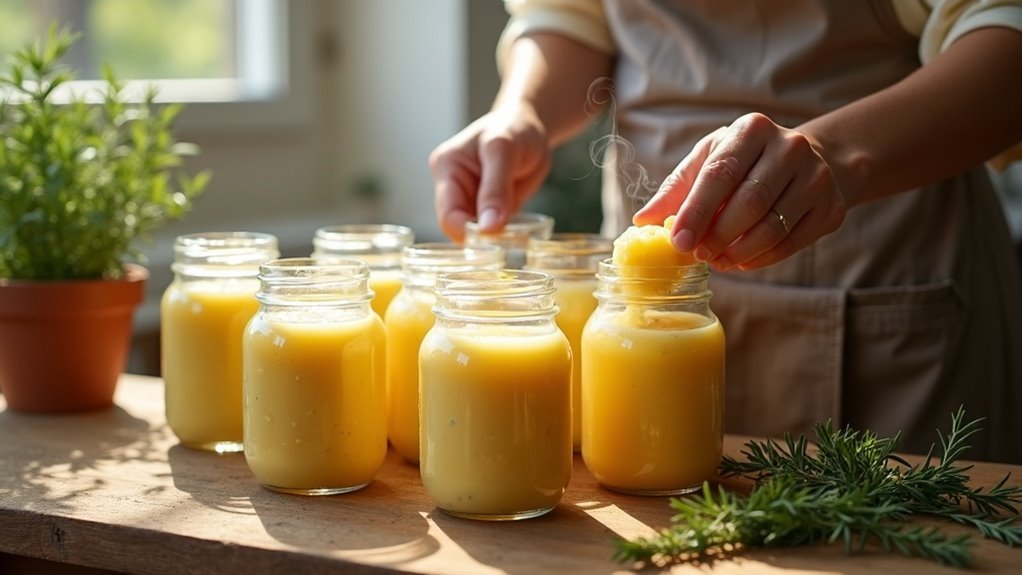
Start by sterilizing your jars in the oven at 250°F for 20 minutes to eliminate any potential contaminants that could compromise your supplies. When it’s time to fill the jars, ensure they’re hot; this helps maintain the temperature and promotes an airtight seal essential for long-term preservation.
Always use new lids, as reused ones may not provide the safety needed for your stored goods. Fill the jars with melted butter, leaving an inch of headspace to allow for expansion during the cooling process.
Lastly, wipe the rims with vinegar to remove any residue, which increases the chances of achieving a secure seal. Adhering to these jar preparation techniques ensures that your canning efforts are safe, effective, and ready for any survival situation.
Alternative Preservation Methods
While canning is a well-known method for preserving food, alternative preservation methods for butter and its substitutes can be equally effective, often providing added safety for survivalists and preppers.
| Method | Storage Duration | Notes |
|---|---|---|
| Freezing | Several months | Portion into ice cube trays for easy use |
| Refrigerating | About three weeks | Best for homemade butter only, keep in mind limited shelf life |
| Vacuum Sealing | Extended shelf life | Removes air to prevent spoilage, ideal for long-term storage |
Ghee is particularly resilient, lasting for months at room temperature if sealed properly. By utilizing these preservation methods, you can confidently stockpile butter alternatives, ensuring you have essential fat sources during emergencies without relying on traditional canning methods.
Safety Considerations in Home Canning
When considering home canning for butter alternatives in the context of survivalism and prepping, it’s crucial to prioritize safety to prevent foodborne illnesses.
Here are key safety considerations to keep in mind:
- Avoid water bath canning for low-acid foods like clarified butter, as it poses an increased risk of botulism, which can compromise your long-term food supply.
- Always sanitize your jars properly; contaminants can jeopardize the safety of your canned products and undermine your preparedness efforts.
- Consider canning high-acid foods instead, as they’re safer for home preservation and more reliable for sustaining your food reserves.
Resources for Approved Canning Recipes
Finding reliable resources for approved canning recipes is essential for ensuring the safety and quality of your preserved foods, particularly in a survival or prepping context.
Since the USDA doesn’t recommend canning butter at home, consider alternatives like ghee, which can be safely canned using established pressure canning guidelines.
For approved canning recipes, the National Center for Home Food Preservation is an invaluable resource, offering tested methods to guarantee food safety.
Always prioritize high-acid foods for boiling water canning, and remember that low-acid foods like butter require pressure canning to prevent botulism.
Engaging with community forums dedicated to survivalism and prepping can provide additional insights, but always adhere to safety guidelines to ensure your food storage practices are both effective and safe.