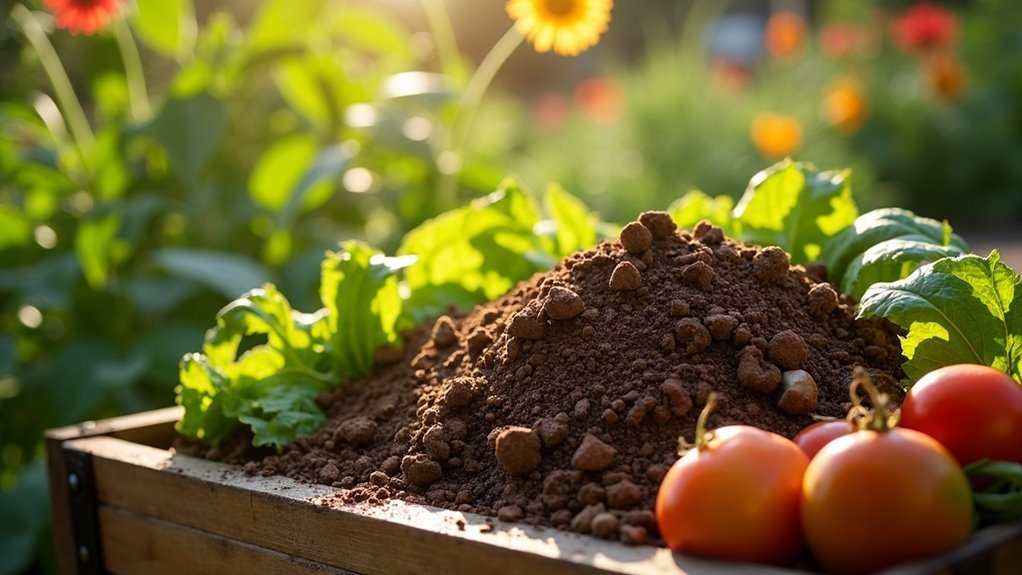
To safely compost spoiled produce in a survivalist or prepping context, it’s essential to maintain a balanced mix of nitrogen-rich greens and carbon-rich browns in a 3:1 ratio. Chopping food scraps into smaller pieces can accelerate decomposition, ensuring that your compost is ready when you need it for gardening or soil enhancement. Layer the scraps with dry materials like leaves to create a balanced compost pile.
It’s crucial to keep the compost damp but not soggy to deter pests that could attract unwanted wildlife. Regularly turning the pile not only aerates it but also disrupts any potential pest habitats, reducing the risk of attracting critters that could pose a threat to your food supply. Proper compost management minimizes health risks and ensures you have a reliable source of nutrient-rich compost for your survival garden. There’s much more to discover about effective composting techniques that can support your prepping efforts.
Key Takeaways
- Always wear gloves and work in a well-ventilated area to protect yourself from respiratory issues while handling moldy foods, especially in survival situations where health is paramount.
- Chop spoiled produce into smaller pieces to speed up decomposition, making it easier to manage in a survival composting scenario while enhancing aeration in the compost pile.
- Layer spoiled produce with brown materials like leaves or straw to maintain a balanced carbon-to-nitrogen ratio, which is crucial for efficient composting and helps mask odors that could attract unwanted pests.
- Keep the compost pile moist but not soggy, as excessive moisture can create a breeding ground for pests, posing a risk to your survival resources.
- Regularly turn the compost to ensure even breakdown and disrupt any potential pest habitats, promoting healthy decomposition vital for your self-sustaining environment.
Understanding Composting Basics
When you start your journey in survivalism and prepping, it’s crucial to grasp the essential principles that make your efforts effective.
Composting food waste can be a valuable skill, as it transforms organic matter into nutrient-rich compost, which can enhance soil for growing your own food while also minimizing reliance on commercial fertilizers.
Achieving a proper balance of nitrogen-rich greens and carbon-rich browns is vital, as this balance promotes efficient decomposition. Moreover, maintaining adequate moisture, temperature, and aeration is key to speeding up the breakdown of materials.
In light of recent food waste laws, there’s an increasing emphasis on improving composting practices, which can help you recycle nutrients back into the soil for sustainable food production.
Benefits and Risks of Composting Spoiled Produce
Composting spoiled produce can be a valuable practice for survivalists and preppers, offering important benefits such as recycling nutrients back into the soil. This not only enhances soil health but also helps reduce reliance on chemical fertilizers, which can be crucial during times of crisis when resources may be limited.
However, it’s essential to recognize potential risks associated with composting, such as mold health concerns and the attraction of pests. If not managed properly, these risks can pose challenges to your preparedness efforts.
Nutrient Recycling Benefits
Nutrient recycling through the composting of spoiled produce is a crucial strategy for survivalists and preppers focused on sustainability and self-sufficiency. By incorporating moldy foods into your compost piles, you not only enrich your soil with organic matter and beneficial microorganisms but also create a resilient ecosystem that supports your survival garden.
This process accelerates decomposition, enhances microbial diversity, and improves soil structure, which is essential for growing nutritious food in a self-reliant manner.
With only 5% of wasted food composted in the U.S., there’s a significant opportunity for preppers to reduce landfill waste and greenhouse gas emissions while fortifying their homesteads.
Properly composted spoiled produce can lessen the reliance on chemical fertilizers, serving as a natural soil amendment that promotes sustainable gardening practices. This approach not only leads to healthier soils but also ensures a more abundant and resilient food supply, vital for long-term preparedness.
Mold Health Concerns
Spoiled produce, while useful for enriching your compost and enhancing self-sufficiency, can pose potential health risks that shouldn’t be ignored.
Moldy foods can accelerate the composting process, but if not handled with care, they may lead to respiratory issues and allergies. To minimize these risks while prepping your compost, follow these essential precautions: always wear gloves, work in well-ventilated areas, and wash your hands thoroughly after handling moldy materials.
It’s important to note that not all molds are harmful; many are benign and can outcompete pathogens, thus fostering a healthier compost ecosystem.
Furthermore, by maintaining proper moisture, temperature, and aeration in your compost pile, you can reduce excessive mold growth, ensuring a safe and effective composting process that supports your survivalist efforts.
Pest Attraction Management
Incorporating spoiled produce into your compost can significantly boost nutrient density for your survival garden, but it also poses the risk of attracting unwanted pests like rats and raccoons.
To effectively manage pest attraction, layer spoiled produce with brown materials such as dried leaves or straw, which helps mask odors and keeps your compost discreet. Regularly turning your compost pile not only aerates it but also disrupts potential pest habitats, ensuring that your compost remains a safe and effective resource for your survival needs.
Maintaining a balanced ratio of green to brown materials (about 3:1) is crucial for healthy decomposition, which is essential for enriching the soil you rely on for sustainable food production.
Keep moisture levels in check to avoid unpleasant odors that could draw in wildlife, and opt for secure compost bins to protect your compost from intruders. Additionally, burying food scraps deep within the pile minimizes wildlife attraction, helping you maintain a low profile while you prep for self-sufficiency.
Practical Tips for Composting Spoiled Produce
Composting spoiled produce can be a valuable practice for survivalists and preppers looking to reduce waste and enrich their gardens. To make the most of your composting efforts, follow these essential steps.
Begin by chopping moldy foods and kitchen scraps into smaller pieces; this will accelerate decomposition and create a more manageable compost pile. Layer these scraps with dry materials like leaves or straw to achieve a balanced carbon-to-nitrogen ratio, which helps minimize unpleasant odors.
Chop moldy foods and kitchen scraps into smaller pieces, layering with dry materials to enhance decomposition and reduce odors.
It’s crucial to keep your compost heap damp, but be cautious not to make it soggy, as excess moisture can attract pests and lead to unwanted infestations. Regularly turning the pile is also important; this aerates the compost and promotes even breakdown, ensuring that your organic matter decomposes efficiently.
Lastly, when adding spoiled produce, avoid dumping large quantities at once. Instead, mix them with other organic materials to maintain a healthy balance, which will help prevent mold issues and create a more effective composting system.
Signs of Mold Problems in Compost
How can you tell if your compost is experiencing mold problems? Look for unpleasant odors, which often indicate anaerobic conditions, and check for visible mold, like black mold, on composted materials.
If decomposition rates slow down, that’s another sign your compost may be struggling. Maintaining the right moisture levels is essential; overly wet compost can promote mold growth, while the ideal moisture should feel like a damp sponge.
To ensure your compost remains healthy and effective for survival use, regularly turn the compost in your bins to improve aeration. If you detect mold, promptly adjust moisture levels and aeration to restore healthy composting conditions.
This will help you maintain a reliable source of nutrient-rich compost for your prepping and survival needs.
Myths About Composting Spoiled Produce
Many survivalists and preppers fall prey to myths surrounding composting spoiled produce, fearing it can ruin their compost pile or spread diseases. In reality, moldy foods can be safe and beneficial, enhancing microbial activity in the composting process, which is crucial for self-sufficiency.
Many misconceptions suggest all mold is harmful, but most molds contribute positively when managed correctly, making them valuable for creating nutrient-rich compost.
Most molds are beneficial when managed properly, turning spoiled produce into nutrient-rich compost.
While some worry about attracting pests, proper compost management—like burying scraps and balancing carbon-to-nitrogen ratios—can effectively mitigate this risk.
Instead of avoiding spoiled produce, consider it an enriching element when layered with browns, as it can support your preparedness efforts.
A well-maintained compost pile’s high temperatures effectively eliminate harmful pathogens, making composting spoiled items a safe and sustainable practice for those committed to survivalism.
Alternative Composting Methods for Small Spaces
For those living in small spaces and focused on self-sufficiency, finding efficient composting solutions is crucial for sustainable living. Innovative methods can provide practical alternatives that align with survivalism and prepping principles. Consider these alternative composting methods:
| Method | Description | Benefits |
|---|---|---|
| Bokashi | Ferments food scraps, minimizing odors | Perfect for indoor use, quick composting in emergencies |
| Vermicomposting | Utilizes red worms for nutrient-rich castings | Space-efficient and effective for nutrient recycling |
| Multi-sided bins | Allows access to multiple composting stages easily | Compact and organized for small spaces, ideal for prepping |
| Spot composting | Bury scraps in garden plots or potted plants | Enriches soil naturally, provides a sustainable resource |
| Community drop-off | Participate in local food waste management | Build connections and resources within the prepping community |
These methods empower you to manage food waste effectively while enhancing your self-reliance in small living spaces.