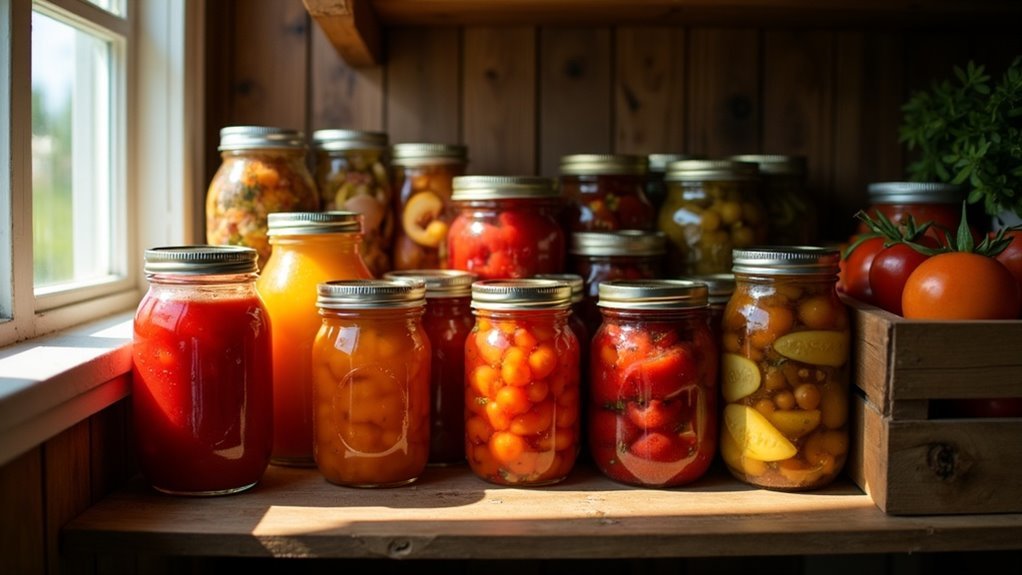
To effectively rotate your home canned goods for survival preparedness, implement a First-In, First-Out (FIFO) system. Begin by clearly labeling each can with its canning date using a permanent marker on the lid. Organize your cans so that the oldest are at the front and the newer ones are placed behind. Regularly assess your inventory and prioritize consuming older items first. This approach not only minimizes waste but also ensures you have the freshest supplies available for emergencies. As you delve deeper into survivalism, you’ll uncover even more strategies for efficient organization and inventory management.
Key Takeaways
- Clearly label all canned goods with the canning date for efficient tracking and to ensure you have a reliable food supply.
- Implement the FIFO (First In, First Out) system by placing newer items behind older ones, ensuring that your older stock is utilized first in times of need.
- Regularly review your inventory to prioritize the use of older items during meal preparation, which is critical for maintaining a sustainable food supply.
- Organize canned goods by type—such as vegetables, proteins, and fruits—to enhance access and streamline your food storage system.
- Frequently update adhesive labels to maintain accuracy in dating, ensuring that you are always aware of the shelf life of your supplies.
Importance of a First-In, First-Out (FIFO) System
When organizing your pantry for survivalism and prepping, implementing a First-In, First-Out (FIFO) system is essential for managing your home canned goods effectively.
This approach ensures that you utilize the oldest canned items first, which is vital for reducing waste and maximizing the longevity of your food supplies. By placing new canned goods behind older ones, you naturally promote the consumption of items based on their canning date, allowing you to maintain a fresh and reliable inventory.
Regularly rotating your stock according to FIFO not only keeps your food storage current but also enhances your efficiency in meal preparation and grocery shopping during times of crisis. This systematic method supports strategic food management and minimizes the risk of consuming expired items, ensuring that you’re always prepared for any situation.
Effective Canning Date Marking Techniques
When it comes to effective canning date marking techniques for survivalism and prepping, clear labeling is essential for easy identification.
Always write the canning date on the lid with a Sharpie or label the side of the can for better visibility.
Implementing a FIFO (First In, First Out) system will ensure you use your oldest items first, reducing the risk of spoilage and maximizing your food supply in times of need.
Proper organization of your canned goods can be a crucial part of your preparedness strategy.
Clear Labeling Methods
How can you ensure your home canned goods remain organized and easily identifiable in your survival stockpile? Clear labeling is crucial for effective management of your canned food supplies. Here are some methods to enhance visibility and ensure you can quickly find what you need:
- Use a Sharpie to write the canning date on the lid for easy readability, ensuring you know when each item was preserved.
- Mark the outside label instead of the top to prevent wear and maintain clarity, which is vital in a survival situation.
- Regularly check and update your adhesive labels to keep your inventory accurate and prepared for any scenario.
- Focus on canning dates rather than best by dates to prioritize using older items first, ensuring your supplies are fresh and ready when needed.
Implementing these practices will help guarantee your canned goods are always identifiable and effectively rotated, keeping your survival stockpile in optimal condition.
FIFO System Implementation
Clear labeling methods set the foundation for effective organization in your survival pantry, but implementing a FIFO (First In, First Out) system takes this a step further.
To ensure proper food storage for long-term preparedness, write canning dates on the lid of each jar with a Sharpie, marking the outside label for easy visibility.
Arrange your canned goods with the oldest items in front, encouraging you to use them first and minimizing waste.
Regularly check and update your inventory, placing new items behind older ones to keep your stock rotated.
Focus on consuming the older items to maintain a fresh and safe food supply, allowing you to be ready for any situation without worrying about best by or expiration dates.
This practice not only helps in efficient consumption but also reinforces your self-sufficiency in times of crisis.
Visibility and Accessibility
Effective visibility and accessibility in your pantry is crucial for survivalists and preppers, especially when it comes to organizing your canned goods.
Here are some strategic labeling techniques to ensure your supplies are easy to identify and access:
- Use a Sharpie to mark the canning date on the lid, making it clear when each item was preserved.
- Label the outside of each jar or can clearly for quick identification during emergencies.
- Implement a FIFO (First In, First Out) system by placing new items behind older ones to ensure you’re using your supplies in the correct order.
- Regularly check and update your markings to maintain an organized inventory.
These techniques help minimize waste and ensure you’re always aware of your available resources, making meal prep and emergency planning more efficient.
Organizing Your Canned Goods by Type and Date
To enhance your preparedness and survival strategy, organizing your canned goods by type and date is crucial.
Begin by categorizing your items—group vegetables, fruits, and proteins together for easy access during emergencies. Implement a FIFO (First In, First Out) system by placing newer cans behind older ones, ensuring you utilize the oldest items first, thus minimizing waste and maximizing your food supply.
Organize your canned goods by type, using a FIFO system to minimize waste and maximize your food supply during emergencies.
Clearly label each can with its purchase or canning date for quick identification, helping you prioritize which items need to be consumed sooner. Additionally, improve accessibility by sorting within categories, such as grouping all tomato products together.
Regularly update your inventory list to accurately reflect your stock, enabling efficient meal planning and ensuring you’re always prepared for unforeseen circumstances.
Inventory Management for Canned Foods
How can you ensure your canned goods are always ready for your survival needs? Effective inventory management is crucial for prepping. Follow these steps to stay organized:
- Group your canned goods by category, noting purchase and expiration dates to ensure you’re using the freshest supplies.
- Regularly update your inventory list, tracking quantities and types to maintain a well-stocked pantry for emergencies.
- Prioritize using the oldest items first to minimize waste and maximize your resources.
- Schedule quarterly inventory checks to remove expired goods and adjust your organization, ensuring you’re always prepared for any situation.
Storage Area Considerations for Easy Access
When organizing your storage area for survival supplies, it’s crucial to evaluate the available space carefully to create an efficient layout for your canned goods.
Use shelving units strategically to accommodate various can sizes, ensuring that essential items are easily accessible during emergencies. Consider the height and depth of each shelf for optimal stacking and retrieval, especially in high-stress situations.
Group similar products together in designated categories such as vegetables, fruits, and proteins to streamline access when time is of the essence. Utilize bins for smaller items to enhance organization and reduce search time.
Regularly assess your arrangement and adjust based on usage patterns to maintain accessibility and efficiency in your storage area, ensuring you’re always prepared for any scenario.
Community Engagement and Sharing Best Practices
Engaging with fellow survivalists and preppers not only enriches your knowledge but also enhances your food storage practices through shared experiences and insights.
To foster community engagement and discover best practices, consider the following:
- Attend local workshops to learn from experienced canners and food preservation experts.
- Share your challenges with food storage for collective problem-solving and support.
- Exchange tips on maximizing pantry space and optimizing storage techniques for long-term preparedness.
- Utilize social media platforms or forums dedicated to survivalism to broaden discussions on food storage methods and techniques.