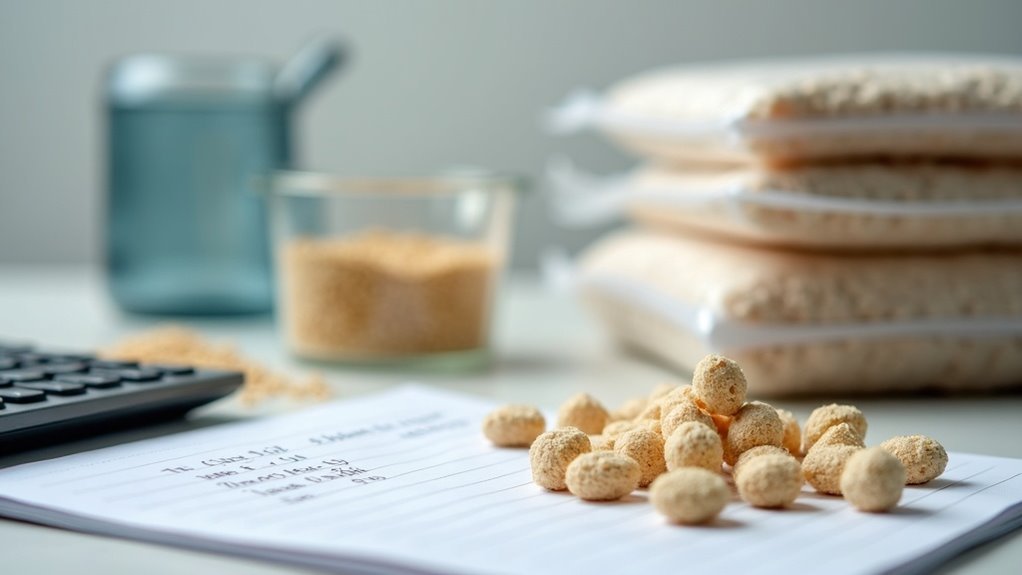
To quickly calculate your oxygen absorber needs for effective food storage in your prepping supplies, start by measuring the container volume in cc. Weigh your food to determine its volume, then subtract this from the container volume to find the residual air volume. Multiply this by 0.21 to estimate the oxygen content, which is crucial for preserving your food long-term. Choose an appropriate oxygen absorber size based on this estimated oxygen volume, and then divide by the absorber’s capacity to figure out how many you need. This streamlined approach will enhance your food preservation efforts and ensure you are well-prepared for any situation.
Key Takeaways
- Measure the container’s total volume in cubic centimeters (cc) to establish a baseline for your emergency food storage calculations.
- Weigh the food in grams to determine its volume, assuming 1 gram equals approximately 1 cc for dry items, which is crucial for maximizing your survival supplies.
- Calculate the residual air volume by subtracting the food volume from the container volume, as minimizing air is key to prolonging shelf life.
- Multiply the residual air volume by 0.21 to find the oxygen content in the container, ensuring that your food is protected from oxidation.
- Select the appropriate oxygen absorber size based on the calculated oxygen volume and consult size charts for guidance, to ensure your preparedness plan is effective and your food remains safe for long-term storage.
Understanding Container Volume
When calculating the oxygen absorber needs for food storage in survival situations, understanding container volume is crucial for effective prepping.
Start by referencing standard sizes, like a #10 can (3,980 cc) or a 5-gallon plastic pail (18,942 cc). It’s important to account for headspace—this empty space above the packed food can significantly affect oxygen levels, which is critical for long-term food preservation.
Calculate the residual air volume by subtracting the food’s volume (converted to cc) from the total container volume. For example, if you fill a 5-gallon bucket with rice, multiply the residual air volume by 0.21 to determine the oxygen volume, as oxygen makes up 21% of air.
Accurate measurements are essential to ensure the effective use of oxygen absorbers, maximizing your food storage and enhancing your survival preparedness.
Weighing Food and Converting to Volume
Weighing food accurately is crucial for ensuring optimal food storage and long-term preservation, especially for survivalists and preppers.
Begin by measuring your food product in grams to determine the total weight, which is essential for calculating the correct number of oxygen absorbers needed. If necessary, convert this weight into volume using the specific gravity of the food.
Accurate measurement in grams is key to determining the right amount of oxygen absorbers for food preservation.
For dry items such as rice and flour, a rough estimate is that 1 gram equals approximately 1 cc. Understanding the volume occupied by your food helps you calculate the residual air volume in your storage container, making it easier to determine the appropriate amount of oxygen absorbers.
This meticulous process is vital for maintaining the quality and longevity of your food supplies, ensuring you’re well-prepared for any situation.
Calculating Residual Air Volume
To accurately calculate the residual air volume in your storage container for survival supplies, start by determining the container’s total volume using standard measurements or geometric formulas.
Once you have this total volume, weigh the food product in grams. Subtract the weight of the food product from the total container volume to find the residual air volume.
This volume indicates the air that must be managed for effective long-term preservation of your supplies.
To assess the oxygen content, multiply this residual air volume by 0.21, as oxygen makes up approximately 21% of air.
This calculation will help you evaluate the number of oxygen absorbers needed to ensure optimal storage conditions for your emergency provisions.
Estimating Oxygen Content
To estimate the oxygen content in your storage container for survival and prepping purposes, begin by calculating the container’s volume in cubic centimeters based on its dimensions.
Next, take into account the weight of the food product to determine the residual air volume, as this void space is crucial for an accurate oxygen assessment.
Finally, multiply the residual air volume by 0.21 to quantify the total oxygen present.
This information will guide you in selecting the appropriate oxygen absorber packets, ensuring your food supplies remain in optimal condition for long-term storage.
Container Volume Calculation
Calculating the container volume is crucial for effectively managing oxygen levels in your survival storage units. Follow these steps for an accurate calculation:
- Identify the container’s volume, such as a #10 can (3,980 cc) or a 5-gallon pail (18,942 cc), which are common choices for long-term food storage.
- Determine the residual air volume by subtracting the weight of your stored food (converted to cc) from the container volume. This step ensures you know how much air is left in the container.
- Estimate the oxygen volume by multiplying the residual air volume by 0.21, as oxygen makes up about 21% of the air.
By following these calculations, you’ll ensure the proper use of CC Oxygen Absorbers, optimizing the storage environment for your food supplies.
Accurate volume assessment is essential for successful oxygen management, helping you prepare effectively for any situation.
Food Weight Consideration
Understanding the weight of the food stored in your container is crucial for survival and prepping, as it directly affects the oxygen levels within it. To estimate the oxygen content, weigh the food in grams and convert that weight into volume using its specific gravity.
Keep in mind that oxygen makes up about 21% of the air volume in the container. For example, if you fill a 5-gallon bucket with 3,000 grams of rice, calculate the container’s volume (approximately 22,730.4 cc) and determine the residual air after accounting for the food weight.
Denser foods trap less air, which means you’ll need fewer oxygen absorbers. It’s essential to assess the void space accurately to ensure effective food storage management, especially in your preparedness plans.
Selecting the Right Oxygen Absorber Size
When selecting the right oxygen absorber size for your survival supplies, it’s crucial to consider the container’s volume, the type of food you’re storing, and the absorbers’ capacity.
This ensures that you effectively remove oxygen, preserving the quality of your provisions for long-term storage.
Accurate calculations and size charts will assist you in choosing the ideal absorbers for various storage scenarios, helping you maintain your food reserves in optimal condition for when you may need them most.
Container Size Considerations
Selecting the right size of oxygen absorbers is crucial for effective food preservation, especially in the context of survivalism and prepping. To ensure optimal results, it’s essential to choose the appropriate size based on your container’s volume.
Keep these factors in mind:
- Container Size: When storing food in larger containers, like 6-gallon buckets, it’s necessary to use more oxygen absorbers compared to smaller containers, such as 1-gallon buckets. Proper sizing is vital for maximizing the lifespan of your supplies.
- Food Density: Denser foods, such as grains or beans, trap less air, which means you’ll require fewer absorbers. Understanding the density of your stored food can help you determine the right amount of absorbers to use.
- Size Chart Reference: Make use of a comprehensive size chart designed for prepping to guide you in selecting the appropriate number of absorbers for your specific needs.
Food Type Impact
The type of food you store is crucial for survivalism and prepping, as it influences the number of oxygen absorbers required for effective preservation. Dense foods, such as flour and rice, trap less air and oxygen, meaning you need fewer packets for preservation. On the other hand, less dense foods like pasta and beans trap more air, which means you’ll need to use additional absorbers. Understanding these distinctions is essential for optimizing your long-term food storage strategy in a survival situation.
| Food Type | Density Level | Recommended Absorbers |
|---|---|---|
| Flour | Dense | 1 |
| Rice | Dense | 1 |
| Pasta | Less Dense | 2 |
| Beans | Less Dense | 2 |
| Grains | Dense | 1 |
Absorber Capacity Selection
Choosing the right size of oxygen absorber is essential for effective food preservation, especially in the context of survivalism and prepping. Follow these steps to ensure you make the ideal selection for your long-term food storage:
- Calculate Container Volume: Determine the total volume of your storage container, such as a Mylar bag or bucket. This is crucial for understanding how much food you can store and how much oxygen needs to be removed.
- Estimate Residual Air: Consider the weight of the food; remember that oxygen comprises about 21% of the air. This calculation will help you gauge how much oxygen needs to be absorbed to protect your food from spoilage and extend its shelf life.
- Refer to Size Chart: Utilize a comprehensive size chart for oxygen absorbers, such as 30 cc, 50 cc, or 100 cc, based on your calculated needs. Selecting the appropriate size will ensure that your food remains safe and nutritious during storage.
For tailored advice on your specific food storage situation, don’t hesitate to reach out to us. This will help you achieve the best preservation strategy for your emergency food supplies.
Practical Examples for Quick Calculations
Calculating the number of oxygen absorbers you need for your long-term food storage is essential for survivalism and prepping.
Start by determining the volume of your storage container in cubic centimeters by multiplying its length, width, and height. For example, a standard 5-gallon pail has a capacity of approximately 18,942 cc.
Next, subtract the weight of the food you plan to store (in grams) from this volume to find the residual air volume. To figure out the amount of oxygen in that air, multiply the residual volume by 0.21.
Finally, divide this oxygen volume by the absorption capacity of your chosen oxygen absorber. For instance, if you use a 300 cc absorber, you can easily calculate how many packets are required to ensure your food remains preserved and safe for consumption over the long term.