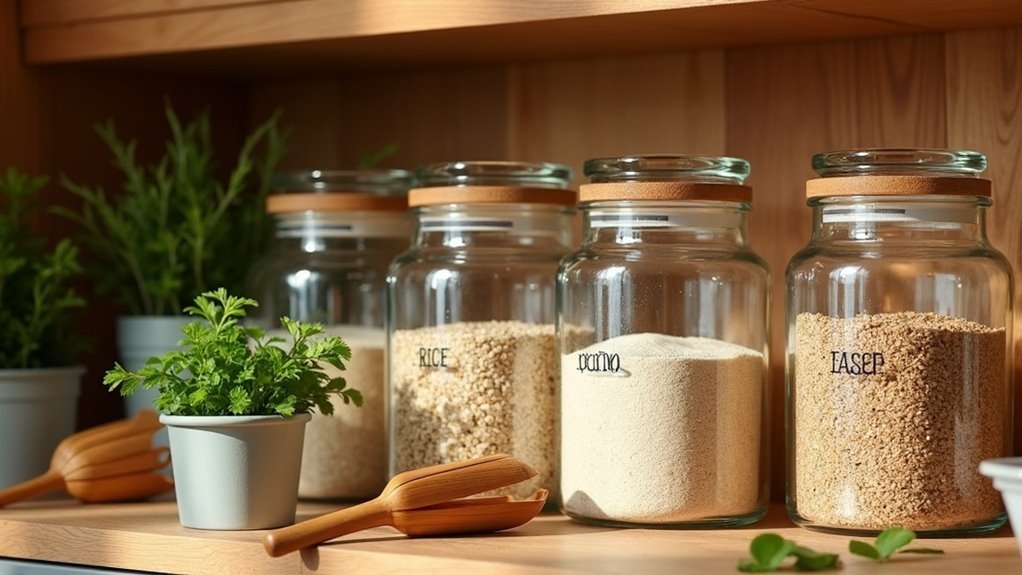
To store gluten-free staples effectively for survival situations, invest in airtight containers to maintain freshness and prevent spoilage, which is crucial when resources are limited. Organize your pantry by grouping similar foods together, ensuring that opened products are at the front for quick access during emergencies. Clearly label everything, including the product name, date opened, and best-by date, to minimize cross-contact risks and ensure you use items before they expire. For longer shelf-life, refrigerate opened gluten-free items like bread and grains. By following these tips, you’ll maximize the freshness and longevity of your gluten-free staples, ensuring you’re prepared for any situation.
Key Takeaways
- Invest in airtight containers to extend the shelf-life of gluten-free staples and protect against pests, ensuring your survival supplies remain viable.
- Organize your pantry items by grouping gluten-free staples like grains and legumes for easy access and visibility during emergencies.
- Clearly label all products with names, opened dates, and best-by dates to effectively manage your inventory and avoid running out of essential supplies.
- Refrigerate opened gluten-free bread and grains in airtight containers to maintain freshness and prevent spoilage, crucial for long-term preparedness.
- Store gluten-free pasta and homemade granola in cool, dry places to safeguard against moisture and pests, keeping your survival food supplies secure.
Invest in Proper Storage Containers
When preparing for survival and ensuring your pantry is stocked with gluten-free staples, investing in proper storage containers is essential for maintaining freshness and preventing spoilage.
Opt for airtight containers to extend the shelf-life of gluten-free products, which can spoil faster than traditional foods. Choosing clear glass or sturdy plastic options enhances visibility, making it easier to navigate your gluten-free pantry during emergencies.
Choose airtight containers for gluten-free products to enhance visibility and extend shelf-life, ensuring easy access during emergencies.
For opened products, like Schär items, be sure to store them in airtight containers to keep your food fresh, as they lack preservatives. Refrigerate opened gluten-free bread for 2-3 days in an airtight container to prevent drying out.
Prioritizing proper storage not only protects your gluten-free foods from pests but also maximizes freshness, ensuring you have reliable supplies when you need them most.
Arrange Your Pantry Practically
After investing in proper storage containers, it’s crucial to arrange your pantry with survival and preparedness in mind.
Organize essential staples, such as grains, legumes, and freeze-dried foods, together to streamline meal prep during emergencies. Place opened containers at the front for easy access and keep sealed items behind to maintain freshness.
Utilize shelving at eye level for visibility and consider using hanging baskets or bins for additional storage of survival gear and supplies.
Maintain an inventory list to quickly assess your stock, ensuring you always have critical items on hand for any situation.
This practical arrangement not only enhances your preparedness efforts but also makes food storage efficient and accessible, ensuring you’re ready for whatever challenges may arise.
Label Things Thoroughly
Thorough labeling of your survival supplies is essential for effective inventory management. Clearly indicating the product name, date opened, and best-by date helps track freshness and usability. Use a label maker or chalkboard paint for visibility. In shared preparedness spaces, specify gluten-free items to minimize cross-contact risks, especially if you have dietary restrictions. Organizing all gluten-free foods in one section with clear labels streamlines access and reduces accidental gluten exposure. Here’s a simple labeling guide for your survival pantry:
| Product Name | Date Opened | Best-By Date |
|---|---|---|
| Gluten-Free Flour | 01/01/2023 | 01/01/2024 |
| Rice Pasta | 02/15/2023 | 02/15/2025 |
| Quinoa | 03/10/2023 | 03/10/2025 |
| Almond Flour | 04/01/2023 | 04/01/2024 |
| Gluten-Free Oats | 05/05/2023 | 05/05/2025 |
This meticulous approach ensures that you are always prepared with safe and usable food supplies.
Consider Refrigerating Gluten-Free Foods
Storing gluten-free foods properly is essential for survivalists and preppers, especially since these products often lack preservatives. Proper refrigeration can significantly extend the lifespan and freshness of gluten-free items, ensuring you maintain a sustainable food supply.
Proper refrigeration of gluten-free foods is vital for survivalists, enhancing freshness and extending shelf life without preservatives.
Here are some vital tips for effective refrigeration:
- Store opened gluten-free bread in airtight containers to keep it fresh for 2-3 days, reducing waste during emergencies.
- Keep gluten-free grains and flours in the fridge to help prevent spoilage and maintain their viability for long-term storage.
- Use airtight containers to protect against moisture and odors, which can compromise food quality.
- Consume opened gluten-free products within 2-3 days for optimal quality, ensuring that no resources are wasted.
Implementing proper refrigeration practices is crucial for ensuring your gluten-free foods remain safe, nutritious, and ready for use in any survival situation.
6 Quick Tips for Keeping Popular Gluten-Free Foods Fresh
To keep your popular gluten-free foods fresh for your survival pantry, it’s essential to employ some straightforward yet effective storage techniques.
Store gluten-free pasta in a cool, dry place, ensuring it’s sealed to protect it from moisture and pests.
Homemade granola should be kept in an airtight container to maintain its crunch and nutritional value.
If you purchase in bulk for long-term storage, consider freezing high-fat items like nuts and seeds to prevent rancidity and extend their shelf life.
For leafy greens, utilize a lidded container lined with a paper towel to absorb excess moisture, which can lead to spoilage.
Rinse berries in a water-vinegar solution before refrigerating to eliminate mold spores and extend their freshness.
Lastly, keep fresh herbs upright in water in the fridge to prolong their life, except for basil, which thrives at room temperature and can be a great addition for flavor in your survival meals.