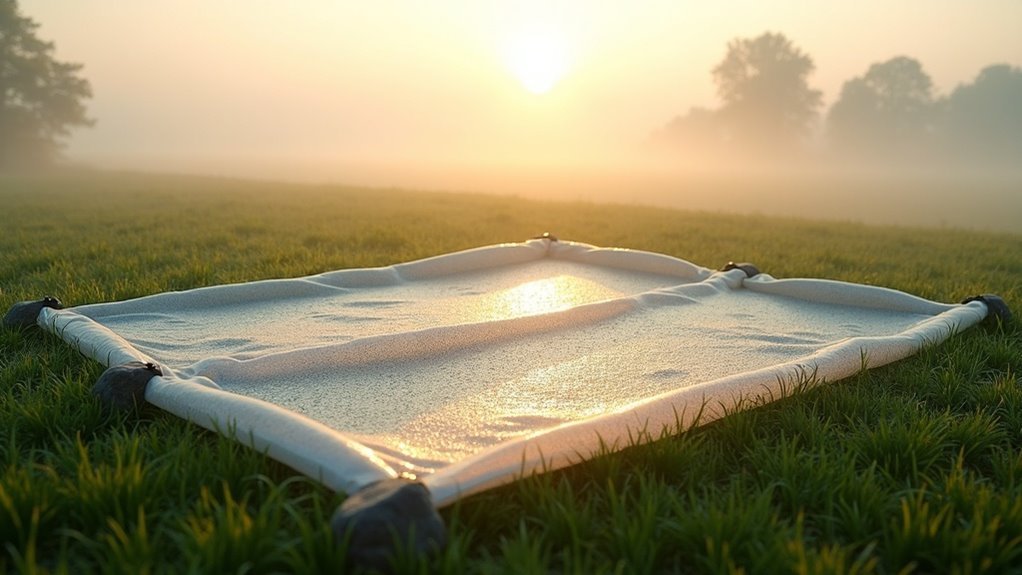
To effectively collect dew using tarps in a survival situation, select a waterproof and UV-resistant tarp. Position it flat in a cool, clear area during high humidity nights, ensuring to create a central depression to funnel the moisture towards the center. Secure the edges of the tarp to prevent it from blowing away and to maintain stability. It’s crucial to collect the dew early in the morning, before the sunlight evaporates it, and transfer it quickly to clean containers to avoid any risk of contamination. Regularly check and maintain your tarp to ensure its continued effectiveness for your water collection needs. Additionally, explore further tips on maximizing your dew harvest and maintaining your setup for optimal survival preparedness.
Key Takeaways
- Select a durable, waterproof, and UV-resistant tarp with a smooth surface to enhance condensation and maximize dew collection efficiency, which is essential for survival situations.
- Set up the tarp on a clear night when temperatures drop and humidity levels are high, ensuring it is positioned away from any obstructions that could hinder dew formation.
- Secure the tarp’s edges with stakes or heavy rocks, creating a slight depression in the center to effectively funnel dew towards a designated collection point, crucial for water sourcing in emergency scenarios.
- Collect dew early in the morning before the sun rises and evaporates the moisture, transferring it immediately into clean storage containers to ensure safe drinking water.
- Regularly inspect and clean your tarp after each use to maintain its effectiveness for future dew collection and prevent any risk of contamination, which is vital for long-term survival preparedness.
Understanding Dew Formation
Understanding dew formation is crucial for survivalists and preppers looking to gather water from natural sources. Dew forms when the air temperature drops, causing moisture in the air to condense on cooler surfaces.
Factors such as humidity levels and temperature fluctuations play a significant role; higher humidity and lower wind speeds enhance dew formation. For optimal collection, focus on gathering dew just after sunrise, when the moisture is still present and hasn’t evaporated, ensuring maximum yield.
Surfaces like grass and leaves are particularly effective for collecting dew, potentially providing several ounces to liters of water. In arid conditions, this can serve as a vital supplement to your water supply, complementing rainwater collection efforts and bolstering your preparedness strategy.
Choosing the Right Tarp
When selecting a tarp for dew collection in a survival scenario, it’s crucial to consider both the material and design to optimize efficiency.
Opt for a waterproof and UV-resistant tarp to ensure durability and effective moisture collection, which can be vital in a survival situation. A smooth surface is beneficial as it promotes condensation and directs dew into your collection containers.
Size is also important; larger tarps can capture more dew, but they may complicate your outdoor setup, especially if you need to remain stealthy. Lighter colors reflect sunlight, which can enhance dew collection during cooler nights, allowing for more water resources.
Lastly, ensure that your tarp is securely staked at an angle to maximize surface area exposure, encouraging dew to flow into your designated water source. This attention to detail can greatly improve your water collection techniques, a key factor in survival preparedness.
Setting Up Your Tarp for Dew Collection
To maximize dew collection for survival and prepping scenarios, choose a clear night with low temperatures and high humidity, which are ideal conditions for condensation.
Lay your tarp flat in an open area, ensuring it’s free from obstructions that could block moisture. Secure the edges with stakes or rocks to keep it in place and create a slight depression in the center to facilitate moisture accumulation.
This setup not only stabilizes the tarp but also significantly enhances your chances of effectively collecting dew, providing a valuable water source in a survival situation.
Choosing Ideal Location
Selecting the right location for your tarp is crucial for effective dew collection, especially in survival situations where every drop counts.
Opt for an open area with optimal air circulation to promote dew formation and maintain cooler temperatures during the night. Set up your tarp on a level surface, ensuring that the edges are slightly elevated to direct moisture towards the center, maximizing your collection potential.
Steer clear of trees or structures that could obstruct airflow, and choose a spot that receives direct sunlight in the morning to aid in evaporation, ensuring you have fresh water available when you need it most.
- Ensure good air circulation to promote dew formation
- Set up on a level surface for optimal moisture collection
- Choose a location with morning sunlight to facilitate evaporation
Securing Tarp Edges
Securing the edges of your tarp is crucial for enhancing dew collection, as loose or flapping edges can significantly impede condensation. To effectively stabilize your tarp, stake down each corner firmly to ensure it stays in place.
For added stability, consider placing heavy rocks or weights along the edges; this creates a slight depression that encourages moisture to pool in the center, making collection easier. Ensure that the tarp is laid out flat and taut to minimize gaps that could allow accumulated dew to escape, maximizing your water gathering efforts.
Position your tarp in an open area with good air circulation, as stagnant air can diminish dew formation. Regularly inspect and adjust its stability to maintain continuous effectiveness, as every drop counts in survival situations.
This method not only aids in water collection but also enhances your overall preparedness strategy.
Collecting and Storing Dew
While collecting dew can be an efficient way to gather water in survival situations, it requires careful planning and execution to maximize your yield.
- Lay a clean tarp flat in a cool, ventilated area to encourage ideal condensation, which is essential for survival scenarios.
- Elevate the tarp’s edges to funnel dew into a central collection point, ensuring that every drop counts.
- Collect dew in the early morning before the sun rises to capture maximum moisture, a crucial resource when other water sources may be scarce.
Transfer the dew into clean storage containers immediately to prevent contamination, which could jeopardize your health.
Tips for Maximizing Dew Harvest
To maximize your dew harvest effectively while preparing for survival situations, place your tarp in an open, well-ventilated area where it can benefit from the cool night air.
Elevate the edges slightly to create a funnel effect, directing moisture toward a central collection point. It’s crucial to secure the tarp with stakes or weights to prevent it from blowing away, ensuring it remains in place for optimal collection.
Elevate the tarp’s edges to funnel moisture effectively, securing it with stakes to ensure optimal dew collection.
Collect dew in the early morning before the sun rises, as moisture is most abundant then.
Additionally, consider using multiple tarps of varying sizes to increase your overall dew harvest and capture more moisture overnight. This practice not only aids in hydration but also enhances your self-sufficiency in a survival scenario.
Maintenance and Care for Your Tarp
Maintaining your tarp is crucial for ensuring its effectiveness in dew collection and extending its lifespan, especially in survival situations. Regular upkeep not only prevents deterioration but also maximizes your water collection efficiency, a vital resource in prepping.
- Inspect for tears or wear to ensure it’s ready for use when you need it most.
- Clean after each use to eliminate debris and mold that can compromise its function.
- Store in a dry environment, avoiding damp folds to prevent creasing and potential damage.
Additionally, consider applying a waterproof sealant periodically to boost water resistance, which is essential during unpredictable weather conditions.
Secure your tarp with stakes during use to minimize movement and maximize the dew collected, providing you with a reliable source of water.