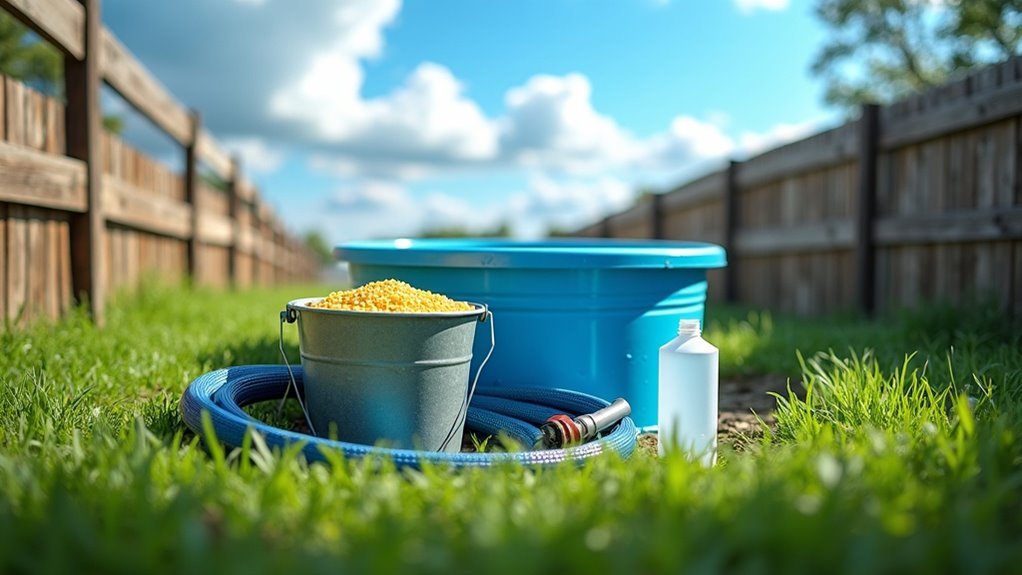
To shock chlorinate your private well, first turn off the well pump and calculate the necessary chlorine—use 3 pints of unscented bleach per 100 gallons of water. This step is crucial for ensuring clean water in emergency situations. Pour the diluted bleach down the well casing and activate the pump to circulate the solution effectively. Open all faucets until you detect a strong chlorine smell, indicating that the solution has reached those points in your plumbing. After allowing the solution to sit for 12 to 24 hours, flush the system thoroughly to remove any residual chlorine. It’s essential to monitor your water quality with tests for bacteria afterward, as maintaining safe drinking water is vital for survival preparedness. More details on testing and water safety follow.
Key Takeaways
- Begin by turning off the well pump circuit breaker to ensure safety during the shock chlorination process.
- Prepare to introduce unscented household bleach (5-5.25% sodium hypochlorite) into the well casing, using a ratio of 3 pints per 100 gallons of water. This is a crucial step in ensuring your water supply is safe for consumption.
- Once the bleach is added, activate the pump to circulate the chlorinated water throughout your plumbing system. This step is essential for ensuring that all areas of your water system are treated effectively.
- Allow the chlorinated water to sit in the system for 12 to 24 hours. After this period, flush the system by running water until the chlorine smell dissipates, indicating that the treatment is complete.
- To confirm the effectiveness of your shock chlorination, test the water for bacteria 5 to 7 days after treatment. This step is vital in maintaining a safe water supply for you and your family, especially in a survival situation.
What Is Shock Chlorination?
Shock chlorination is an essential disinfection technique for those preparing for emergencies, ensuring that your well water is safe for consumption. This method involves introducing a concentrated chlorine solution into your water supply to eliminate harmful bacteria, such as coliform and E. coli, which can pose health risks during crises.
Typically, you’ll use plain, unscented household bleach that contains at least 5% sodium hypochlorite. The recommended dosage is 3 pints per 100 gallons of water.
Use plain, unscented bleach with at least 5% sodium hypochlorite; 3 pints per 100 gallons is recommended for effective disinfection.
It’s crucial to allow the chlorinated water to circulate through your entire water system, including all faucets and plumbing, to ensure effective disinfection. After allowing the chlorinated water to sit for 12 to 24 hours, you must flush the system to remove any residual chlorine before retesting the water.
This preparedness step is vital in maintaining a safe water supply in any survival situation.
When Should Shock Chlorination Be Used?
Shock chlorination is a crucial step in ensuring the safety of your water supply, especially for those committed to survivalism and prepping.
You should perform shock chlorination when annual water tests indicate the presence of bacteria in your well. It’s equally important to carry out this process after any maintenance work on your well system to prevent potential contamination.
Additionally, if your well is threatened by floodwaters or if you observe muddy water, conducting shock chlorination is necessary to maintain a clean and safe water source for you and your family.
Bacteria Presence in Water
When conducting annual water tests, if harmful bacteria such as coliform or E. coli are detected, it’s crucial to act swiftly by shock chlorinating your well.
Shock chlorination serves as an essential survival tactic to disinfect well water, effectively eliminating contaminants that pose health risks.
Be vigilant for any changes in water color, odor, or taste, as these could indicate a contamination issue that requires immediate shock chlorination.
Furthermore, after any repairs or maintenance, or in the aftermath of flooding, it’s imperative to perform shock chlorination to eliminate any bacteria that may have been introduced during these events.
Regular water testing and prompt chlorination are key practices in maintaining safe drinking water, ensuring your preparedness against the dangers associated with contaminated sources.
Stay proactive and safeguard your water supply for a resilient survival strategy.
After Well Maintenance
After conducting maintenance or repair work on your well, performing shock chlorination is a critical step in ensuring your water supply remains safe from potential bacterial contamination.
In the context of survivalism and prepping, keeping your water source uncontaminated is essential for your self-sufficiency and preparedness.
Here are key situations when you should shock chlorinate your well:
- If your annual water tests reveal the presence of coliform bacteria, immediate disinfection is necessary to protect your health and ensure your survival.
- When the well system has been opened for inspection or maintenance, new surfaces may be exposed to contamination, necessitating a thorough shock chlorination to mitigate risks.
- Before returning an unused well to service, it’s crucial to ensure that the water supply is chlorinated and safe for use, as part of your prepping strategy.
Always consult with local experts to determine the correct amount of bleach needed for shock chlorination, and test your water samples regularly to confirm that your water remains clean and safe for consumption.
This diligence is vital in maintaining a reliable and safe water source in any survival situation.
Following Flooding Events
Flooding events can pose significant risks to your well water quality, as floodwaters often introduce harmful bacteria and contaminants into your supply. If you are serious about survivalism and prepping, shock chlorination should always be your first step after flooding, especially if the water in your well looks muddy or cloudy, indicating contamination. Before proceeding, conduct a thorough inspection for structural damages to the well casing. After shock chlorination, wait 5–7 days before retesting the water to verify it’s safe to drink. Remember, the strong chlorine odor means it’s working, but don’t take chances with potential contamination.
| Condition | Action Required |
|---|---|
| Flooding occurred | Perform shock chlorination |
| Water appears muddy or cloudy | Shock chlorinate immediately |
| Structural damages noted | Repair before chlorination |
| After chlorination | Wait 5–7 days before retesting |
| Strong chlorine odor present | Indicates disinfection in process |
Being prepared and knowledgeable about these steps is crucial for ensuring your water supply remains safe in the face of natural disasters.
Effectiveness of Shock Chlorination
Shock chlorination provides a dependable way to disinfect your private well water, crucial for survivalists and preppers looking to eliminate harmful bacteria such as coliform and E. coli.
However, its effectiveness can be compromised by chlorine-resistant pathogens and the necessity to tackle any underlying sources of contamination.
For long-term safety and preparedness, it’s wise to consider incorporating additional disinfection systems alongside shock chlorination to ensure your water supply remains safe and reliable in any situation.
Benefits of Shock Chlorination
When it comes to ensuring the safety of your drinking water in a survival situation, shock chlorination is an essential method for eliminating harmful bacteria such as coliform and E. coli from private wells.
The benefits of this process are crucial for anyone focused on prepping and self-sufficiency:
- Rapid disinfection: A concentrated chlorine solution quickly neutralizes pathogens in your well and plumbing system, providing immediate safety for your water supply.
- Enhanced water quality: Regular shock chlorination improves the overall quality of your water, making it safer for consumption and essential for long-term survival.
- Preventive maintenance: This process serves as a key maintenance measure, particularly after contamination events, ensuring that your well remains a reliable source of clean water.
Incorporating shock chlorination into your survival routine is vital for maintaining the health and safety of your water supply.
Limitations of Disinfection
While shock chlorination can be a useful method for disinfecting private wells, it’s important to recognize its limitations, especially for those focused on survivalism and prepping. This technique is effective in killing many bacteria, but it doesn’t tackle the root causes of contamination, which can lead to recurring problems in a survival situation.
Chlorine disinfection requires adequate contact time; if there’s insufficient circulation, some pathogens may survive, posing a risk when access to clean water is critical. Moreover, resilient organisms like Cryptosporidium and Giardia may evade elimination, which is a concern for long-term water safety.
Biofilm buildup can also compromise the effectiveness of chlorination, necessitating professional cleaning—an important consideration for those preparing for emergencies. If you continue to detect bacteria after treatment, it could indicate unresolved issues, suggesting the need for alternative purification methods or the installation of continuous disinfection systems to ensure lasting protection of your water supply in challenging circumstances.
Long-Term Solutions Needed
Addressing the limitations of shock chlorination is crucial for ensuring the long-term safety and reliability of your water supply in a survival situation. While it offers a temporary solution for disinfection, it doesn’t tackle the root causes of bacterial contamination.
To secure lasting solutions for your preparedness plan, consider implementing the following steps:
- Investigate and repair any faulty septic systems or well construction that may lead to contamination.
- Set up continuous disinfection systems, such as UV filters or chlorinators, to manage persistent water quality issues.
- Regularly conduct water testing, ideally 5–7 days after chlorination, to monitor for coliform bacteria and confirm that your treatment methods are effective.
Precautions Before Shock Chlorination
Before you initiate the shock chlorination process, it’s essential to take several safety precautions to ensure your safety and protect your equipment.
Equip yourself with protective clothing, including goggles and gloves, to shield against chlorine exposure.
Equip yourself with goggles and gloves to protect against harmful chlorine exposure during the shock chlorination process.
Prepare alternative drinking water during treatment to avoid consuming chlorinated water, which is crucial for maintaining health in any survival scenario.
Always turn off the well pump circuit breaker before removing the well cap to prevent electric shock, a key step in ensuring your safety.
Disconnect any sensitive components, such as carbon filters, to prevent damage from chlorine, preserving your water purification systems for future use.
Additionally, clean the well house or storage tank beforehand to enhance the disinfection effectiveness during the shock chlorination process.
Prioritizing safety and preparedness is vital for the best results and long-term sustainability in your survivalist efforts.
Step-by-Step Instructions for Shock Chlorination
With safety precautions in place, you can now proceed with the shock chlorination process to disinfect your private well—an important step for ensuring a safe water supply during emergencies.
Follow these steps:
- Turn off the well pump circuit breaker and calculate the amount of chlorine needed—3 pints per 100 gallons plus an extra 3 pints for plumbing. This ensures that your water supply is adequately treated in case of contamination.
- Pour the diluted bleach down the well casing, and activate the pump to circulate the solution through the entire water system. This step is crucial for effective disinfection in a survival scenario.
- Open faucets and flush toilets until you detect a strong chlorine smell, indicating that the disinfection process is working and your water system is being properly treated.
After 12 to 24 hours, flush the system to remove residual chlorine and wait 5-7 days to test the water for bacteria.
Regular maintenance of your water supply is essential for preparedness, especially in uncertain times.
Post-Treatment Testing and Waiting Period
After completing shock chlorination, it’s essential to wait at least 12 to 24 hours before flushing the system. This waiting period allows the chlorine to effectively disinfect your water supply, which is critical for long-term survival preparedness.
Once the time has elapsed, flush your well by running water from outdoor spigots until the chlorine smell dissipates, and then check the indoor faucets. To ensure your water is safe for consumption, conduct bacterial water testing 5 to 7 days post-flushing to confirm the absence of coliform bacteria.
A follow-up test 14 to 30 days later is advisable to monitor for any resurgence of contamination. If bacteria are still present, investigate potential contamination sources and take corrective measures before relying on your water supply for drinking and cooking.
Recommended Chlorine Bleach for Treatment
Choosing the right chlorine bleach is essential for effective shock chlorination of your private well, especially in survival situations. Use plain, unscented household bleach with a concentration of 5-5.25% sodium hypochlorite for optimal disinfection.
Here are key points to consider for your preparedness:
- Avoid bleach with additives, fragrances, or thickeners—they can compromise your treatment system and may introduce harmful substances.
- For every 100 gallons of water, add 3 pints of bleach, plus an additional 3 pints for the plumbing system to ensure thorough disinfection.
- If the water depth is unknown, use 3.7 gallons as a general treatment measure to account for variations.
Always prioritize safety precautions when handling bleach, including wearing protective gear and ensuring proper ventilation, to protect yourself in emergency situations.
Troubleshooting If Shock Chlorination Doesn’t Work
If shock chlorination doesn’t yield the expected results, it’s crucial to investigate potential underlying issues that may be compromising your water supply.
Persistent bacteria could signal unresolved contamination from nearby septic system failures or inadequate well construction, both of which can jeopardize your survival preparations.
Additionally, biofilm on well casings may hinder the effectiveness of shock chlorination, necessitating professional cleaning.
If bacteria continue to reappear, consider installing a continuous disinfection system or point-of-use treatment methods to ensure access to safe drinking water, a vital aspect of self-reliance.
Remember to test your water for bacteria seven days post-chlorination to evaluate treatment success and identify any ongoing contamination issues.
Consulting a well water professional may also be necessary to safeguard your water supply for long-term preparedness.