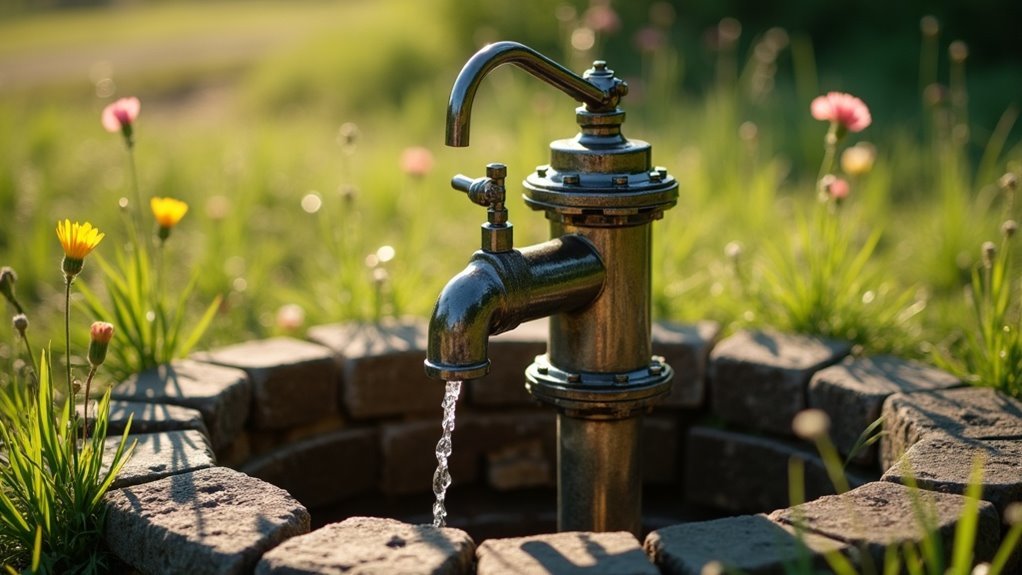
To install a hand pump on your well for survival and prepping purposes, start by verifying your well piping setup, ensuring it has a minimum diameter of 4 inches for optimal water flow. Gather essential tools such as an Allen wrench set and channel-lock pliers, which are vital for a reliable installation. Inspect the well for any obstructions that could hinder access to water and replace the well cap if necessary to maintain safety and functionality.
Next, install the hand pump cylinder by wrapping Teflon tape around the threads to prevent leaks, then carefully add drop pipes until they reach 10-20 feet above the water table, ensuring you can access water even during dry spells. Follow the subsequent steps diligently for effective installation and testing, ensuring your hand pump is ready to provide a reliable water source in any emergency situation.
Key Takeaways
- Verify well dimensions and the static water level to determine the correct drop pipe length for installing the hand pump, ensuring you are prepared for any unforeseen circumstances.
- Thoroughly clean the well casing, eliminate any blockages, and inspect all existing components to ensure optimal performance before proceeding with the hand pump installation.
- Apply Teflon tape to the threads of the hand pump cylinder and securely attach it to the well casing, adhering to the manufacturer’s instructions for reliable operation during emergencies.
- Ensure all connections are sealed properly and adjust the sucker rod length to maximize water retrieval efficiency, crucial for survival situations.
- Conduct a comprehensive test of the hand pump system to confirm its functionality, check for leaks, and ensure dependable access to water when it matters most in prepping scenarios.
Confirm Your Well Piping Setup
Before you begin installing a hand pump, it’s crucial to ensure that your well piping setup is appropriate for survival and preparedness scenarios.
First, check the diameter of your well casing; most hand pumps require at least a 4-inch diameter to fit properly.
Next, verify the static water level in your well to determine the necessary drop pipe length, as access to water is vital in emergency situations.
Additionally, inspect existing well components for any obstructions or damage that could hinder installation, as maintaining operational water sources is key in prepping.
If you have an electric submersible pump, you may need a new well cap for the hand pump; be sure to ascertain compatibility to facilitate a smooth installation process.
Being well-prepared ensures you have reliable access to water when it matters most.
Get the Tools
Before you embark on your installation, it’s crucial to gather the necessary tools to ensure a successful process.
Equip yourself with an Allen wrench set, channel-lock pliers, and vise grip wrenches, along with Teflon tape and thread locker to secure your connections properly.
Additionally, prepare for any unforeseen circumstances by donning safety gear, such as gloves and goggles, to protect yourself during the installation.
Being well-prepared is essential in the world of survivalism and prepping.
Essential Tools Required
To successfully install a hand pump on a well for your survivalist setup, you’ll need a specific set of essential tools.
Start with an Allen wrench set, particularly sizes 1/4”, 3/16”, and 5/32”, for tightening the necessary bolts. Channel-lock pliers, which can grip 1.75” diameter pipes, are vital for handling connections securely.
Vise grip wrenches provide additional leverage for ensuring fittings are tight and reliable. Don’t forget Teflon tape to seal connections and prevent leaks in your plumbing system, which is crucial in a survival scenario.
Lastly, make sure you have Permatex anti-seize lubricant and Loctite thread locker on hand to keep fittings secure and prevent corrosion over time, ensuring your hand pump remains functional and durable for your preparedness needs.
Safety Equipment Considerations
When installing a hand pump on your well, ensuring the right safety equipment is crucial for a smooth and secure process, especially for those focused on survivalism and prepping. Here’s a list of essential tools you need for a safe installation:
| Tool | Purpose | Notes |
|---|---|---|
| Allen Wrench Set | Assemble hand pump components | Sizes: 1/4”, 3/16”, 5/32” |
| Channel-Lock Pliers | Securely handle 1.75” diameter pipe | Provides an effective grip |
| Vise Grip Wrenches | Maintain a strong grip on pipe fittings | Prevents slippage |
| Teflon Tape | Seal threaded connections | Ensures a watertight fit |
| Permatex Anti-Seize | Protects fittings against corrosion | Prevents loosening over time |
Having these tools prepared not only enhances your safety but also boosts your efficiency during the installation process—crucial for those who value self-reliance and preparedness.
Inspect Your Well
Inspecting your well is an essential task for survivalists and preppers before installing a hand pump, ensuring a reliable water source in times of need.
Inspecting your well is crucial for survivalists and preppers, securing a dependable water source when it matters most.
Follow these guidelines to ensure your well is ready for action:
- Check for obstructions or debris that could hinder installation and access to water.
- Remove the existing well cap, especially if an electric submersible pump is present, to facilitate the installation of your hand pump.
- Measure the depth of the well and determine the static water level to select the correct drop pipe length for optimal performance.
- Clean visible pipes and rods with a diluted bleach solution to eliminate contaminants and ensure safe drinking water.
Proper inspection and preparation of your well can be a vital step in your self-sufficiency and preparedness plan.
Replace the Existing Well Cap
To begin replacing your existing well cap, first assess its condition and compatibility with your well’s diameter and design.
It’s crucial to choose a new cap that meets these specifications to ensure an effective seal, preventing contamination and safeguarding your water supply—the lifeblood of any survivalist or prepper.
Opt for a robust, durable cap that can withstand the elements and potential threats.
Don’t forget to use Teflon tape on the threads of the new cap for added protection against leaks, ensuring your water remains clean and safe for consumption in any situation.
Assess Current Well Cap
Before you install a hand pump, it’s crucial to conduct a thorough assessment of the existing well cap to ensure it’s in good condition. A damaged well cap can lead to water contamination, which is a serious concern for survivalists and preppers.
During your evaluation, be vigilant for:
- Cracks or fractures in the material that could compromise its integrity
- Signs of rust or corrosion that may weaken the cap
- Inadequate sealing around the edges that can allow contaminants to enter
- Compatibility with the hand pump’s drop pipe and sucker rod to ensure a proper fit
If you identify any issues, it’s essential to clean the well casing and its surrounding area before proceeding to install a new well cap.
Proper sealing with Teflon tape is vital to preserve the purity of your water supply, an important factor in any survival scenario.
Select Compatible Replacement Cap
Selecting the right replacement well cap is crucial for ensuring a secure fit and preventing contamination, especially in survival situations.
Start by measuring the dimensions of your existing well opening; different well sizes require specific cap types to maintain water quality and safety. Choose a replacement well cap that accommodates your hand pump’s design, ensuring the riser tube attaches properly for efficient water access during emergencies.
If you live in colder climates, opt for a cap with a built-in weep hole to facilitate drainage and prevent freezing, which could hinder your water supply when you need it most.
Additionally, always check local regulations to ensure your chosen cap complies with safety and health standards.
This careful approach not only guarantees a reliable installation but also enhances your overall preparedness for any survival scenario.
Ensure Proper Sealant Use
Replacing the existing well cap is a critical task for anyone focused on survivalism and prepping, as it ensures a secure and safe water supply.
Follow these steps to ensure effective sealant use:
- Select a durable well cap that fits securely over the casing to prevent contamination.
- Utilize Teflon tape on the threads of the cap to create a watertight seal, safeguarding your water source.
- Thoroughly inspect the well for any obstructions or debris before sealing, as this can compromise water quality.
- Regularly check the well cap for signs of wear or damage after installation to maintain its integrity and functionality.
Install the Hand Pump Cylinder
To install the hand pump cylinder effectively for your survival needs, begin by thoroughly cleaning the well casing and ensuring that any debris or obstructions are removed to facilitate a smooth attachment process.
Next, wrap Teflon tape around the threads of the riser pipe to ensure a watertight seal, which is crucial for reliable water access in emergency situations.
Wrap Teflon tape around riser pipe threads for a watertight seal, ensuring reliable water access during emergencies.
Once prepared, securely screw the hand pump cylinder into place, making sure it’s properly aligned and tightened to prevent any leaks during operation.
Proceed to attach the drop pipes to the hand pump cylinder, extending them down to the water table, and ensure they’re firmly secured to withstand various conditions.
Finally, adjust the sucker rod as necessary to optimize functionality before installing the pump head. This setup will ensure you have a dependable water source as part of your prepping strategy.
Keep Going Until You Reach the Water Table
After securing the hand pump cylinder and connecting the drop pipes, your next step involves reaching the water table, a crucial skill for survivalists. Follow these instructions carefully to ensure a reliable water source:
- Attach the hand pump cylinder securely to the drop pipes, making sure there are no obstructions that could hinder water flow.
- Use a weighted string to measure the well’s depth and accurately determine the static water level. This knowledge is essential for planning your water retrieval strategy.
- Add drop pipes until you’re 10-20 feet above the water table to avoid disturbing any sediment that could compromise water quality. This practice is vital for maintaining a clean water supply.
- Adjust the sucker rod for smooth operation and effective water retrieval, ensuring you can access water efficiently when needed.
Finally, pump the handle 7 to 10 times to prime the system, confirming you’ve successfully reached the water table. This process not only provides you with a critical resource but also enhances your self-sufficiency in any survival situation.
Install the Pump Head
Install the Pump Head for Survival Preparedness****
Begin by ensuring the pump head is compatible with your well’s drop pipe, as having reliable access to water is crucial for survival situations.
Securely attach the pump head using the appropriate mounting bolts specified in the installation instructions to ensure it withstands the rigors of frequent use.
Before installing the pump head, adjust the sucker rod to the correct length, ensuring it reaches the water table without being too tight or too loose, as this will maximize efficiency in drawing water when needed.
Use Teflon tape to seal the connections between the pump head and the drop pipe, preventing leaks that could compromise your water supply.
Tighten the pinch bolts on the riser tube firmly to prevent any movement during operation, which could lead to failures in critical moments.
Finally, test the system by pumping the handle 7 to 10 times to confirm smooth operation. This ensures that in any emergency situation, you can rely on your water source without worry.