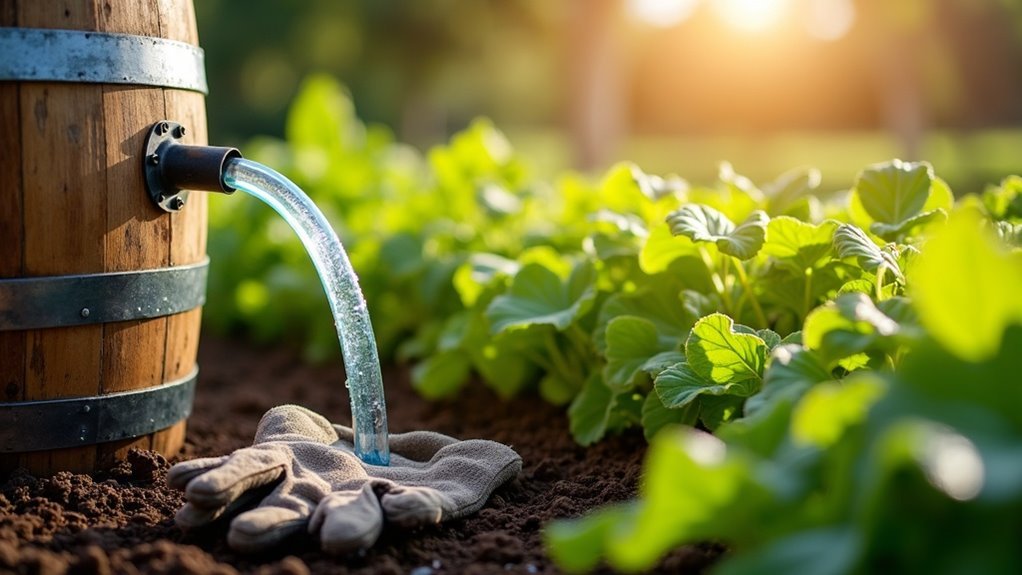
To set up drip irrigation from rain barrels for your survival garden, position the barrels 2 to 4 feet high to ensure optimal gravity drainage. Install a 100-micron inline filter at the outlet to prevent debris from clogging your system, and connect ½ inch mainline tubing to ¼ inch emitter lines that run downhill to your plants. Utilize a high-flow spigot for efficient water output, and regularly check emitter spacing to ensure even water distribution across your crops. Consistent maintenance is crucial; monitor for clogs and maintain proper water levels to prepare for any potential shortages. For additional strategies on automating your irrigation system and maximizing water efficiency in a survival situation, keep reading.
Key Takeaways
- Position rain barrels 2 to 4 feet high to harness gravity for a reliable water supply, crucial for survival gardening and prepping.
- Install a 100-micron inline filter at the outlet to prevent clogs and ensure clean water delivery, which is vital in any self-sufficient setup.
- Connect ½ inch mainline tubing to ¼ inch emitter lines, maintaining a downhill run for effective water distribution, ensuring your plants thrive even in challenging conditions.
- Utilize a high-flow spigot at the barrel’s bottom for maximum output, allowing for efficient irrigation and minimizing the need for manual watering.
- Regularly check and adjust emitter spacing to ensure even moisture distribution across garden beds, promoting healthy crops and securing your food supply.
Benefits of Using Rain Barrel Water for Garden Beds
Using rain barrel water for your garden beds offers several advantages that align with survivalism and prepping principles. By harnessing rainwater, you can decrease reliance on external water sources, which is crucial in emergency situations when municipal water supplies may be compromised.
This natural water source is free from chemicals and chlorine, providing healthier hydration for your plants and contributing to self-sufficiency. Additionally, utilizing rain barrel water helps prevent soil erosion and flooding by reducing runoff, which is vital in maintaining soil integrity for sustainable food production.
Implementing a gravity-fed irrigation system ensures your garden receives consistent moisture even during dry periods, promoting resilience in your gardening efforts. This practice not only conserves water but also lessens the demand for water treatment, thereby lowering energy usage and minimizing your overall environmental impact—key components of a self-reliant survival strategy.
Setting Up the Drip Irrigation System
To successfully set up a drip irrigation system for your survival garden, follow these essential steps that ensure efficient water delivery to your plants, which is crucial for self-sufficiency.
- Position your rain barrels 2 to 4 feet high to facilitate optimal water flow, allowing gravity to aid in irrigation.
- Install a 100-micron inline filter at the outlet to prevent clogs, ensuring clean water supply for your crops.
- Connect ½ inch mainline tubing to ¼ inch emitter lines, ensuring a downhill run for effective gravity feed.
- Utilize a high-flow spigot at the bottom of the barrel to maximize water output for your irrigation system.
Regularly test the system, making necessary adjustments to emitter spacing to achieve deep watering and consistent water distribution throughout your garden beds.
This preparation will help ensure that your plants thrive, even in challenging conditions.
Essential Components for Drip Irrigation
Essential components are crucial for an effective drip irrigation system, ensuring reliable water delivery for your survival garden.
Start with a rain barrel that has a bottom-mounted drain valve, allowing for easy access and minimizing sediment buildup. Incorporate a 100-micron inline filter to safeguard your system against debris, ensuring clean water for your plants.
Utilize high-flow spigots or ball valves to optimize water output while reducing any restrictions. Mainline tubing (½ inch) and ¼ inch emitter lines or drip tape will deliver water directly to your crops at controlled rates, maximizing efficiency.
Don’t overlook the importance of goof plugs and barbed connectors for making reliable adjustments and securing connections throughout your drip irrigation system, essential for maintaining your food supply in times of uncertainty.
Maintenance and Troubleshooting Tips
While maintaining your drip irrigation system for your survival garden, regular inspections are essential to ensure optimal performance and longevity. Here are some key maintenance tips tailored for preparedness:
- Inspect rain barrels for sediment buildup; ensure the bottom drain valve is clear to maintain efficient water flow, crucial for your self-sustaining setup.
- Check filters and emitters frequently to prevent clogs, using a 100-micron inline filter at the spigot to safeguard your water supply.
- Monitor water levels to ensure adequate water pressure; low pressure can lead to inconsistent distribution, which is vital for maintaining healthy crops in case of emergencies.
- Look for kinks or bends in the tubing that restrict water flow, and adjust emitters to guarantee that each area of your garden receives sufficient moisture, supporting your long-term food security.
Watering Techniques and Automation Options
Regular maintenance is crucial for ensuring your survival garden’s irrigation system operates effectively, but the technique you use to water your plants can significantly impact their resilience and growth.
Implementing automated timers allows you to efficiently manage watering schedules, ensuring that even in times of crisis, your plants receive consistent moisture from your rain collection systems. Utilizing low-pressure timers designed for gravity-fed systems makes it easy to adjust watering without the need for high pressure, which is crucial when resources are limited.
Longer watering sessions with drip irrigation techniques can enhance soil saturation and promote deeper root growth, vital for plants that may need to withstand drought conditions.
Consider incorporating specialized no-pressure soaker hoses for gentle and even water distribution, which can be particularly beneficial in conserving water.
Additionally, smart technology can enable remote control of your irrigation system through smartphone apps, providing enhanced convenience and efficiency in managing your garden, ensuring that your plants thrive even in challenging environments.
This preparedness will be essential for maintaining a sustainable food source during uncertain times.