To script family tabletop scenarios focused on survivalism and prepping, first, assess your family’s dynamics—understanding what motivates each member in high-stress situations. Identify common challenges such as communication breakdowns during emergencies and varying preparedness levels. Then, create engaging scenarios that reflect your family’s unique traits while emphasizing themes of resilience and resourcefulness. Assign roles based on each person’s strengths, such as strategist, medic, or communicator, to promote teamwork and collaboration. Finally, facilitate reflective discussions to ensure everyone’s perspectives are valued. This approach not only strengthens familial bonds but also enhances your family’s preparedness journey, resulting in more impactful and realistic scenarios for future training.
Key Takeaways
- Engage family members in brainstorming survival scenarios to ensure relevance and enhance preparedness.
- Integrate family dynamics and shared experiences to create relatable and enjoyable narratives that reflect your unique situation.
- Clearly define roles and responsibilities for each member in emergency situations to enhance teamwork and collaboration.
- Use open-ended questions during discussions to encourage diverse perspectives and critical thinking about potential survival challenges.
- Document key insights and experiences to track growth in preparedness and strengthen family bonds through shared learning.
Understanding Family Dynamics
When you delve into the realm of family dynamics, particularly within the context of survivalism and prepping, you’ll uncover a complex web of interactions and relationships that can significantly impact how family members work together in times of crisis.
Each family structure—whether nuclear, extended, or blended—develops distinct patterns of communication and emotional bonds that can either strengthen or weaken the family unit’s ability to prepare for and respond to emergencies. Factors such as cultural background, economic status, and social connections play vital roles in shaping these dynamics, influencing everything from decision-making processes to conflict resolution strategies in high-pressure situations.
Effective communication becomes even more crucial in survival scenarios, as it fosters trust, understanding, and collaboration among family members. Establishing clear roles and responsibilities can help mitigate misunderstandings and enhance efficiency when preparing for potential threats.
It’s essential to recognize that shifts in circumstances—such as a new family member or an unforeseen event—can disrupt established dynamics. Therefore, developing adaptive strategies is key to maintaining cohesion and harmony within your family unit during challenging times.
Prioritizing strong family bonds will ultimately enhance your collective resilience and preparedness for whatever may come your way.
Identifying Common Challenges
While navigating family survival scenarios can be a rewarding experience, you might encounter common challenges that can disrupt the process. Here are three key obstacles you might face:
- Communication Breakdowns: Family members may struggle to convey their survival strategies clearly, leading to misunderstandings about roles and responsibilities during a crisis.
- Conflicting Expectations: Different ideas about how to prepare or what supplies to prioritize can create tension, as each family member’s vision for survival may clash.
- Time Management Issues: Busy schedules can make it tough to dedicate enough time for planning and practicing survival skills, resulting in rushed preparations and increased anxiety.
Addressing these challenges helps ensure a more effective and cohesive survival experience for everyone involved.
Creating Relatable Scenarios
Creating relatable scenarios is essential for engaging your family in tabletop survival exercises, as it helps them connect personally with the situations at hand. Start by gathering input from family members about memorable events that can inspire your scenarios related to survival and prepping.
Identify your family’s dynamics, quirks, and inside jokes to add authenticity and humor, while focusing on themes relevant to preparedness. Craft scenarios that reflect diverse family structures and challenges, incorporating common conflicts like resource allocation or differing opinions on survival strategies.
Use straightforward language that mirrors your family’s personalities and interests, ensuring that the content is accessible and engaging. By doing so, you’ll create an immersive experience that resonates with everyone, making your family’s preparedness journey more enjoyable and effective.
Defining Roles and Responsibilities
With relatable survival scenarios in place, it’s time to assign roles that bring your family’s tabletop exercises to life in the context of prepping and survivalism. Clearly defining each family member’s role enhances engagement and collaboration, which is crucial in high-stakes situations. Here’s how to do it:
- Identify Unique Traits: Recognize each member’s strengths, such as leadership, resourcefulness, or medical knowledge, and how they can contribute to your family’s preparedness plans.
- Assign Specific Tasks: Designate responsibilities like decision-making during emergencies, gathering supplies, or providing emotional support to ensure a balanced and effective team.
- Encourage Authenticity: Discuss motivations and potential reactions to various survival scenarios to deepen character immersion and prepare for real-life situations.
Establish ground rules for respectful communication and reflect on your experiences afterward to strengthen family dynamics and preparedness in real life.
Embrace these roles, and watch your survival scenarios flourish!
Encouraging Reflective Discussion
How can you turn your family tabletop survival scenarios into a powerful tool for connection and growth?
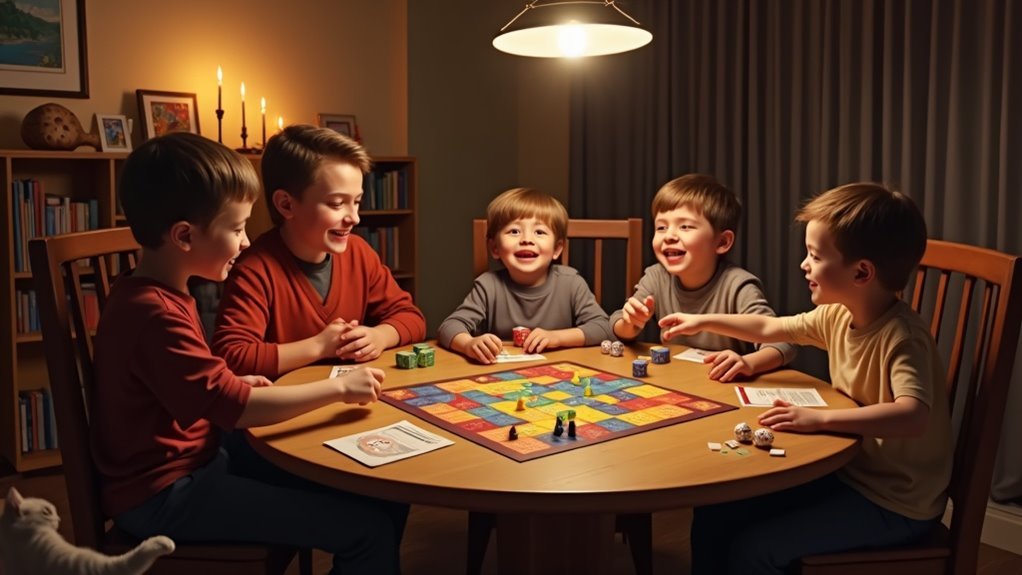
In your living room, create an inviting space for reflective discussion centered around preparedness and resilience. Use open-ended questions to spark diverse perspectives on survival strategies, encouraging everyone to think critically about the scenarios.
Relate each situation to personal experiences, fostering empathy and deeper connections regarding the importance of being prepared. Set aside dedicated time after each scenario to ensure all voices are heard, cultivating a respectful environment where everyone can share their thoughts on survival techniques and emergency plans.
Document key points from your discussions to track your family’s growth in preparedness skills and improve communication over time.
This intentional reflection transforms your tabletop moments into meaningful family bonding experiences while enhancing your collective survival knowledge.
Implementing Practical Solutions
While reflective discussions lay the groundwork for meaningful conversations, implementing practical solutions is where the real transformation happens.
To create engaging tabletop scenarios for survival situations, especially for foster children, consider these steps:
Create captivating tabletop survival scenarios for foster children by incorporating shared experiences, humor, and immersive props.
- Gather input from family members to identify shared experiences related to survival situations.
- Outline each scenario, detailing characters, settings, challenges, and resolutions in a survival context.
- Use humor and relatable quirks to make the dialogue authentic, ensuring that the scenarios remain engaging.
Incorporating props and survival gear enhances immersion, while post-role-play discussions allow everyone to reflect and offer practical solutions for real-life preparedness.
This approach not only fosters understanding of survival skills but also strengthens family connections, making the experience memorable for all involved.