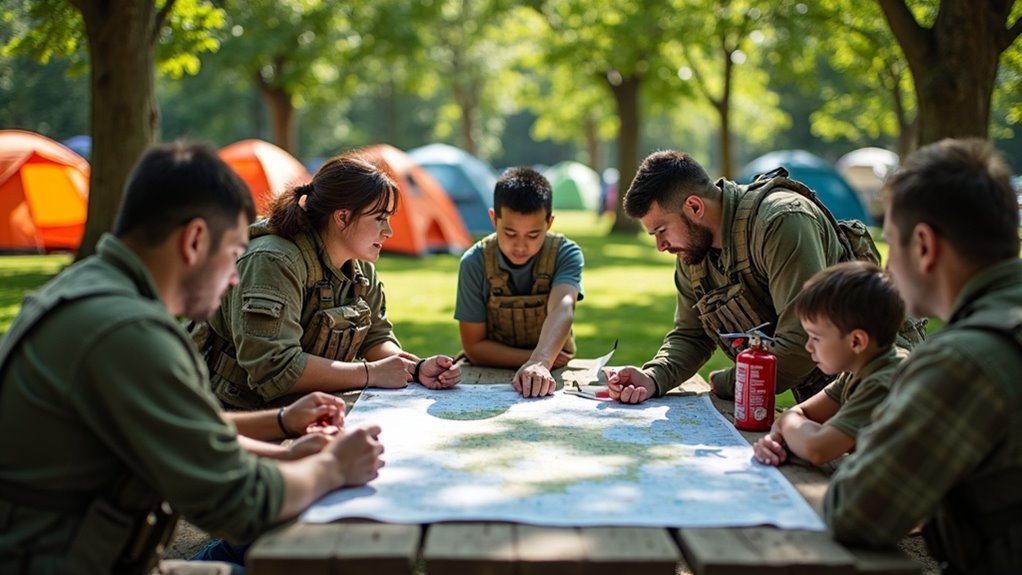
To conduct a weekend preparedness drill, begin by selecting a realistic disaster scenario that reflects the specific risks in your area, whether it’s a natural disaster, economic collapse, or societal unrest. Gather your family emergency response team and thoroughly review your emergency plans, ensuring everyone knows their roles and responsibilities. Collect essential survival supplies, including food, water, first-aid kits, and communication devices, and engage in practical exercises to build skills.
Execute the drill under time constraints to simulate real-life pressure, and introduce challenges such as simulated power outages or communication failures to test your team’s adaptability. Following the drill, hold a debriefing session to evaluate each member’s experiences, discuss what worked well, and identify areas for improvement. This process not only enhances your survival skills and teamwork but also significantly boosts your overall preparedness. For further insights, explore additional strategies to refine your preparedness approach for future drills and enhance your survivalism efforts.
Key Takeaways
- Choose a disaster scenario that reflects the potential threats in your region, such as natural disasters, civil unrest, or economic collapse, to fully engage all family members in the planning process.
- Assemble critical survival supplies and review your emergency protocols, ensuring that everyone understands their roles and responsibilities before the drill commences.
- Plan the drill for a weekend when all participants can be fully involved, making sure to simulate realistic conditions and enforce time constraints to mimic real-life situations.
- Incorporate unexpected obstacles, like sudden power failures or extreme weather conditions, to challenge decision-making skills and promote teamwork under pressure.
- Hold a comprehensive debriefing session after the drill to assess the overall experience, document any difficulties encountered, and pinpoint specific areas that require improvement for future preparedness efforts.
Importance of Weekend Drills
While you might think preparedness is just about having supplies, weekend drills are a crucial component in ensuring your family is fully equipped for emergencies.
These immersive experiences provide an opportunity to practice your emergency plan under real-world stress, reinforcing instinctive responses that could be vital during an actual crisis. By simulating a disaster over a weekend, you can uncover any gaps in your emergency kits, ensuring that your supplies aren’t only adequate but also easily accessible when every second counts.
Moreover, these drills foster teamwork and communication, clarifying roles among family members and enhancing your collective response. By regularly conducting weekend drills, you instill a culture of preparedness within your household, promoting continuous review and improvement of your emergency plans and resources, which is essential for any dedicated survivalist or prepper.
Selecting a Realistic Scenario
When selecting a realistic scenario for your preparedness drill, focus on local disaster risks that are most relevant to your area, such as home fires, severe storms, or even civil unrest.
Consider seasonal factors that could influence these risks, like hurricanes in late summer or blizzards in winter.
Incorporate challenges that require critical thinking and resourcefulness, ensuring all family members can actively engage and contribute to the planning process.
This approach not only enhances your survival skills but also fosters a resilient mindset among your group.
Local Disaster Risks
To effectively prepare for potential disasters, it’s crucial to select a realistic scenario that reflects the specific risks your community faces.
Research local natural disaster threats, such as hurricanes or floods, to identify the most pertinent emergencies. Consult community reports and government resources to understand the historical frequency and impact of these disasters.
Consider seasonal patterns, like tornadoes in spring, to further refine your scenario. Engage with local emergency management agencies for insights on prevalent risks and unique challenges related to population density and infrastructure.
This tailored approach guarantees your preparedness drills are practical and relevant, enhancing your readiness for survival in your community.
Always remember, being proactive and aware of potential threats is key to effective survivalism and prepping.
Engaging Scenario Ideas
Understanding local disaster risks is crucial for selecting realistic and engaging scenarios for your preparedness drills in the context of survivalism and prepping. Focus on prevalent natural disasters such as hurricanes or floods to ensure the scenarios are relevant to your community’s specific threats.
Incorporate elements like power outages by simulating the loss of electricity and disabling devices, which creates an authentic survival environment. Test decision-making skills under pressure by simulating varying levels of urgency, such as a sudden evacuation order or a need to secure resources quickly.
Utilize local emergency resources, including community shelters, to familiarize participants with available support while also discussing self-reliance strategies. Enhance engagement further through role-playing, assigning specific roles such as family members or emergency responders, to make your Emergency Scenarios more immersive and effective for all participants, while reinforcing the importance of preparedness and self-sufficiency.
Assembling Your Emergency Response Team
To assemble your survivalist emergency response team, begin by identifying key individuals with diverse skills relevant to various survival and prepping areas.
Assign specific roles to each team member to ensure clarity in responsibilities, and establish effective communication protocols for seamless coordination during emergencies.
Regularly review and practice these components to enhance your team’s readiness and response capabilities, ensuring you’re well-prepared for any situation that may arise.
Identifying Key Team Members
When assembling your emergency preparedness team, it’s vital to identify key roles that ensure clear responsibilities and effective communication during drills and real-life survival situations.
Include family members with a variety of skills, such as a team leader, communication officer, and safety officer. This diverse skill set enhances the team’s overall effectiveness in critical scenarios.
Ensure that everyone understands the emergency response plan and has access to essential resources like contact lists, survival protocols, and supplies.
Regularly review and update the team to reflect any personnel changes, confirming that all members are well-trained in their roles.
Conduct team-building exercises to foster collaboration and improve coordination, which is crucial during actual emergencies.
Assigning Specific Roles
Clear roles are a cornerstone of effective emergency preparedness. It’s important to assign specific roles, such as team leader, communication coordinator, and logistics manager, to ensure that everyone understands their responsibilities during a survival situation.
Each team member should have a clear grasp of their tasks, which enhances overall efficiency when facing emergencies. Regular training sessions can reinforce this understanding and build teamwork among group members.
Utilize scenario-based exercises to practice role-specific tasks, providing members with hands-on experience in a controlled environment. After each drill, evaluate the effectiveness of assigned roles to identify strengths and areas needing improvement, thereby refining your team’s response capabilities for real-life survival situations.
Establishing Communication Protocols
Establishing effective communication protocols is crucial for the success of your survival and prepping team, especially during a crisis.
Begin by creating a clear hierarchy, assigning specific roles, and ensuring everyone understands their responsibilities. Utilize multiple communication methods—phone calls, texts, and two-way radios—so team members can stay connected, even if one channel fails.
Implement a shared document for emergency contacts and protocols, allowing for real-time updates as situations evolve. Conduct regular communication drills to familiarize your team with these protocols and test the effectiveness of your communication tools.
Finally, designate a backup leader to ensure continuity in decision-making and coordination, particularly in high-stress scenarios where First Aid responses may be critical.
Preparing for the Drill
To effectively prepare for your weekend preparedness drill, begin by selecting a specific disaster scenario—such as a flood, earthquake, or any other potential emergency—that will guide your simulation and ensure its relevance to your survival plan. Gather essential supplies, including a comprehensive 72-hour emergency kit, to create authentic conditions that mimic a real disaster situation. Review and update your emergency plans, ensuring that all family members comprehend their roles and responsibilities in the event of an emergency. Schedule the drill for a weekend when everyone can participate, emphasizing the importance of teamwork and collaboration in survival situations. Finally, establish a debriefing plan to discuss the experiences and challenges faced during the drill, allowing for valuable learning and improvement.
| Step | Action | Purpose |
|---|---|---|
| Choose Scenario | Select a natural disaster | Ensure relevance to survival |
| Gather Supplies | Assemble a comprehensive emergency kit | Create realistic conditions |
| Schedule Drill | Pick a family-friendly weekend | Encourage participation and preparedness |
Running the Drill
Running a weekend preparedness drill is essential for survivalists and preppers, as it ensures that your emergency response plans are thoroughly tested. Set aside approximately 72 hours to simulate a realistic disaster scenario, such as a flood or earthquake, which can provide invaluable experience.
Prior to the drill, review all relevant procedures with your family to ensure everyone is on the same page in case of an emergency. Engage your family in practical activities that replicate real-life conditions, such as constructing a temporary shelter or practicing evacuation routes under time constraints.
After the drill, conduct a debriefing session to discuss lessons learned, emotional reactions, and areas for improvement. This reflection is crucial for enhancing your family’s preparedness for actual emergencies, ultimately increasing your overall readiness and resilience in the face of potential threats.
Introducing Challenges
While conducting a preparedness drill, introducing challenges can significantly enhance the training experience by pushing participants to adapt and think critically in survival situations.
Incorporate unexpected scenarios, such as sudden power outages or simulated injuries, to test problem-solving skills under pressure. Utilize role-playing to immerse participants in specific roles, such as first responders or survivalists, ensuring they feel the weight of their responsibilities.
Implement time constraints for tasks to encourage quick decision-making, mirroring real-life emergencies where every second counts. Environmental challenges, like adverse weather conditions or disruptive noises, simulate the unpredictability of outdoor survival.
Additionally, introduce logistical hurdles, such as limited resources or communication breakdowns, to assess teamwork, resourcefulness, and adaptability. This comprehensive approach effectively prepares participants for real-world emergencies and survival situations.
Debriefing and Evaluation
After participants have navigated the challenges of the preparedness drill, it’s essential to conduct a comprehensive debriefing session.
Gather feedback on their experiences and document specific challenges encountered, such as logistical hurdles and communication breakdowns.
Evaluate the effectiveness of your emergency plans by discussing what strategies were successful and which areas require improvement.
Identify any gaps in knowledge that emerged during the drill, emphasizing the importance of continuous learning in the realm of survivalism and prepping.
Summarize your findings in a report that outlines recommended updates to emergency plans and preparedness strategies.
This evaluation should take place in two formats: a group setting for collaborative insights and through individual reflections for deeper, personal perspectives.
Enhancing Future Preparedness Efforts
To enhance future preparedness efforts in the realm of survivalism and prepping, it’s crucial to thoroughly analyze the outcomes of your recent drills and incorporate practical changes informed by participant feedback.
As emphasized previously, debriefing sessions are essential for discussing challenges and emotional responses, promoting a culture of continuous learning.
By integrating realistic survival scenarios, you can significantly improve readiness for actual emergencies. Evaluating the outcomes of your drills allows you to identify weaknesses in your emergency plans and implement necessary adjustments.
Engaging the community in these exercises not only fosters collective awareness but also fortifies resilience against potential disasters.
Ultimately, your commitment to ongoing improvement will lead to more effective survival strategies and preparedness efforts in the future.