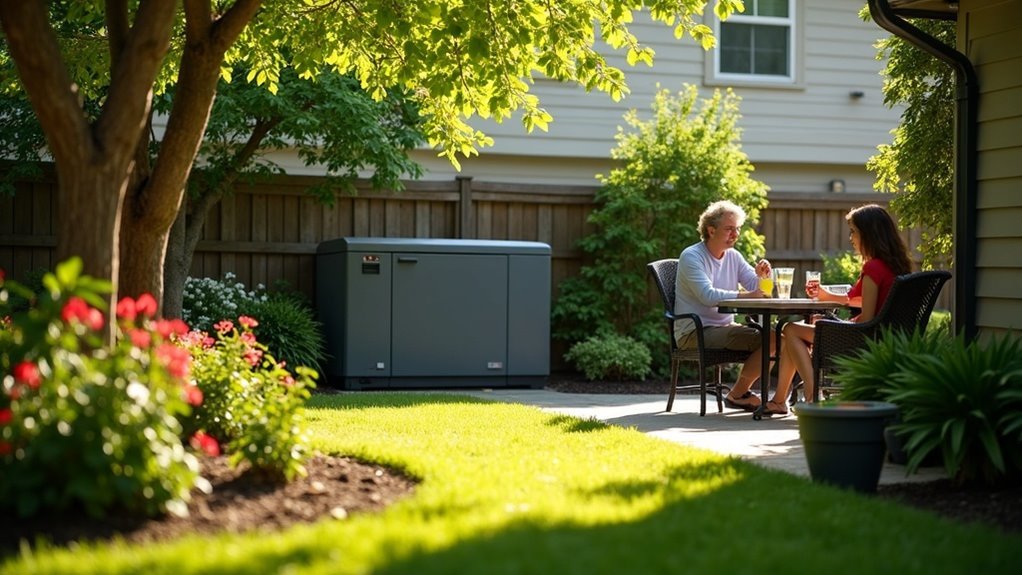
To minimize the noise from your generator while maintaining a survivalist mindset, position it at least 15-20 feet away from your living quarters, ensuring the exhaust faces away from any structures. Implement sound dampening techniques, such as acoustic insulation and anti-vibration mounts, to reduce noise levels further. Constructing a soundproof enclosure can provide significant noise reduction, making your setup more discreet. Regular maintenance, including oil changes and muffler checks, is crucial for optimal performance and longevity of your generator. Additionally, consider community-driven DIY solutions and noise barriers as part of your prepping strategy, enabling you to maintain a low profile while ensuring your energy needs are met without disturbing your neighbors.
Key Takeaways
- Position the generator at least 15-20 feet away from living areas and 25 feet from property lines to minimize noise impact, ensuring a discreet setup that won’t compromise your survivalist strategy.
- Use sound-dampening enclosures lined with acoustic insulation to reduce noise levels by up to 10 dB, allowing you to maintain a low profile during critical situations.
- Regular maintenance of the generator, including oil and filter changes, is essential for optimal performance and quieter operation, which is vital for stealth in survival scenarios.
- Incorporate anti-vibration mounts and sound deflectors to further reduce noise transmission, enhancing your generator’s quietness while you’re focused on prepping.
- Plant tall shrubs or trees around the generator to naturally absorb sound and create a noise barrier, providing both camouflage and a sound shield for your prepping activities.
Understanding Generator Noise Levels
When considering the purchase of a portable generator for your survivalist or prepping needs, understanding its noise levels is crucial, as excessive noise can compromise your stealth and security during emergencies.
Generator noise typically ranges from 70 to 85 dB, which is similar to the sound of a washing machine or a gas-powered lawn mower. Prolonged exposure to levels above 80 dB can lead to hearing damage, making it essential to manage noise levels for both safety and situational awareness.
With normal conversation occurring at around 60 dB, many generators can disrupt the quiet needed for monitoring your surroundings. Always check the specific noise rating measured at 7 meters, and consider investing in models equipped with sound-dampening technology to minimize your generator’s impact on the environment and maintain a low profile during critical moments.
This way, you can ensure a more discreet and effective experience for your survival efforts.
Generator Positioning and Placement
To effectively reduce generator noise in a survival and prepping context, position it at least 15-20 feet from living areas and ideally 25 feet from property lines to maintain stealth and minimize detection.
Utilize natural barriers like trees or shrubs to deflect sound, which can be crucial for maintaining a low profile in uncertain situations.
Choose soft surfaces for placement to minimize noise amplification and prevent vibrations that could attract unwanted attention.
Additionally, ensure the exhaust faces away from structures and your living area to maintain air quality and further reduce noise disturbance.
Always prioritize stable ground for the generator to ensure reliable operation during critical times.
Optimal Distance From Neighbors
Positioning your generator at an ideal distance from neighbors is crucial for minimizing noise disturbance, especially in survival and prepping scenarios where stealth can be vital.
To achieve the best distance and enhance noise control, consider the following:
- Place the generator at least 15-20 feet away from living areas to maintain a low profile.
- Aim for an ideal distance of 25 feet from property lines to avoid drawing attention.
- Doubling the distance can reduce perceived noise levels by 6dB, helping you remain discreet during critical situations.
- Ensure the exhaust faces away from neighboring properties to mitigate sound and prevent carbon monoxide entry, keeping your operation concealed and safe.
Use Natural Barriers
Natural barriers can significantly improve noise control when situating your generator for survival situations. By carefully placing your generator 15-25 feet away from living areas and utilizing natural barriers such as tall shrubs or trees, you can effectively reduce noise transmission. Ensure that these plants are positioned at least 3 feet away from the generator to allow for proper airflow. Furthermore, orient the generator with the exhaust directed away from living spaces and towards these barriers to maximize sound dampening.
| Feature | Benefit |
|---|---|
| Shrubs/Trees | Absorb sound, minimizing detection |
| Distance | Reduces noise impact on nearby areas |
| Orientation | Directs sound away from living quarters |
Terrain Considerations for Placement
When selecting a location for your generator in a survivalist or prepping context, considering the terrain is crucial for minimizing noise disturbance, which can alert unwanted attention.
Proper placement can greatly reduce sound impact on your surroundings. Here are key terrain considerations:
- Position the generator on soft surfaces like grass or dirt to lessen noise amplification and help conceal its presence.
- Utilize natural terrain features, such as hills or berms, to deflect sound away from your living areas and potential intruders.
- Plant tall shrubs or trees at least 3 feet away to create a natural sound barrier while enhancing your overall security and camouflage.
- Maintain a distance of 15-20 feet from your living quarters, ideally 25 feet from property lines, to optimize sound reduction and ensure privacy.
Being strategic about your generator’s placement can contribute significantly to your preparedness and stealth in a survival situation.
Utilizing Sound Dampening Techniques
To effectively reduce generator noise while prepping for survival scenarios, employing sound dampening techniques is essential.
You can build tall enclosures lined with acoustic insulation, such as PrivacyShield ABBC-13 EXT Blankets, to significantly muffle the noise. Positioning the generator 50-100 feet away from your living area using an extension cord can achieve up to a 6dB reduction in noise for every doubling of distance, helping you maintain stealth in a survival situation.
Building enclosures with acoustic insulation and positioning your generator away can greatly reduce noise, enhancing your stealth during survival scenarios.
Additionally, sound deflectors made from plywood or drywall can redirect sound waves without hindering airflow, ensuring your generator remains functional. Incorporating anti-vibration mounts can also minimize vibrations that amplify noise levels, further enhancing your discretion.
Lastly, regular maintenance—such as checking the muffler and replacing clogged filters—ensures your generator operates quietly and efficiently, allowing you to maintain a low profile in critical times.
Building a Soundproof Enclosure
How can you effectively build a soundproof enclosure for your generator in a survivalist setting? A well-constructed soundproof enclosure can significantly reduce noise levels, which is crucial for maintaining stealth and not drawing unwanted attention. Follow these steps:
- Use plywood lined with acoustic insulation to achieve up to 10 dB noise reduction, helping to keep your operations discreet.
- Incorporate intake and exhaust baffles for ventilation, ensuring the generator doesn’t overheat while minimizing sound escape—a key factor in maintaining a low profile during uncertain times.
- Install anti-vibration mounts to dampen vibrations, which can amplify noise and give away your location.
- Maintain at least 3 feet of clearance around the generator for proper airflow and safety, ensuring it operates efficiently and safely in your survival setup.
Consider soundproofing compounds like Green Glue between materials for enhanced effectiveness in your soundproof enclosure. This won’t only help in noise reduction but also in creating a more secure and efficient energy source for your prepping needs.
DIY Modifications for Noise Reduction
While you might think that a generator’s noise is an unavoidable factor during survival situations, implementing DIY modifications can significantly reduce sound levels, allowing for a more discreet operation.
Start by checking the muffler for damage; replacing it can enhance noise reduction considerably, which is essential for maintaining a low profile in the field.
Surround the generator with sound deflectors made of plywood or drywall to redirect sound waves, keeping your location hidden from prying eyes and ears. An anti-vibration mat underneath will dampen vibrations that contribute to noise, making your setup more covert.
Additionally, adding a 20-foot coil of flexible conduit to the exhaust system can help mitigate exhaust noise, further enhancing your stealth.
Regular maintenance, including oil changes and filter replacements, ensures peak performance and minimizes operational noise, crucial for maintaining your preparedness in any situation.
Choosing a Quiet Generator
Selecting a generator that operates quietly can significantly enhance your comfort and maintain a low profile during critical situations.
When choosing an effective quiet generator for your survival and prepping needs, consider the following:
Choosing a quiet generator is essential for discreet energy access during survival and prepping scenarios.
- Noise Rating: Look for models with a noise rating of 60 dB or lower to avoid drawing attention.
- Inverter Technology: Opt for generators such as the Honda EU2200i, which runs at approximately 48 dB at a quarter load, making it ideal for stealthy operations.
- Specifications: Evaluate noise levels measured at 7 meters to understand the potential impact on your surroundings and ensure minimal disturbance.
- Noise Reduction Features: Research sound-dampening enclosures and specialized quiet mufflers to further minimize noise, allowing you to stay discreet while maintaining power.
In survival scenarios, a quiet generator can be a valuable asset, providing energy without compromising your position.
Regular Maintenance for Optimal Performance
Regular maintenance is essential for ensuring your generator is ready when you need it most, especially in survival situations. Proper lubrication of moving parts, following the manufacturer’s recommendations, helps minimize friction and noise, allowing for a stealthier operation.
Frequent oil changes not only maintain optimal engine performance but also reduce noise from engine components, which is critical when you want to remain undetected. Be sure to replace clogged air and fuel filters regularly; a clean filter allows your generator to operate efficiently and quietly, preventing it from working harder than necessary.
Additionally, a clean exhaust system is vital to avoid blockages that can increase noise levels. By adhering to the manufacturer’s maintenance guidelines, you can prevent operational issues, ensuring your generator runs smoothly and quietly, providing you with the peace of mind you need during emergencies while minimizing disturbances to others in your vicinity.
Community Suggestions and Shared Experiences
Engaging with your community can reveal effective noise reduction techniques that fellow survivalists and preppers have successfully implemented.
By sharing personal success stories and DIY solutions, you can discover innovative modifications that have worked for your neighbors in similar situations.
This collaborative approach not only enhances your understanding of noise management in survival scenarios but also helps compile a valuable resource for minimizing generator noise in challenging environments.
Effective Noise Reduction Techniques
While many generator owners in the survivalist community face the challenge of excessive noise, community-driven solutions offer practical insights into effective noise reduction techniques that are crucial for maintaining stealth and minimizing detection.
Here are four methods to evaluate for lowering noise levels:
- Natural Barriers: Planting tall, dense shrubbery or trees around your generator can absorb sound waves, providing both camouflage and noise reduction.
- Quiet Boxes: Share experiences with different quiet box brands to identify effective models that can reduce noise levels by up to 10 dB, ensuring you stay under the radar.
- Exhaust Conduits: Implement flexible exhaust conduits, such as a 20-foot coil, to help minimize exhaust noise, which can be particularly important in a survival situation.
- DIY Soundproofing: Gather feedback on various sound-absorbing materials or create acoustic enclosures tailored to your specific generator type, enhancing your preparedness without drawing attention.
Personal Success Stories
Community-driven solutions have proven invaluable in tackling the noise generated by portable generators, especially in survival and prepping scenarios.
One prepper discovered that using a soundproofing blanket, in conjunction with positioning their generator 50 feet away, significantly reduced noise levels, allowing for a more discreet setup.
Another individual successfully constructed a quiet box from plywood, which lowered the noise output from 77 dBA to 67 dBA, making it easier to maintain a low profile.
Planting tall shrubs and trees around the area also helped to create a natural sound barrier, enhancing stealth.
Moreover, employing a 50-foot extension cord allowed another prepper to place their generator further away, noticeably improving the experience for everyone in the vicinity.
These shared experiences underscore effective strategies for minimizing generator noise in survival settings, ensuring that one can remain prepared while also being considerate of the surrounding environment.
DIY Solutions Shared
When seeking effective methods to quiet a generator for survival situations, many DIY enthusiasts have shared practical solutions that utilize readily available materials and techniques.
Here are some popular DIY strategies tailored for prepping:
- Use soundproofing blankets like PrivacyShield ABBC-13 EXT to create noise barriers that can help maintain stealth in survival scenarios.
- Build a quiet box using plywood or drywall to deflect sound while ensuring proper airflow, which is crucial for long-term use.
- Position your generator behind natural barriers, such as trees or shrubs, to enhance noise reduction and conceal your location from potential threats.
- Perform regular maintenance, including checking mufflers and using anti-vibration mats, to effectively minimize noise levels and ensure reliable operation.
Implementing these strategies can significantly reduce your generator’s noise impact, allowing for discreet operation in survival situations.