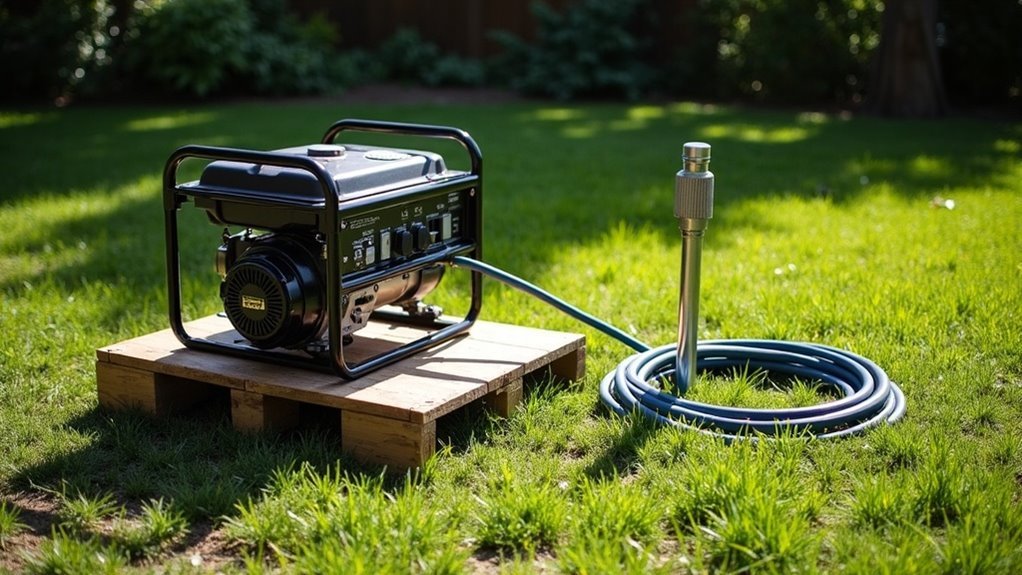
To ground your portable generator correctly for survival situations, start by driving an 8-foot grounding rod at least 3 feet deep into the earth. Use a No. 10 AWG stranded copper wire, stripping 15-30 cm of insulation from one end. Securely wind this end around the grounding rod and attach the other end to the generator’s grounding bolt. Regularly check connections for deterioration and ensure compliance with local electrical codes to minimize risks. By properly grounding your generator, you can enhance the safety and reliability of your power supply during emergencies. Discover more grounding practices and safety tips to optimize your survival setup.
Key Takeaways
- Drive a grounding rod at least 3 feet deep into the earth to establish a secure ground for your generator, ensuring it operates safely during emergencies.
- Use a No. 10 AWG stranded copper wire to connect the grounding rod to the generator’s grounding bolt, maximizing safety and reliability in survival situations.
- Strip 15-30 cm of insulation from one end of the copper wire before securing it around the grounding rod, ensuring a solid and effective connection.
- Regularly inspect grounding connections to prevent corrosion and maintain dependable operation when you need power most.
- Always consult local electrical codes and manufacturer guidelines to guarantee compliance and safety while grounding your generator, which is essential for effective prepping and survival readiness.
What Is Grounding & Why Is It Important?
Grounding is an essential safety measure for portable generators, especially for those who prioritize survivalism and prepping. By connecting the generator’s neutral electric conductor terminal to the earth, grounding redirects faulty electricity through a low-resistance copper grounding wire, significantly reducing the risk of electric shocks.
For preppers, proper grounding is vital not only for protecting your generator and connected appliances from overloads and electrical hazards but also for ensuring reliable operation in emergency situations. Furthermore, grounding is crucial for compliance with electrical codes, enhancing safety for users and their gear.
Neglecting to ground your portable generator elevates the risk of dangerous shocks and could lead to violations of local electrical regulations, highlighting the critical importance of this safety practice in a survival scenario.
Do All Generators Need To Be Grounded?
When utilizing a portable generator for survival situations or prepping, you may question the necessity of grounding. Most portable generators should be properly grounded to ensure safety and adhere to the National Electrical Code (NEC), particularly when connected to an electrical panel.
However, if your generator is being used solely with extension cords for standalone applications, grounding may not be strictly required. Additionally, some modern generators are designed with pre-grounded metal frames, reducing the need for additional grounding steps.
If using extension cords for standalone applications, grounding might not be strictly necessary for your generator.
Always refer to the manufacturer’s guidelines to understand the specific grounding requirements for your generator model. Neglecting proper grounding can heighten the risk of electric shocks and potentially damage your essential appliances during critical times.
Prioritize safety in your prep plans by ensuring your generator is set up correctly.
What Happens If You Don’t Ground A Generator?
Neglecting to ground a generator can pose significant risks, particularly in survival and prepping scenarios.
Without a proper grounding rod, the potential for electric shocks increases during ground fault conditions, as stray electricity has no safe route to dissipate. This can be especially dangerous in emergency situations where reliable power is essential.
Ungrounded generators and appliances are also susceptible to overload, which can lead to equipment damage or failure—an issue you can’t afford when preparing for uncertain times.
Additionally, the lack of grounding can allow static electricity to build up, increasing the likelihood of electrical malfunctions that could hinder your ability to operate essential devices.
Moreover, failing to adhere to local electrical codes could lead to legal consequences, adding another layer of complication in a survival situation.
Grounding your generator correctly is vital for ensuring your safety, protecting your equipment, and maintaining compliance with safety standards—critical factors in effective preparedness.
Steps to Ground a Generator
To ground your generator effectively for survival situations, you’ll need a few essential tools, including a grounding rod and No. 10 AWG stranded copper wire.
Begin by securely connecting the grounding wire to the grounding rod and the generator’s grounding bolt. This is crucial to ensure safety during power outages or emergency scenarios.
Always refer to your generator’s manual for specific compliance and safety requirements, as proper grounding can protect your equipment and enhance your preparedness.
Tools Needed for Grounding
Grounding a portable generator is a crucial step in ensuring safety and functionality, especially for those focused on survivalism and prepping. Having the right tools on hand not only guarantees a secure connection but also prepares you for potential emergencies. Here’s what you’ll need:
- Ground rod: A minimum of 8 feet long, driven 3 feet deep, is essential for effective grounding in various outdoor conditions.
- No. 10 AWG stranded copper wire: This wire is necessary to connect the ground rod to the generator’s grounding lug, ensuring a reliable and strong connection.
- Wire strippers: Essential for removing insulation from the copper wire, allowing for proper connections.
Ensure that all connections are tight and secure to maintain safe operation during critical situations.
Additionally, a protective clamp should be used to cover the ground rod, minimizing the risk of accidental contact.
Proper grounding is a vital part of preparedness, ensuring your generator functions safely in any scenario.
Grounding Wire Connection Steps
After gathering the necessary tools for grounding your portable generator, you’re ready to connect the grounding wire properly, an essential step for any serious prepper.
Begin by driving a grounding rod into the earth at least 3 feet deep to create a reliable grounding electrode. This is crucial for safety, especially in survival situations.
Strip 15-30 cm of insulation from one end of a low-resistance copper wire, which is known for its conductivity. Wind the stripped end tightly around the grounding rod to ensure a secure connection, as this will help protect you from electrical hazards.
Next, loosen the generator’s grounding bolt and attach the other end of the copper wire, making sure to secure it tightly.
Always double-check that all connections are tight before operating the generator, as this precaution is vital for preventing electrical issues that could compromise your safety during critical times.
Grounding Compliance and Safety
Ensuring compliance with grounding standards is crucial for the safe operation of your portable generator, especially in survival and prepping scenarios where reliable power is essential.
To effectively ground the generator and adhere to electrical codes, follow these steps:
- Drive a grounding rod at least 3 feet deep into the soil to establish a solid connection.
- Utilize a No. 10 AWG stranded copper wire for the connection to ensure low resistance and reliable performance.
- Securely connect the wire to both the grounding rod and the generator’s grounding terminal to prevent electrical hazards.
Before using the generator, always verify all connections and the proper installation of the grounding rod.
Additionally, consult the manufacturer’s guidelines for any specific grounding requirements unique to your generator model, as these can vary and may impact your preparedness plans.
Grounding Methods and Best Practices
When grounding your portable generator for survival situations, it’s crucial to use the right techniques and equipment to ensure safety and reliability.
Begin by selecting a No. 10 AWG stranded copper wire and a copper or brass grounding rod, which should be driven at least 3 feet deep into the soil to provide a solid connection.
Regularly inspect all connections to ensure they remain secure and compliant with local electrical codes, as this can be critical during emergencies when reliable power is essential.
Proper Grounding Techniques
Grounding portable generators is a crucial step in ensuring safety and operational effectiveness, especially for those engaged in survivalism and prepping. Improper grounding can lead to serious hazards, so it’s important to follow these techniques to prepare for any situation:
- Use a No. 10 AWG stranded copper wire to connect the generator’s grounding lug to an earth-driven grounding rod, which is essential for effective grounding in emergency scenarios.
- Drive the grounding rod at least 3 feet into the soil to establish a solid connection. Strip 15-30 cm of wire insulation to ensure a secure bond.
- Regularly inspect all connections to prevent corrosion and maintain the integrity of your setup, ensuring your generator remains reliable when you need it most.
Always consult local codes and manufacturer guidelines, as requirements can vary based on location and circumstances.
For added safety in your prepping efforts, consider using a grounding clamp with a protective cover to safeguard against electrical hazards.
Grounding Equipment Requirements
Proper grounding techniques are essential for ensuring safety when utilizing portable generators in survival and prepping scenarios.
To meet grounding equipment requirements, use a No. 10 AWG stranded copper wire to connect the generator’s grounding lug to an earth-driven copper or brass grounding rod, which should be driven at least 3 feet deep into the ground. Wind the stripped end tightly around the rod and securely attach the other end to the generator’s grounding bolt.
Regularly inspect these connections to prevent corrosion or wear that could compromise effectiveness in emergency situations. Always consult local electrical codes and manufacturer guidelines to ensure compliance with specific grounding requirements for your portable generator model, as this knowledge is crucial for maintaining safety during power outages or other crises.
Get the Right Advice, Contact Us Today
Ensuring your generator is correctly grounded is crucial for both safety and optimal performance, especially in survival situations.
Seeking expert guidance can significantly enhance your preparedness. Consulting professionals can provide you with:
- Guidance on compliance with local electrical codes relevant to your area
- Customized grounding techniques tailored to specific generator models
- Options for pre-grounded camping generators, making them easier to use in the field
A well-grounded generator not only prevents electric shocks but also safeguards your equipment during operation, which is essential when you’re relying on it in emergencies.
For expert advice and support, don’t hesitate to contact Blue Diamond Machinery at 1300 998 647. They can provide the right assistance, ensuring you’re well-equipped to safely utilize the benefits of your portable generator in any situation.