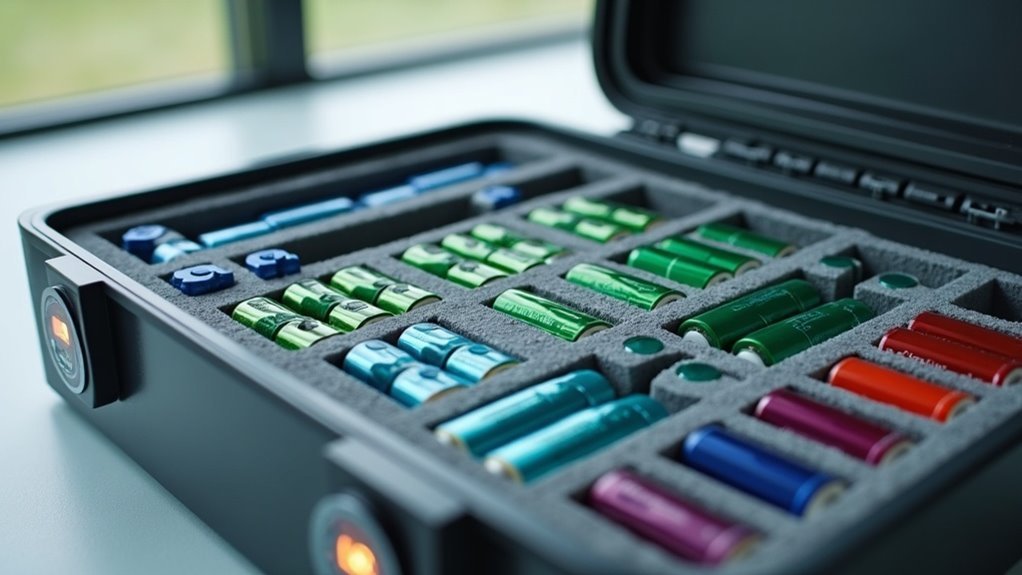
To store lithium cells safely for survival and prepping purposes, it’s essential to disconnect and charge them to 60-80% before putting them away. Store the batteries in a cool, dry area with temperatures ranging from 35°F to 90°F, while ensuring they are kept out of direct sunlight. It’s crucial to control humidity levels to prevent deterioration and to maintain good airflow around the batteries. Be vigilant with any damaged batteries; isolate them immediately and follow proper disposal regulations to avoid hazards. Implement an organized system to track both storage conditions and battery status, ensuring you have reliable power sources when you need them most. There’s always more to learn about enhancing battery safety and lifespan in your preparedness plans.
Key Takeaways
- Store lithium cells in a cool, dry environment, ideally between 35°F and 90°F, to ensure reliability and prevent damage, which is crucial for survival situations.
- Charge batteries to 60-80% capacity before storage and recharge every three months to extend their lifespan, ensuring you have reliable power when you need it most.
- Always wear proper personal protective equipment (PPE) like goggles and gloves when handling batteries to ensure safety during your prepping activities.
- Regularly monitor for signs of damage, such as leakage or bulging, and immediately isolate any problematic batteries to prevent hazards in your survival stockpile.
- Keep batteries organized in labeled, non-combustible containers, and maintain an inventory control system for tracking their conditions, so you can quickly access the power sources you need in an emergency.
Removing and Charging the Battery
When preparing for long-term storage of lithium cells in a survival situation, it’s crucial to adhere to specific procedures for removal and charging.
First, disconnect the battery from any larger power system if you plan to store it for 3-6 months or longer; this helps prevent self-discharge and potential damage.
Disconnect the battery from larger systems for 3-6 months of storage to prevent self-discharge and damage.
Charge the battery to 60-80% capacity before storage to ensure it remains in peak condition for when you need it most.
Keep a written log of the storage and charging dates to effectively monitor its status.
During the storage period, be sure to charge the battery every three months.
Additionally, avoid leaving it connected to the charger for extended periods to prevent overcharging, which can create safety hazards for your lithium-ion batteries.
Proper preparation can make all the difference in an emergency.
Finding the Right Storage Area
To find the ideal storage area for your lithium cells in a survivalist or prepping context, it’s crucial to maintain a temperature range between 35 to 90 degrees Fahrenheit. This ensures the longevity and reliability of your batteries when you need them most.
Minimize light exposure and control humidity levels, as these factors can lead to deterioration and reduced performance. A well-ventilated, dry space is essential not only for the preservation of the batteries but also for your overall preparedness strategy.
Optimal Temperature Range
Maintaining lithium batteries in an ideal temperature range is crucial for their longevity and performance, especially for those prepared for emergencies and survival situations. The optimal temperature range for storage is between 35°F and 90°F. Storing lithium batteries outside this range can lead to excessive heat, increased self-discharge rates, and ultimately, damaged batteries—compromising your preparedness.
| Temperature Range | Effects |
|---|---|
| Below 20°F | Increased self-discharge rates |
| 35°F – 90°F | Best for long-term storage and reliability |
| Above 100°F | Risk of overheating and battery damage |
| Consistent monitoring required | Ensures safety and effectiveness in critical moments |
Always keep batteries in a well-ventilated area to optimize performance and ensure your preparedness kit is ready when you need it most.
Light and Humidity Control
Finding the right storage area for lithium cells is critical for survivalists and preppers, as improper conditions can lead to diminished performance and safety risks.
Store your batteries in a dry area with low humidity, utilizing dehumidifiers or desiccants if necessary to ensure optimal conditions. Maintain the temperature between 35 to 90 degrees Fahrenheit to enhance battery longevity and minimize self-discharge, which is vital for emergency preparedness.
Limit light exposure by placing cells in covered or shaded locations to prevent cosmetic damage and temperature fluctuations that could compromise their functionality.
Ensure proper ventilation to avoid stale air and overheating, particularly in enclosed spaces like garages or storage units.
Regularly monitor humidity and temperature to maintain safe storage conditions for your lithium batteries, ensuring they’re ready when you need them most in a survival situation.
Temperature Considerations
When storing lithium batteries for your survival gear, it’s crucial to maintain them within the optimal temperature range of 35 to 90 degrees Fahrenheit.
Exposure to temperatures below 20°F or above 100°F can compromise the integrity of the cells, increasing the risk of self-discharge and reducing their reliability in emergency situations.
Regularly monitoring the temperature of your storage area is essential to ensure the safety and longevity of your batteries, enabling you to be prepared when it matters most.
Ideal Storage Temperature Range
To ensure the longevity and reliability of lithium-ion batteries, especially for survival and prepping scenarios, it’s crucial to store them within a temperature range of 35 to 90 degrees Fahrenheit.
Maintaining this ideal storage temperature range is essential for safe storage; extreme temperatures can lead to increased self-discharge rates and potential damage, which could be detrimental in emergency situations.
Cold conditions below 20°F can severely hinder battery performance, while excessive heat above 100°F poses risks of overheating and thermal runaway.
Consistent temperature control is vital, as fluctuations can cause harmful physical and chemical changes in battery chemistry.
Regularly monitoring the storage environment helps ensure your lithium-ion batteries remain within the recommended range, ensuring they’re ready for use when you need them most.
Effects of Extreme Temperatures
Storing lithium-ion batteries outside the recommended temperature range can pose serious risks during emergency situations.
Extreme temperatures can lead to:
- Damage: Temperatures below 20°F and above 100°F can irreversibly harm the cell structure, compromising battery integrity when you need it most.
- Increased Self-Discharge: Keeping batteries outside the ideal range can diminish overall capacity over time, which is critical in survival scenarios where reliability is key.
- Thermal Runaway: Temperature fluctuations can cause overheating, resulting in a serious fire hazard that could jeopardize your safety and supplies.
To ensure safe storage of your batteries, closely monitor their environment, particularly in areas exposed to direct sunlight or heat sources.
Maintaining your batteries within the ideal temperature range is essential for optimal performance and safety when preparing for unforeseen circumstances.
Managing Light Exposure
Exposing lithium cells to direct sunlight or harsh lighting can lead to cosmetic damage and temperature fluctuations that negatively impact their performance, which can be critical in survival situations.
To manage light exposure effectively, store your lithium batteries in a cooler, covered area, utilizing opaque containers to minimize the risk of damage. Avoid locations with excessive artificial lighting, as prolonged exposure can result in overheating and reduced battery life, potentially leaving you without power when you need it most.
Regularly inspect stored batteries for signs of damage or deterioration to ensure they’re safe for use in emergency scenarios.
Controlling Humidity and Airflow
Maintaining low humidity and proper airflow is crucial for ensuring the reliability and longevity of lithium-ion batteries, especially in survival and prepping scenarios.
To ensure safe storage and optimal performance, adhere to the following guidelines:
- Store batteries in a dry location to mitigate the effects of high humidity, which can jeopardize their functionality in critical situations.
- Implement dehumidifiers or desiccants in environments susceptible to moisture, ensuring humidity levels remain low to protect your supplies.
- Ensure proper ventilation to facilitate airflow, preventing overheating caused by stagnant air, which can be detrimental during emergencies.
Care for Damaged or Defective Batteries
Humidity control and proper airflow are essential for preserving lithium-ion batteries, especially for those who prioritize survivalism and prepping.
However, if you encounter damaged or defective cells, it’s crucial to handle them with care. Always wear appropriate personal protective equipment (PPE), including goggles, gloves, and an apron, to protect yourself from potential hazards.
Store damaged batteries in a non-combustible, electrically non-conductive, and absorbent container to reduce fire risks and contain any leaks. Keep a vigilant eye out for signs of leakage, discoloration, or bulging, and isolate any problematic batteries immediately.
Don’t dispose of damaged batteries in regular trash; adhere to local regulations for hazardous waste disposal to ensure safety and environmental protection.
In a preparedness mindset, consider utilizing a specially designed storage case for enhanced safety during handling and storage of batteries. This not only helps in keeping your supplies organized but also minimizes risks associated with battery damage, ensuring your survival gear remains reliable when you need it most.
Creating an Organized Storage System
When you prioritize safety and efficiency in storing lithium-ion batteries for your survival and prepping needs, creating an organized storage system is crucial.
Follow these steps to ensure proper management:
- Utilize secure lithium-ion battery cabinets to store batteries safely and prevent cross-contamination, which is vital for maintaining reliability in emergency situations.
- Clearly label storage containers with battery types and charge states for quick and easy identification, allowing you to swiftly access the right batteries when needed.
- Implement an inventory control system to track battery conditions and maintenance dates, ensuring that you always have functional batteries ready for use.
Moreover, practice segregation by storing different battery types separately to avoid potential hazards.
Regularly inspect the storage area to maintain a cool, dry environment within the ideal temperature range of 35 to 90 degrees Fahrenheit.
This thorough approach not only enhances safety but also prolongs the life of your batteries, ensuring you’re prepared for any situation that may arise.